
Best Adhesive Nose Pads for Glasses: 5 Picks Compared

Bloom&Bloom 1 mm Teardrop Pads is the best adhesive nose pad choice for most glasses because its 1 mm teardrop profile is designed to cushion the bridge without adding much height. Choose a thicker or differently shaped pad if your frames need more lift or its outline does not fit your nose bridge.
Adhesive nose pads are stick-on silicone cushions for frames without built-in pads; fit depends on both the pad footprint and the flat space available on the frame.
We earn a commission if you buy through links on this page. As an Amazon Associate I earn from qualifying purchases. Products are compared on manufacturer specifications, not hands-on testing.
- Best overall: Bloom&Bloom 1 mm Teardrop Pads – Its 1 mm silicone profile and teardrop shape offer a low-profile option for plastic frames.
- Best for larger pads: 20-Pair Silicone Pads, 1.9 × 0.8 cm – The pads measure 1.9 × 0.8 cm and come in a 20-pair pack.
- Best for black frames: Black Silicone Stick-On Pads, 20 Pairs – The silicone pads are black and the pack contains 20 pairs.
| Product | Best for | Thickness or size | Pack quantity | Color | Shop |
|---|---|---|---|---|---|
| Bloom&Bloom 1 mm Teardrop Pads | Low-profile cushioning | 1 mm | 6 pairs | Clear | Check Price on Amazon |
| 20-Pair Silicone Pads, 1.9 × 0.8 cm | Larger pad footprint | 19 × 8 mm | 20 pairs | Transparent | Check Price on Amazon |
| 1.3 mm X-Thin 18 mm Pads | Slim standard size | 1.3 mm; 18 mm | 5 pairs | Clear | Check Price on Amazon |
| Black Silicone Stick-On Pads, 20 Pairs | Dark frame matching | — | 20 pairs | Black | Check Price on Amazon |
| Clear Silicone 1 mm Nose Pads | Clear 1 mm option | 1 mm | — | Clear | Check Price on Amazon |
Adhesive Nose Pads for Glasses Compared
Compare pad size, quantity and color, then match the shape to your frame’s available space and nose bridge.
Bloom&Bloom 1 mm Teardrop Pads

For a discreet fit on plastic frames, these clear teardrop pads stand out with a 1 mm profile and a contour intended to follow the nose bridge. The pack contains six pairs of soft silicone pads. Brand says the upgraded adhesive lasts up to three times longer than ordinary nose pads and peels away cleanly. That claim may matter to someone replacing pads often, but it does not establish a fixed wear interval; heat, sweat and frame preparation can affect adhesion. Check that the teardrop outline fits the frame’s contact area before applying.
Bottom line: Choose these if a slim, clear profile matters more than getting the largest pack.
20-Pair Silicone Pads, 1.9 × 0.8 cm
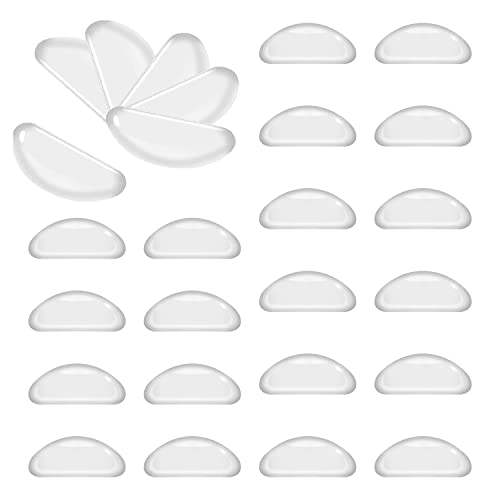
These pads are distinguished by their 19 × 8 mm footprint, making them a larger-format option than the explicitly slim 1 mm pads. The transparent silicone pack includes 20 pairs and is intended for eyeglasses, sunglasses and other plate-style frames. The larger footprint can provide more contact area, but it also needs more clear, reasonably flat frame surface; a pad that overlaps the bridge edge may lift or catch. The maker’s application guidance calls for cleaning the spot with rubbing alcohol and letting it dry thoroughly first.
Bottom line: Pick these if the broader footprint fits your frame and you want 20 pairs.
1.3 mm X-Thin 18 mm Pads

These clear pads are a defined middle ground for shoppers comparing thickness: they measure 1.3 mm and are identified as an 18 mm standard size. The five-pair pack uses silicone and is intended for plastic frames. The maker describes the adhesive as 3M and says the contoured pads help reduce slipping. A measured thickness does not tell you the full outline or whether the pad will sit well on a narrow frame, so compare the 18 mm size against the available contact area before choosing. Five pairs also means fewer replacements on hand than the 20-pair options.
Bottom line: Choose these when 1.3 mm thickness and an 18 mm size match your frame.
Black Silicone Stick-On Pads, 20 Pairs

Unlike the clear options, these silicone pads are black, which may blend better with dark frames. The 20-pair pack is described for reading glasses, sunglasses and prescription eyewear, with a self-adhesive backing and no special tools needed for installation. The maker says the anti-slip surface is intended to help keep eyewear in place, but fit and grip still depend on placement and frame shape.
Bottom line: Pick these if black pads suit your frames and exact thickness is not your deciding factor.
Clear Silicone 1 mm Nose Pads

These clear silicone pads are specified as 1 mm thick and are described for plastic frames, sunglasses, safety glasses and everyday eyewear. The maker says they add grip to help limit sliding, while also noting that frame fit, skin oils and activity affect grip. That makes correct placement important: the pad should sit fully on a clean frame surface rather than across an edge. The pack wording is inconsistent about quantity, so compare pack count before deciding if replacements are a priority. Check that the shape and available space suit smaller frames, as the maker advises.
Bottom line: Choose these if you need a clear 1 mm pad and broad eyewear compatibility.
How to Choose Adhesive Nose Pads for Glasses
Choose adhesive nose pads by matching thickness, footprint and shape to the frame contact area and the amount of lift you want. A 1 mm pad adds less height than a 1.3 mm pad, while a larger footprint needs more flat frame surface. If a frame has under 2 cm of usable length for a pad, avoid a pad whose length is 1.9 cm unless its shape can sit fully within that area. Pads that overhang an edge can peel sooner. Clear pads tend to blend with light or transparent frames; black pads may be less conspicuous on dark frames. Silicone is the material in these options, but softness alone does not determine whether the pad will stay aligned: frame curvature and skin oils also matter.
Use the pad’s measurements to compare against the frame, not the pack title alone. Where no dimension is given, verify the footprint before applying if the frame has a narrow bridge.
How to Apply Stick-On Nose Pads
Clean, dry frame surfaces are the starting point for adhesive pad application. One product specifically recommends rubbing alcohol followed by thorough drying; oils, dust and moisture can interfere with contact between adhesive and frame. Handle the adhesive side as little as possible, align the pad over the frame’s nose-contact area, then press it firmly into place. Do not stretch or bend the pad to force a fit, because edges that lift are more likely to catch during wear.
Place pads symmetrically and check that their edges remain on the frame surface. If a pad lands crooked, remove and replace it rather than relying on a partly attached edge. A pad that changes the glasses’ position can alter how the frames sit; if the fit remains uncomfortable or unstable, an optical professional can assess the frame adjustment. Keep loose adhesive pads away from small children and pets.
Pad Thickness, Shape and Frame Fit
Pad thickness changes how far the frame sits from the nose, while pad footprint determines how much of the frame is covered. The 1 mm options are the thinnest specified here, and the 1.3 mm option adds 0.3 mm more height; the 1.9 × 0.8 cm option provides a footprint rather than a thickness. Teardrop or contoured shapes may suit a curved contact area, while a broader pad needs sufficient clear space. There is no universal nose-pad size that fits every frame, so a measurement on one model cannot guarantee a match on another.
Use this comparison as a fit rule: choose a size only if it sits entirely inside the frame’s usable surface. A clear pad can still be visible if it extends beyond the frame edge, and a thick pad can create unwanted lift on shallow-set glasses.
When to Replace Adhesive Nose Pads
Replace a stick-on pad when an edge lifts, the pad shifts, or the surface becomes dirty enough that cleaning no longer restores grip. Adhesive pads do not have a universal service interval: perspiration, skin oil, heat and frequent handling can shorten their useful life. Keep spare pairs available if you rely on pads daily, and clean the frame before fitting a replacement rather than sticking a new pad over residue.
Remove old pads slowly so the adhesive releases instead of tearing away abruptly. Avoid harsh scraping on coated or delicate frames, and test a cleaning method in an inconspicuous spot if frame material is uncertain. Never use a loose or partly detached pad if it makes the glasses unstable; remove it and fit a correctly sized replacement.
Frequently Asked Questions
How thick should adhesive nose pads be?
Choose thickness based on the lift needed and the frame position you want: the thinnest specified options here are 1 mm, with another at 1.3 mm. A 0.3 mm difference can matter on a close-fitting frame, so start with the lower profile if you do not want much added height.
How do I keep stick-on nose pads attached?
Clean the frame contact area with rubbing alcohol and let it dry completely before applying. Dust, skin oil and moisture can reduce adhesion, while an edge placed over the frame boundary may lift sooner.
Can adhesive nose pads fit plastic frames?
Yes, several options are intended for plastic frames, including the clear 1 mm and 1.3 mm pads. Match each pad’s footprint to a flat area on the frame so it does not overhang the edge.
When should I replace stick-on glasses nose pads?
Replace a pad when it shifts, an edge lifts or dirt prevents it from gripping reliably. Heat, sweat and skin oils can shorten wear time, so there is no single interval that suits every wearer.
Do silicone nose pads stop glasses from slipping?
Silicone pads can add cushioning and grip, but they cannot correct every frame-fit problem. If the glasses still slide after a clean, secure application, have the frame fit assessed rather than adding pads that make the frames sit too high.