
Best Anti-Glare Night Driving Glasses for Seniors

phikttu Fit-Over Night Driving Glasses suits most people who need glasses over prescription eyewear, thanks to its fit-over design and side coverage. However, its yellow polarized lenses are tinted, which can reduce light reaching your eyes; drivers who need maximum visibility should choose clear prescription lenses instead.
Night driving glasses are eyewear marketed to reduce glare or improve contrast, but no tint can make darkness brighter. For seniors, prioritize a current prescription, an unobstructed view, and lens clarity over claims of enhanced night vision.
We earn a commission if you buy through links on this page. As an Amazon Associate I earn from qualifying purchases. Products are compared on manufacturer specifications, not hands-on testing.
- Best overall: phikttu Fit-Over Night Driving Glasses – Fit-over styling and wraparound side coverage make it the option for drivers who need glasses over prescription frames.
- Best for included accessories: ZILLERATE Yellow Night Driving Glasses – The package includes a hard case, retainer strap and microfiber cloth.
- Best for a medium fit: Myiaur Medium Yellow Night Vision Glasses – Its size is identified as medium rather than one size.
| Product | Best for | Fit | Lens | Frame features | Shop |
|---|---|---|---|---|---|
| phikttu Fit-Over Night Driving Glasses | Fit-over coverage | One size | Yellow polarized | Wraparound side shields | Check Price on Amazon |
| ZILLERATE Yellow Night Driving Glasses | Storage accessories | One size | Yellow polarized | Rubber-padded TR90 | Check Price on Amazon |
| Myiaur Medium Yellow Night Vision Glasses | Medium frame fit | Medium | Yellow polarized, UV400 | Lightweight comfort fit | Check Price on Amazon |
| Tnnaiko Yellow Night Driving Glasses | One-size simplicity | One size | Yellow polarized | — | Check Price on Amazon |
Anti-Glare Night Driving Glasses for Seniors
Compare fit and frame features, but treat night-vision benefits as maker claims and weigh tint against the need to see clearly in low light.
phikttu Fit-Over Night Driving Glasses

For drivers who wear prescription glasses, the fit-over format and wraparound side shields set this pair apart. The package contains three pairs, and the TR90 frame has ergonomic nose pads, non-slip temples, metal hinges and ventilation. The maker says its yellow polarized lenses with anti-reflective coating reduce headlight and streetlight glare. These are a practical form factor for someone who wants coverage over existing frames, but the yellow tint can cut visible light, so it may not suit driving in very dark conditions.
Bottom line: Choose this if you need a fit-over frame and accept the tradeoff of a tinted lens.
ZILLERATE Yellow Night Driving Glasses
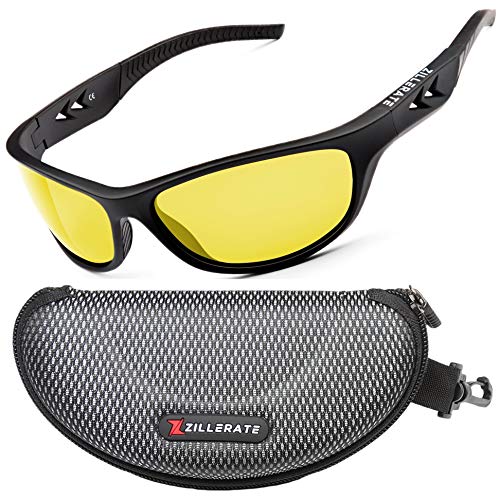
This pair is distinguished by its included storage and cleaning accessories: a hard shell case, retainer strap and microfiber cloth. The one-size frame is TR90 with rubber padding; its lens width is 64 mm and bridge width is 1.97 inches. The maker says the yellow polarized lenses reduce glare and improve low-light clarity, and describes the frame as scratch-resistant and impact-resistant. The wide lens may appeal to someone who prefers more coverage, but the specifications do not establish fit over prescription frames; confirm frame compatibility if that is essential.
Bottom line: Choose this if the included case and strap matter more than fit-over styling.
Myiaur Medium Yellow Night Vision Glasses

A medium size is the distinguishing fit cue for this pair, unlike the one-size alternatives. The tortoise frame has yellow polarized lenses and a lightweight comfort-fit design. The maker says the lenses reduce glare and enhance contrast in dim light. Those claims do not establish that the tint is suitable for night driving: tinted lenses can lower the amount of light reaching the eye, which matters most on dark, poorly lit roads. The medium sizing may help narrow a fit choice, but buyers should compare the frame dimensions with eyewear that already fits them.
Bottom line: Choose this if medium sizing is a better starting point for your fit.
Tnnaiko Yellow Night Driving Glasses

This pair keeps its design simple, with a one-size frame and yellow polarized lenses. Its specifications identify a leopard color option but do not give frame measurements or construction materials, so it is harder to assess fit than eyewear with specified dimensions. The maker says the tint and polarization improve contrast and reduce glare in low light. Because any tint can reduce visible light, those claims should not replace checking whether the driver can see road markings and hazards clearly without added eyewear. One-size styling may suit someone who does not need fit-over frames.
Bottom line: Choose this only if a one-size frame works and tinted lenses do not compromise your visibility.
How to choose night driving glasses for seniors
Clear, untinted lenses are the safer starting point for night driving because a tint reduces light transmission. Yellow lenses may alter contrast, but they cannot create light or remove the direct beam from an oncoming headlight; polarization mainly reduces reflected glare from flat surfaces. A measurable decision rule is to skip tinted glasses if you cannot comfortably read road signs or see lane markings in a familiar, well-lit area without them. Prescription accuracy, scratch-free lenses and a frame that does not block peripheral vision matter more than a claim of sharper night vision. If ordinary headlights seem unusually dazzling, consider an eye-care professional rather than relying on tinted eyewear.
Fit-over frames and side coverage
Fit-over glasses are designed to sit over prescription frames, while standard frames are worn alone; the phikttu pair explicitly offers both options. Side shields can block light entering from the sides, but larger frames can also interfere with peripheral vision if they sit too close or shift. Before driving, check that the frame stays in place when you turn your head and does not obscure side views. Compare frame width and bridge fit with glasses you already wear comfortably; a one-size label is not a measurement. For the ZILLERATE pair, the 64 mm lens width gives one sizing reference, but it does not establish overall frame width.
Yellow lenses versus clear lenses at night
Clear lenses transmit more available visible light than otherwise similar tinted lenses, which is important on unlit roads. Yellow lenses can change perceived contrast, but a darker or colored lens does not reduce headlight glare without also changing the light reaching the eye. Polarized lenses are most useful for reflected glare, such as sunlight bouncing off pavement or water, not as a guaranteed fix for bright headlights. Use clear, clean lenses for night driving unless a qualified eye-care professional recommends otherwise. Never wear dark sunglasses after dark, and do not assume an anti-reflective coating makes a yellow tint harmless in low light.
| Need | Practical choice | Tradeoff |
|---|---|---|
| Wear over prescription glasses | Fit-over style | Check clearance and side vision |
| Keep maximum light at night | Clear lenses | Does not remove headlight glare |
| Reduce reflected daytime glare | Polarized sunglasses | Not a night driving solution |
When headlight glare needs more than glasses
Persistent glare can come from dirty windshields, scratched lenses, misaligned headlights or an outdated prescription, so inspect the glass and lenses before adding eyewear. Keep the windshield clean inside and out; film and streaks scatter light, especially at night. Aim your gaze toward the right edge of your lane rather than directly into oncoming headlights, and slow down when visibility is limited. If glare is new, worsening or makes it difficult to see road hazards, arrange an eye examination before relying on a tint. Glasses marketed for night vision should not be used to justify driving when vision is inadequate.
Frequently Asked Questions
Do yellow glasses really reduce headlight glare?
Yellow lenses change the light reaching your eyes, but they do not eliminate the direct beam from an oncoming headlight. Polarization primarily reduces reflected glare, so yellow polarized glasses are not a guaranteed night driving fix.
Are fit-over glasses suitable for prescription frames?
A fit-over design is intended to be worn over prescription glasses; the phikttu pair explicitly offers that option. Check that the frames sit without pressure and do not obstruct your peripheral view before driving.
Can tinted lenses make night driving less safe?
Yes, any tint can reduce visible light reaching your eyes, which can make hazards harder to see on a dark road. If signs or lane markings are harder to see with tinted lenses, do not wear them for night driving.
What should seniors check before driving after dark?
Check that your prescription is current, lenses and windshield are clean, and the frame leaves side vision unobstructed. If glare interferes with seeing signs or hazards, avoid driving until the cause is addressed.
Do polarized lenses help with oncoming headlights?
Polarized lenses are designed to cut reflected glare, such as reflections from pavement, rather than directly dimming every headlight beam. A yellow tint can also reduce available light, so polarization alone does not establish suitability for night driving.