
Best Bed Leg Floor Protectors for Stable Furniture

For most beds, Yelanon 3-Inch Rubber Cups is the strongest match because its 3-inch rubber cups are designed to hold furniture feet without adhesive. Choose X-Protector 3-Inch Gripper Pads instead if you want self-adhesive pads; the other options are better suited to fitted chair legs or smaller furniture feet.
Bed leg floor protectors sit between a furniture foot and the floor to help limit scratches, noise or unwanted movement. Measure each leg and consider whether you want the bed to stay put or move easily before choosing.
We earn a commission if you buy through links on this page. As an Amazon Associate I earn from qualifying purchases. Products are compared on manufacturer specifications, not hands-on testing.
- Best overall: Yelanon 3-Inch Rubber Cups – The 3-inch rubber cups fit under furniture feet without adhesive or tools.
- Best for adhesive grip: X-Protector 3-Inch Gripper Pads – The square pads combine rubber and felt with a self-adhesive backing.
- Best for square legs: CHWM Square Silicone Leg Covers – The fitted silicone covers are sized for square legs about 1.26 to 1.54 inches long.
| Product | Best for | Style | Size | Attachment | Shop |
|---|---|---|---|---|---|
| Yelanon 3-Inch Rubber Cups | Broad furniture feet | Rubber cups | 3 in | No adhesive | Check Price on Amazon |
| X-Protector 3-Inch Gripper Pads | Adhesive bed feet | Rubber and felt pads | 3 in square | Self-adhesive | Check Price on Amazon |
| CHWM Square Silicone Leg Covers | Square chair legs | Silicone covers with felt | 1.26–1.54 in square | Fitted cover | Check Price on Amazon |
| X-Protector 1-Inch Felt Pads | Small furniture feet | Felt pads | 1 in round | Adhesive | Check Price on Amazon |
Bed Leg Floor Protectors Compared
Match the protector style to the bed-leg shape and decide whether grip or easier movement matters more.
Yelanon 3-Inch Rubber Cups
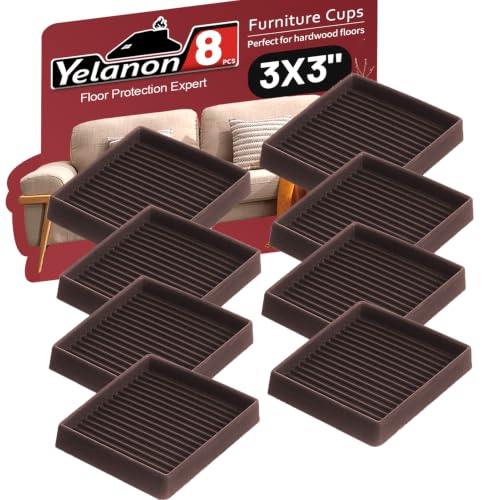
For a bed that should stay in place, these 3-inch square rubber cups are the most direct fit among these options. Each cup sits under a furniture foot, so installation requires placing the leg in the cup rather than sticking a pad to it. The maker says the cups help prevent sliding, scratches and noise, and that they can be used with several flooring types.
The cup shape can suit feet of different shapes, but the 3-inch footprint still needs enough floor space around each leg. Measure the foot and the available space before choosing.
Bottom line: Choose these if the bed has feet that fit within a 3-inch cup and should resist sliding.
X-Protector 3-Inch Gripper Pads

Unlike the no-adhesive cups, these 3-inch square pads attach to the furniture foot and combine rubber with a felt layer. The set contains 12 pads, which can be useful when the bed has several contact points or other furniture needs protection too. The maker says the grippers are intended to reduce sliding and protect hard floors from scratches.
Adhesive pads need a clean, dry surface for a secure bond, and the square pad must fit the underside of the leg. They are less suitable if a bed foot is too small or uneven to support the pad fully.
Bottom line: Pick these when a flat bed foot can take a 3-inch adhesive pad.
CHWM Square Silicone Leg Covers
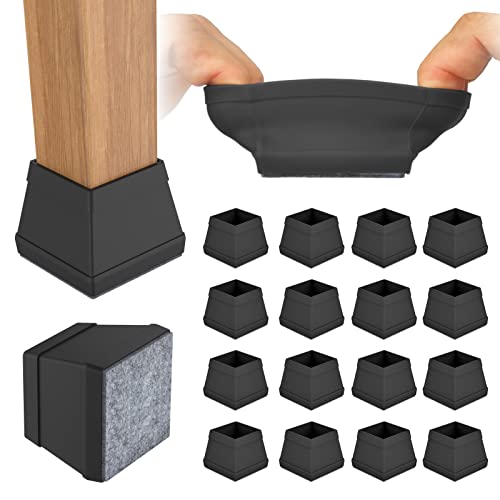
These fitted silicone covers are aimed at square chair legs rather than broad bed feet. Their fit range is square legs about 1.26 to 1.54 inches long, and each cover has felt on the bottom. The maker says the felt helps furniture move quietly while protecting floors from scratches.
That fitted size makes measurement especially important: a wider bed leg will not fit this cover, and an undersized leg may not stay secured. The felt bottom is also a different choice from a gripper cup when the goal is to keep a heavy bed from shifting.
Bottom line: Choose these for square legs within the measured fit range, not oversized bed feet.
X-Protector 1-Inch Felt Pads
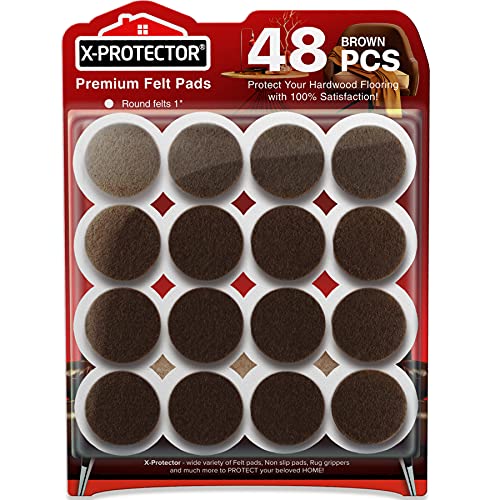
These small, round felt pads are a better match for compact furniture feet than large bed legs. The pack has 48 pads, each 1 inch across, with an adhesive backing. The maker says the felt is intended to reduce scratching and noise on hard floor surfaces.
Because the pad is only 1 inch wide, it may not cover the full underside of a bed foot, and felt is not the best choice when a bed must resist sliding. Check the foot’s contact area before applying; a pad that extends beyond the leg can catch or peel during movement.
Bottom line: Pick these for small, flat feet when scratch protection matters more than grip.
How to Choose Bed Leg Floor Protectors
Choose by leg shape, contact area and whether the bed should slide. A cup surrounds the foot and can help resist movement; a flat adhesive pad covers the underside, while a fitted cover wraps around a leg. Measure the widest point of each foot and compare it with the protector’s usable opening or surface. For a 3-inch cup, leave enough clear floor around the leg for the cup’s footprint. Soft felt generally allows furniture to move more easily than a grippy rubber surface, so prioritize grip for a bed that shifts and felt for a bed you reposition often.
Hard flooring needs a clean, smooth contact area: grit trapped beneath a protector can act like an abrasive. Wipe the floor and leg before installation, and recheck for accumulated dust or debris when cleaning.
Bed Leg Protector Styles and Their Tradeoffs
Rubber cups, adhesive pads and fitted covers solve different fit problems. Cups do not depend on adhesive, but they require room around each foot. Adhesive pads stay attached to a flat underside, but need an adequately sized bonding surface. Fitted covers depend on a close match to the leg dimensions; a loose cover may slip off, while a tight one may not seat fully.
The table compares the practical choice by protector style, not by a universal ranking. Use it as a first screen, then confirm the individual leg measurements.
| Style | Choose when | Watch for |
|---|---|---|
| Rubber cup | Bed should stay put | Foot and surrounding floor must fit |
| Adhesive pad | Foot has a flat underside | Pad must bond across the foot |
| Felt cover or pad | Scratch protection and movement matter | Check size and how readily bed moves |
How to Measure Bed Feet Before Buying
Measure every leg at the floor-contact end because bed frames can use different foot shapes or sizes at opposite ends. For square legs, measure both sides; for round feet, measure diameter. Also measure any taper or lip that changes the width where the protector will sit. A cover sized for a 1.26- to 1.54-inch square leg is not interchangeable with a 3-inch cup simply because both go under furniture.
Allow for the protector’s outside dimensions as well as its opening. A cup that fits the foot can still interfere with a wall, rug edge or nearby furniture if the floor area is tight. If the bed has casters, confirm the protector can accommodate the caster rather than only its stem.
Keeping Floor Protectors Effective
Inspect protectors whenever the bed is moved and during routine floor cleaning. Dust, grit and hair can collect beneath a cup or felt pad, and that debris can scratch a finish as the bed shifts. Lift the bed rather than dragging it when checking or repositioning protectors, especially on wood or other easily marked surfaces.
Replace a protector if its felt is worn through, the adhesive edge lifts, or a cup cracks or no longer holds the foot. A protector is not a substitute for a stable frame: check that every leg contacts the floor evenly and that any bed hardware remains secure. Avoid forcing an oversized leg into a cover or stacking loose pads to make up a size difference.
Frequently Asked Questions
Do bed leg floor protectors stop a bed from sliding?
Rubber cups and gripper-style pads are intended to reduce sliding, while felt is usually chosen when furniture should move more easily. For a bed on a smooth hard floor, start with a close-fitting rubber protector and make sure every leg is seated.
How do I measure bed legs for floor protectors?
Measure the foot at the point that contacts the floor, including its widest dimension; measure both sides of a square leg and the diameter of a round one. Also check clearance around the foot because a cup’s outside footprint can be wider than its opening.
Can I use felt pads under a heavy bed?
Felt pads can protect a floor from direct contact, but felt generally permits more movement than rubber grippers. If the bed shifts when someone sits or turns, use a grippy style instead of relying on felt alone.
Should I put floor protectors under bed casters?
A protector must fit the caster’s rolling base, not just the narrow stem. If the bed should remain stationary, use a caster cup sized to the wheel and confirm the bed cannot roll out of it.
How often should bed floor protectors be checked?
Check them whenever the bed is moved and during regular floor cleaning. Remove grit and replace a pad if its felt wears through, its adhesive lifts, or a rubber cup cracks.