
Best Bed Wetting Alarm: 4 Types Compared by Fit

DRYEASY Bedwetting Alarm suits most families because its wearable sensor detects the first drop and offers sound, vibration, or both with four volume levels. Choose a non-wear system instead if your child cannot comfortably wear a sensor; that style monitors a bed pad.
Bed wetting alarms use moisture sensors to cue a child or caregiver to respond when wetting begins, and consistent nighttime setup matters more than extra sounds.
We earn a commission if you buy through links on this page. As an Amazon Associate I earn from qualifying purchases. Products are compared on manufacturer specifications, not hands-on testing.
- Best overall: DRYEASY Bedwetting Alarm – The wearable sensor detects the first drop, with four volume levels and three alert modes.
- Best for no-wear setup: TheraPee No-Wear Bedwetting System – A bed-pad sensor avoids attaching a transmitter to underwear.
- Best for wireless placement: Wireless Bedwetting Alarm with 7 Melodies – Its transmitter is wireless and the receiver can sit bedside.
| Product | Best for | Sensor setup | Alert options | Power / size | Shop |
|---|---|---|---|---|---|
| DRYEASY Bedwetting Alarm | Adjustable alerts | Wearable clip sensor | 6 sounds; 4 volume levels; sound/vibration | 2.36 × 2.28 × 0.63 in | Check Price on Amazon |
| TheraPee No-Wear Bedwetting System | No-wear monitoring | Bed-pad sensor | Alarm plus online coaching program | 1.69 lb | Check Price on Amazon |
| Wireless Bedwetting Alarm with 7 Melodies | Wireless placement | Wireless underwear transmitter | 7 melodies; 3 modes | 2.0 × 2.8 × 0.3 in transmitter | Check Price on Amazon |
| Wet-Stop 3 Bedwetting Alarm | Reset control | Wearable sensor | 6 tones plus vibration | 2 AAA batteries | Check Price on Amazon |
Bed Wetting Alarms Compared
Choose by sensor placement first, then compare alert choices and the nighttime routine each system requires.
DRYEASY Bedwetting Alarm
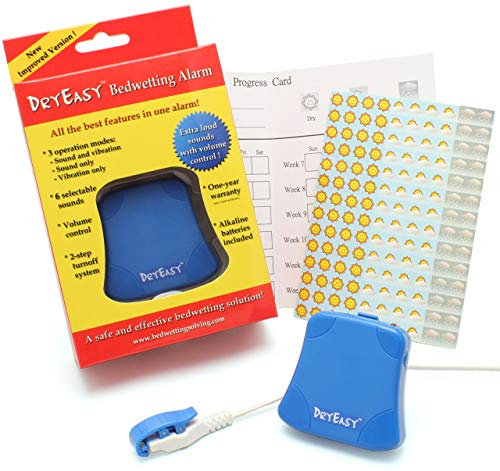
Four digital volume levels set this wearable alarm apart, while the sensor clamp locks onto clothing and detects the first drop of urine. Choose one of six sounds or rotate through them, with sound, vibration, or both available. The maker says the maximum volume is 85 dB, so consider the bedroom environment and the child’s comfort before selecting a setting. This option suits families who want alert flexibility in a clip-on format. It requires a sensor attached to underwear, which may not work for a child who resists wearing a device.
Bottom line: Pick this if you want a wearable sensor with selectable tones and several alert modes.
TheraPee No-Wear Bedwetting System
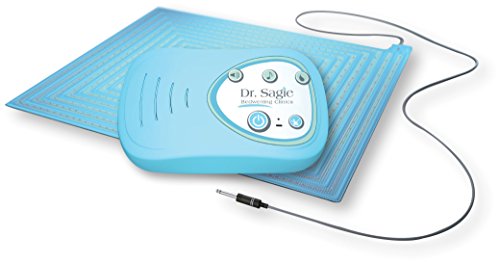
A bed-pad sensor and online coaching program distinguish this system from clip-on alarms. Its Stopee setup monitors the bed without requiring a transmitter on underwear, and the included software license is for one patient with unlimited access. The maker says the device has CE safety certification and is FDA registered; those claims describe this product and are not a substitute for clinical advice. This setup suits a child who does not tolerate wearing a sensor and a caregiver ready to use the online program. The bed-pad format means the monitoring surface must be positioned as intended beneath the sleeper.
Bottom line: Choose this when a no-wear bed sensor and guided online program suit your routine.
Wireless Bedwetting Alarm with 7 Melodies

Wireless communication and a receiver that can sit bedside set this alarm apart from a system worn on the arm. The waterproof, compact transmitter clips to the moisture-prone area of underwear; the maker says its moisture sensor triggers an alert. This design suits households prioritizing freedom from a cable between child and receiver, including travel or camp use. Buyers should confirm which alert behaviors the three modes provide before choosing settings for nighttime use.
Bottom line: Pick this if a wireless transmitter and bedside receiver fit the child’s sleep setup.
Wet-Stop 3 Bedwetting Alarm
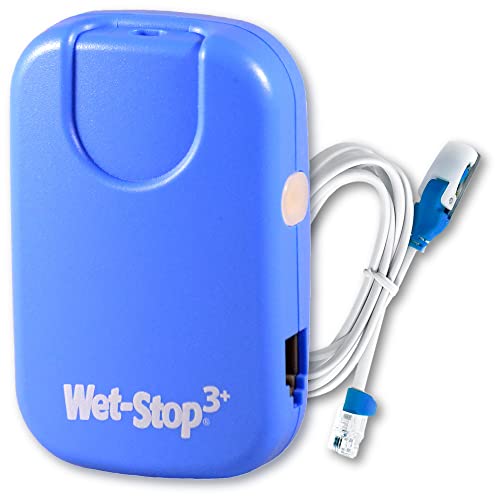
A two-step reset is the defining feature of this wearable alarm: the button must be held while the sensor is dried, helping guard against accidental shutoff. The unit provides six tones plus vibration, and its sensor is designed to be cleaned; the maker recommends cleaning before use for best results. It suits families who want several alert choices and a reset procedure that calls for deliberate action. The two AAA batteries are a separate practical consideration, and the sensor needs to be cleaned and positioned properly for reliable detection.
Bottom line: Choose this if you want multiple alert tones and a deliberate two-step reset.
How to Choose a Bed Wetting Alarm
Start with sensor placement: wearable alarms clip to underwear, while no-wear systems use a pad beneath the sleeper. A child who removes clothing or resists clips may be a better candidate for a bed-pad setup; a wearable unit can be preferable when the bed surface must stay uncovered. Next, consider whether the alarm’s sound, vibration, or combined modes suit the child and caregiver. Some models offer multiple tones, but a quiet sleeping arrangement may call for vibration or caregiver support. A moisture alarm is a cue to wake and respond, not a substitute for a caregiver’s judgment. Keep the sensor placement consistent nightly and make sure the child can reach the alarm’s reset control safely.
Wearable Clips Versus Bed-Pad Sensors
Wearable clips detect moisture at underwear, while bed-pad sensors monitor a surface below the sleeper. The practical difference is what must remain in position through the night: a clip needs secure contact with the garment, and a pad needs the sleeper to remain over the sensing area. A clip that shifts away from the moisture-prone area may delay detection; a pad that bunches or folds may compromise contact. The table summarizes the basic fit decision.
| Setup | Works best when | Watch for |
|---|---|---|
| Wearable clip | Child accepts a sensor on underwear | Clip stays secured at the target area |
| Bed pad | Wearing a transmitter is a barrier | Pad stays flat beneath the sleeper |
Choose a no-wear system when wearing a clip is the obstacle; choose a wearable alarm when consistent garment placement is manageable.
Setting Up Alerts and Sensor Placement
Secure sensor contact is central to an alarm’s response: place a wearable clip at the moisture-prone area of underwear and avoid letting fabric bunch between the sensor and the area. For a pad system, keep the sensor surface flat and within the sleeper’s usual position. Start with an alert mode the child can tolerate, then adjust sound and vibration choices rather than changing sensor placement at the same time. Bedrooms differ in distance and noise, so the caregiver should be able to hear or notice the alarm from their sleeping location. Practice resetting the unit while awake, and dry reusable sensors after an alarm before resetting when the design requires it.
Cleaning and Safe Nighttime Use
Clean sensor surfaces regularly because residue can interfere with contact, and dry a wet sensor before restarting an alarm. Avoid using a damaged cable, clip, or wet electronic unit; discontinue use if a component is broken and contact the maker for handling guidance. Keep small batteries away from young children, since swallowed button or coin cells can cause severe injury; these products’ described battery formats should be handled according to their own compartments and instructions. An alarm should not be treated as a punishment or a medical diagnosis. If bedwetting is new, painful, or accompanied by other symptoms, discuss it with a pediatric clinician rather than relying on an alarm alone.
Frequently Asked Questions
Where should a wearable bedwetting sensor attach?
Attach the clip to the moisture-prone area of underwear so the sensor can contact moisture promptly. A secure clamp matters because shifting fabric can separate the sensor from the target area.
How often should a bedwetting alarm sensor be cleaned?
Clean reusable sensors before use and whenever residue or moisture remains after an alarm. Dry the sensor before resetting if its design requires drying to restart.
Should a bedwetting alarm use sound or vibration?
Choose an alert the child and caregiver can notice without making the child avoid the device. A combined sound-and-vibration option can suit sleepers who miss sound alone, while vibration-only may be preferable when sound disrupts others.
Can a bedwetting alarm be used away from home?
A compact wearable alarm can be easier to pack than a bed-pad system, and one wireless model is specifically described for travel and camp use. Check that the sleeping setup still allows secure sensor placement and that the caregiver can respond to an alert.
What should caregivers do when the alarm sounds?
Wake the child fully, help them finish in the bathroom, and reset the sensor before returning to sleep. An alarm provides a cue for a nighttime routine, not a reason to scold or punish.