
Best Blister Bandages for Heels: 4 Picks Compared

Amazon Basics Extreme Heel Cushions suits most people because its hydrocolloid cushion is shaped for heel protection and flexes with the foot.
We earn a commission if you buy through links on this page. As an Amazon Associate I earn from qualifying purchases. Products are compared on manufacturer specifications, not hands-on testing.
- Best overall: Amazon Basics Extreme Heel Cushions – Heel-shaped hydrocolloid cushions provide padding and are designed to flex with the foot.
- Best for multiple spots: Dr. Frederick’s Better Blister Variety Pack – The pack includes heel, toe and spot shapes.
| Product | Best for | Material / format | Count | Water resistance | Shop |
|---|---|---|---|---|---|
| Amazon Basics Extreme Heel Cushions | Heel blisters | Hydrocolloid gel cushion | 10 | — | Check Price on Amazon |
| Dr. Frederick’s Better Blister Variety Pack | Multiple foot spots | Hydrocolloid, three shapes | 12 | Water-resistant | Check Price on Amazon |
| Hydrocolloid Blister Bandages, 30-Piece Variety | Mixed footwear | Hydrocolloid gel | 30 | Waterproof | Check Price on Amazon |
| BAND-AID Pro Heal Hydrocolloid Blister Bandages | Waterproof protection | Hydrocolloid bandage | 6 | Waterproof | Check Price on Amazon |
Blister bandages for heels
Match the pad shape and material to whether you are protecting an existing blister or preventing shoe rub.
Amazon Basics Extreme Heel Cushions

Amazon Basics Extreme Heel Cushions is specifically shaped for heel protection, unlike the multipurpose shapes in Dr. Frederick’s Better Blister Variety Pack and Hydrocolloid Blister Bandages, 30-Piece Variety. Each self-adhesive cushion measures 1.65 by 2.67 inches and is designed to flex with the foot while cushioning friction. The pack contains 10 bandages, making it a straightforward pick for a heel blister or a spot repeatedly rubbed by footwear.
The maker says the cushions are intended for multi-day use. They are heel-focused, so choose a variety pack if you also need toe or small spot shapes.
Bottom line: Pick this for a heel-shaped hydrocolloid cushion in a 10-count pack.
Dr. Frederick’s Better Blister Variety Pack

Dr. Frederick’s Better Blister Variety Pack stands out for combining heel, toe and spot shapes in one 12-count pack; Amazon Basics Extreme Heel Cushions is focused on heels alone. The hydrocolloid pads are water-resistant and designed to stay on through the day, according to the maker. That variety can help when rubbing shifts between the back of a shoe, a toe and a smaller area.
Its limitation is that the pack is divided among three shapes, so it may be less suitable if you need many identical heel pads. Choose a heel-only pack when that is your sole concern.
Bottom line: Choose this if you need several pad shapes for different foot areas.
Hydrocolloid Blister Bandages, 30-Piece Variety
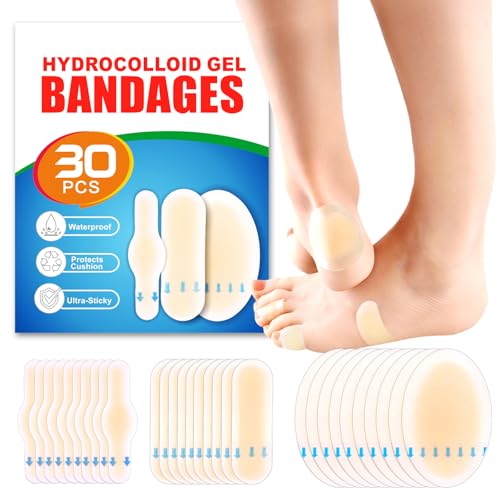
Hydrocolloid Blister Bandages, 30-Piece Variety offers 30 hydrocolloid bandages for heels, feet and toes, while Amazon Basics Extreme Heel Cushions is a defined heel cushion and Dr. Frederick’s Better Blister Variety Pack specifies three targeted shapes. The maker describes these as waterproof pads that cushion sore spots and help shield them from rubbing and pressure. The broad intended use suits someone who wants pads for more than one footwear contact point.
The pack is identified as a variety but gives no individual shape counts, so it may not suit a buyer who needs a specific heel-pad outline. Check the pad dimensions and shape before relying on a particular fit.
Bottom line: Pick this for a larger mixed-use supply of hydrocolloid pads.
BAND-AID Pro Heal Hydrocolloid Blister Bandages

BAND-AID Pro Heal Hydrocolloid Blister Bandages differs from the heel-specific cushions by being a general blister bandage for cuts and scrapes as well as blisters. The six-count pack is described as waterproof, with extra cushioning; the maker says each bandage can stay in place for up to five days. Its hydrocolloid absorbs fluid, and a white bubble may form beneath the seal as this process begins.
Because the product name and features do not identify a heel-specific shape, this is a less targeted choice than Amazon Basics Extreme Heel Cushions. Choose it when waterproof protection matters more than a dedicated heel outline.
Bottom line: Choose this when waterproof protection is more important than heel-specific shaping.
How to choose heel blister bandages
For an existing blister, choose a cushion that covers the rubbed area and extends onto clean, dry skin around it. Hydrocolloid dressings absorb wound fluid and form a gel; a pale bubble under the dressing can be part of that process. For intact skin that gets rubbed repeatedly, friction-reducing moleskin is a different tool from a wound dressing.
Shape matters because a heel pad must stay put where the shoe counter meets the foot. With a rubbing patch under 1 inch across, a small spot pad may avoid excess material; for a broader heel contact zone, compare the pad’s actual dimensions with the affected area. Do not stretch a pad across a crease or apply it over dirty or damp skin, which can weaken adhesion.
Hydrocolloid versus moleskin for heel rub
Hydrocolloid bandages are intended to cushion and cover blisters, while moleskin is commonly used as a friction barrier on intact skin. Hydrocolloid absorbs fluid beneath a sealed surface; moleskin’s soft fabric layer reduces direct shoe contact. The choice is about the skin’s condition, not simply the shoe type.
The table gives a quick decision rule. Keep a blister clean, avoid peeling skin, and use a pad that does not compress the sore area. If redness spreads, warmth or swelling increases, or drainage looks cloudy, seek medical advice rather than relying on a bandage alone.
| Need | Pad type | Reason |
|---|---|---|
| Cover an existing small blister | Hydrocolloid bandage | Cushions and absorbs fluid |
| Prevent rubbing on intact skin | Moleskin | Creates a friction barrier |
| Rubbing at several foot areas | Multi-shape pack | Offers different pad outlines |
How to apply a heel blister pad
Clean and fully dry the skin before applying an adhesive pad; moisture, lotion and oils make edges more likely to lift. Center a hydrocolloid dressing over the blister and press its edges onto surrounding skin without pulling the bandage tight. Avoid cutting a sealed hydrocolloid pad unless its packaging permits trimming, because a damaged edge may compromise its seal.
For prevention, place moleskin on intact skin at the shoe’s rubbing point before a long walk, not over an open blister. Test new footwear for short periods first, then adjust socks or lacing if the heel continues to slide. A pad that bunches, wrinkles or causes new pressure is a poor fit and should be replaced with a better-sized shape.
When to change a blister bandage
Hydrocolloid pads are often left in place until their edges begin to lift or fluid reaches the edge; changing them too early can disturb the skin. Some products specify multi-day wear, but actual wear depends on adhesion, sweat and the wound. Follow the specific package’s wear limit, and replace a dressing that becomes soiled, leaks or no longer seals.
Do not pop a friction blister just to make a pad fit: intact skin helps protect the area. People with diabetes, poor circulation or reduced foot sensation should seek clinician guidance for foot wounds because small injuries can become harder to manage. For any blister with spreading redness, increasing pain, warmth or pus, get medical advice.
Frequently Asked Questions
Should I pop a heel blister before covering it?
No, an intact blister roof helps protect the skin underneath. Cover it with a clean dressing and seek medical advice if pain worsens or redness spreads.
How long can a hydrocolloid blister bandage stay on?
Wear time depends on the product and how well its edges stay sealed. Some products allow several days, but change a dressing that leaks, gets dirty or lifts at the edges.
Can I use moleskin on an open heel blister?
Moleskin is generally used on intact skin to reduce friction, not as a fluid-absorbing wound dressing. For an open blister, use an appropriate clean dressing and get medical guidance if infection signs develop.
How do I keep a heel bandage from peeling off?
Apply it to clean, completely dry skin without lotion or oil beneath the adhesive. Make sure the pad lies flat and extends onto surrounding skin rather than crossing a deep crease.
When should a heel blister get medical attention?
Get medical advice for spreading redness, increasing warmth or swelling, worsening pain, or cloudy drainage. People with diabetes, poor circulation or reduced foot sensation should seek guidance for foot wounds promptly.