
Best Broth for Cats: 5 Picks for Meals and Hydration

Solid Gold Chicken Bone Broth is the best broth for cats for most households because its chicken bone broth comes with real chicken shreds in 3-ounce pouches. Choose another option if you want multiple seafood flavors, a smaller serving, or a larger pourable bottle for cats and dogs.
We earn a commission if you buy through links on this page. As an Amazon Associate I earn from qualifying purchases. Products are compared on manufacturer specifications, not hands-on testing.
- Best overall: Solid Gold Chicken Bone Broth – Chicken bone broth with chicken shreds comes in 3-ounce single-serve pouches.
- Best seafood variety: Fancy Feast Seafood Broths – The 12-pack includes tuna, shrimp, whitefish, anchovies, salmon and vegetables.
- Best for dry-food toppers: Tiki Cat Born Carnivore Broths – The maker positions its tuna-and-salmon broth as a moisture and flavor addition to kibble.
| Product | Best for | Flavor or protein | Package size | Shop |
|---|---|---|---|---|
| Solid Gold Chicken Bone Broth | Chicken shreds | Chicken | 3 fl oz, 12 pouches | Check Price on Amazon |
| Fancy Feast Seafood Broths | Seafood variety | Tuna, shrimp, whitefish, salmon | 1.4 oz, 12 pouches | Check Price on Amazon |
| Tiki Cat Born Carnivore Broths | Dry-food topper | Tuna and salmon | 1.3 oz, 12 pouches | Check Price on Amazon |
| INABA Churu Chicken & Seafood Broth | Moisture details | Chicken, tuna, scallop, salmon | 1.4 oz, 12 pouches | Check Price on Amazon |
Cat Broths Compared
Choose by protein, serving format and whether you want a cat-only topper or a broth shared with dogs.
Solid Gold Chicken Bone Broth

Solid Gold Chicken Bone Broth stands out for its chicken bone broth base and real chicken shreds, making it a more textured choice than smooth broth toppers. The 3-ounce pouches are positioned as a topper or standalone treat, and the maker says the broth provides hydration and gut-health support. Choose it when chicken is the flavor you want and a serving with shreds may appeal to your cat.
The pack offers one chicken option, so it is less suited to households looking for a range of seafood flavors. A broth topper is supplemental; keep a complete, balanced cat food as the main diet.
Bottom line: Pick this if you want chicken broth with shreds in a single-serve pouch.
Fancy Feast Seafood Broths

Fancy Feast Seafood Broths differs with a seafood variety pack: its pouches feature combinations including tuna, shrimp and whitefish, as well as tuna, anchovies and whitefish, or salmon and vegetables. Each serving is 1.4 ounces, making it a smaller pouch than the chicken and multi-pet options here. The maker describes this as a complement for adult cat food, not a complete meal.
Choose it if you want several seafood combinations and a small serving. Its use is for adult cats, so it is not the fit for someone seeking a broth specifically intended for kittens.
Bottom line: Choose this for adult cats when seafood combinations and smaller pouches matter.
Tiki Cat Born Carnivore Broths

Tiki Cat Born Carnivore Broths is specifically framed as a moisture-and-flavor addition for dry food, with tuna and salmon in a grain-free broth. At 1.3 ounces per pouch, it is the smallest single-serve pouch among the cat-only options in this comparison. The maker says each pouch can be poured over kibble or served alone.
This is a useful match if your main goal is to add broth to dry food without opening a larger container. The flavor information centers on tuna and salmon, so buyers seeking chicken or a wider set of seafood combinations should choose a different option.
Bottom line: Pick this to add a small tuna-and-salmon broth serving to kibble.
INABA Churu Chicken & Seafood Broth
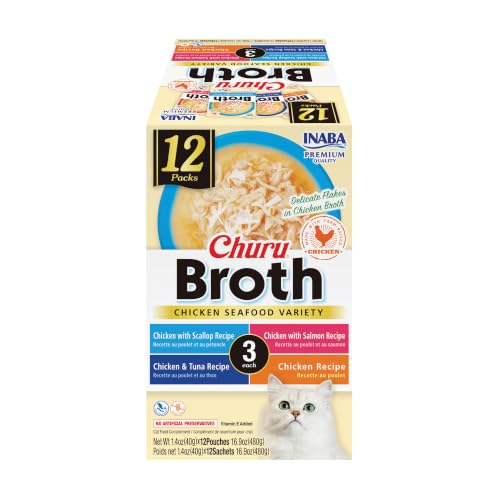
INABA Churu Chicken & Seafood Broth distinguishes itself with a specific moisture and calorie figure: the maker says each 1.4-ounce pouch has 90% moisture and 16 calories. Chicken broth is the first ingredient, with chicken flakes and tuna, scallop or salmon in the variety. The pack suits buyers who want portioned chicken-and-seafood options and a clearly stated moisture percentage.
Its 16 calories are per pouch, so count the topper as part of the cat’s daily food intake rather than treating it as calorie-free hydration. Choose another product if you need a larger container or a broth made for dogs as well as cats.
Bottom line: Pick this if you value a moisture percentage and mixed chicken-seafood flavors.
How to choose broth for cats
Start with the job the broth needs to do: add moisture to kibble, offer a small treat, or provide a pourable topper for multiple pets. Wet food already contains substantial water—canned cat food commonly has about 70% to 80% moisture, while dry food is typically around 10%—so broth is an optional addition, not a replacement for fresh water. Check that the package identifies the product as a topper or complement if you plan to mix it into a complete diet. For routine feeding, keep toppers to about 10% or less of daily calories; the balance should come from complete and balanced food. INABA Churu Chicken & Seafood Broth is the only one here with a calorie figure per pouch, which can help with portion accounting.
Cat broth pouch sizes and portions
Single-serve pouches in this group range from 1.3 to 3 ounces; the multi-pet choice instead comes in a 17.6-fluid-ounce container. A smaller pouch can help limit leftovers, while a larger container makes more sense when several servings will be used. Do not assume a pouch is a full meal: several options are described as toppers, treats or complements, rather than complete diets. Use this comparison as a serving-format guide, then portion according to the package and your cat’s overall food intake.
| Need | Choose by | Products |
|---|---|---|
| Small single serving | 1.3–1.4 oz pouch | Fancy Feast Seafood Broths or Tiki Cat Born Carnivore Broths |
| Larger single pouch | 3 oz pouch with shreds | Solid Gold Chicken Bone Broth |
| Pourable multi-pet container | 17.6 fl oz, cats and dogs | — |
Ingredients and safe serving
Broth made for pets is different from stock prepared for people: human broths can contain onion or garlic, which are unsafe for cats, and may contain excess salt. Choose a pet product whose ingredients suit your cat, and avoid pouring seasoned table broth over food. A topper is not a substitute for a nutritionally complete cat diet, even when it contains animal protein. Introduce a new food gradually and stop serving it if your cat develops vomiting, diarrhea or another adverse reaction; contact a veterinarian for persistent symptoms. Cats with a prescribed diet or a medical condition should have new toppers cleared with their veterinarian.
Storing opened cat broth
Opened broth should be refrigerated promptly and handled with clean utensils; perishable pet food should not sit at room temperature for more than 2 hours, or 1 hour when the temperature is above 90°F. Package storage directions and discard windows control for each product. Avoid leaving a broth-topped meal out all day, since added moisture makes food perishable. Serve a small portion, refrigerate the rest as directed, and discard food left in the bowl after the safe room-temperature window.
Frequently Asked Questions
Can cats have chicken broth every day?
Cats can have a small amount of pet-safe chicken broth as a topper, but broth should not displace complete cat food. Keep toppers to roughly 10% or less of daily calories and count any calories toward the total.
Is broth enough to hydrate a cat?
No; broth is an optional source of moisture, and fresh drinking water should remain available. Dry food is commonly about 10% moisture, compared with roughly 70% to 80% for canned food, so a broth topper may add moisture without replacing the water bowl.
Can kittens eat cat broth toppers?
A topper is not automatically a complete food for growing kittens. Check the package’s life-stage suitability, and use a food labeled complete and balanced for growth as the kitten’s main diet.
How long can cat broth sit out?
Refrigerate opened broth promptly and do not leave perishable pet food out over 2 hours, or over 1 hour above 90°F. Follow the product’s storage and discard directions for any opened container.
Can I give my cat broth made for people?
Avoid seasoned human broth unless its ingredients are verified safe for cats. Onion and garlic can be harmful to cats, and broths may also contain salt or seasonings that do not suit them.