
Best Clear Elastic Cord for Bracelets: 3 Options

For most bracelet makers, FIVEIZERO 6-Size Elastic Cord Set is the best clear elastic cord because its six diameters, from 0.4 mm to 1 mm, give more options for matching cord to bead holes. Choose a single-size spool instead if you already know the diameter your beads require.
Clear elastic cord stretches through a bracelet opening and is secured with a knot; bead-hole fit and cord thickness decide which size works.
We earn a commission if you buy through links on this page. As an Amazon Associate I earn from qualifying purchases. Products are compared on manufacturer specifications, not hands-on testing.
- Best overall: FIVEIZERO 6-Size Elastic Cord Set – Six diameters from 0.4 mm to 1 mm let you match cord to different bead holes.
- Best for a long spool: Paxcoo 0.8 mm Elastic String – The roll contains 120 meters of 0.8 mm cord.
- Best for fine beads: Stretch Magic 0.6 mm Beading Cord – The 0.6 mm polyurethane cord suits projects needing a thinner single diameter.
| Product | Best for | Diameter | Length | Material | Shop |
|---|---|---|---|---|---|
| FIVEIZERO 6-Size Elastic Cord Set | Mixed bead sizes | 0.4–1 mm | — | Elastic plastic rubber | Check Price on Amazon |
| Paxcoo 0.8 mm Elastic String | Long single-size spool | 0.8 mm | 120 m | Elastic plastic rubber | Check Price on Amazon |
| JULIMAIDONG 0.8 mm Elastic Cord | Fine elastic cord | 0.8 mm | 60 m | Elastic polyester spandex | Check Price on Amazon |
| Stretch Magic 0.6 mm Beading Cord | Polyurethane projects | 0.6 mm | 10 m | Polyurethane | Check Price on Amazon |
Clear Elastic Cord for Bracelets
Compare cord diameter, spool length, and material to match the string to your beads and project volume.
FIVEIZERO 6-Size Elastic Cord Set

Six diameters set this assortment apart: it includes 0.4, 0.5, 0.6, 0.7, 0.8, and 1 mm round clear cord. That range is useful when one project uses seed beads and another uses larger-hole beads, since the cord must pass through the holes while still filling them adequately. The material is elastic plastic rubber, and the maker claims abrasion and aging resistance. The tradeoff is that the total length of each roll is not given, so makers who need a known amount of a single size should choose a spool with a length.
Bottom line: Pick this set if you need several diameters to suit different bead-hole sizes.
Paxcoo 0.8 mm Elastic String
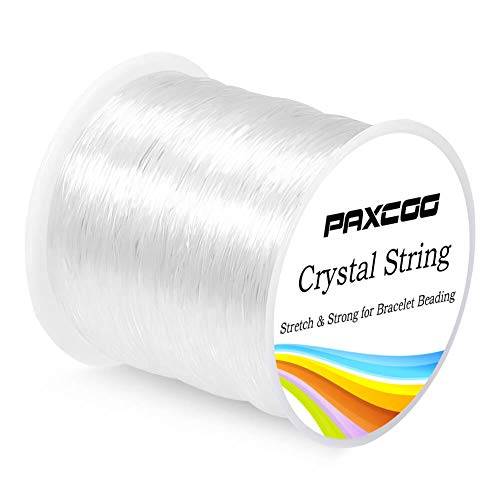
A 120-meter roll makes this 0.8 mm cord the long-spool option among these picks. The cord is made of elastic plastic rubber and is intended for bracelets, necklaces, bead weaving, and crafts; the maker specifically mentions seed, gemstone, and glass beads. A fixed 0.8 mm diameter is convenient when your bead holes accept that thickness, but it does not offer the size range of an assortment. Check that the cord can pass through your smallest bead hole before starting a project, especially if the beads have narrow openings.
Bottom line: Choose this roll when 0.8 mm fits your beads and you want a longer supply.
JULIMAIDONG 0.8 mm Elastic Cord

This 60-meter cord uses elastic polyester spandex, distinguishing it from the plastic-rubber cords in the other options. It measures 0.8 mm in diameter and is described by the maker as crystal clear and easy to tie, with knots that can be hidden among beads. The single size is suited to projects where 0.8 mm fits the bead openings; it is not as adaptable as a multi-diameter set. Its roll is half the length of the 120-meter option, so frequent makers who need the same size may prefer a longer spool.
Bottom line: Pick this cord if 0.8 mm suits your beads and polyester spandex is your preferred material.
Stretch Magic 0.6 mm Beading Cord

At 0.6 mm, this polyurethane cord is thinner than the 0.8 mm single-size alternatives, which can matter for beads with smaller openings. The spool contains 10 meters, and the cord is latex-free; the maker describes it as non-fraying, elastic, and easy to knot. It suits smaller projects or makers who have confirmed that 0.6 mm is a good fit. The shorter spool is a limitation for repeated or long projects, and a thinner cord may be less suitable when larger beads need a more substantial string.
Bottom line: Choose this option for a smaller project that calls for 0.6 mm polyurethane cord.
How to choose clear elastic cord by diameter
Choose the thickest cord that passes through every bead hole without forcing it. A 0.4–0.6 mm range is a useful starting point for small-hole beads, while 0.7–1 mm is more suited to larger openings; the bead-hole size, cord stretch, and number of passes change the fit. These are practical starting ranges, not guaranteed matches, so test a short length against the smallest hole before stringing the full bracelet. If the cord must pass through a bead more than once, account for both passes rather than measuring only the cord’s unstretched diameter. A thick cord can be difficult to thread, while an overly thin one can leave excess space in larger holes.
Elastic cord materials and construction
Elastic bracelet cord commonly uses polyurethane or rubber-based elastic, and the material affects feel, stretch, and handling. The products here include polyurethane, elastic plastic rubber, and polyester spandex; those material names are not interchangeable. Round cord is a practical choice for ordinary bead stringing, while knot placement and bead-hole clearance affect how finished bracelets look. For a clean finish, leave enough tail to tie a secure knot and tuck it into a bead only if the knot fits comfortably. Avoid pulling the cord sharply over bead edges, since rough or sharp holes can abrade elastic over time. Clear cord can also be less visible against light beads, but its appearance depends on bead color and lighting.
How much bracelet cord to buy
Estimate cord by measuring the finished bracelet length, then allow extra for knotting and handling; a bracelet around 7 inches long needs more than 7 inches of cord. A roll measured in meters is easier to compare by length than a vague count of projects, because bead size, bracelet circumference, and the number of passes all change consumption. For occasional single bracelets, a 10-meter spool may be sufficient; repeat projects benefit from a longer roll such as 60 or 120 meters. Multi-size sets are useful when the bead-hole sizes vary, but confirm how much cord each size contains before relying on the set for a long run.
Stringing and knotting elastic bracelets
Cut a generous working length, string the beads, then stretch the cord gently before tying; this helps reveal loose slack before the bracelet is finished. A surgeon’s knot or square knot can secure elastic cord, but a dab of jewelry-safe adhesive may help keep a knot from loosening if the adhesive is compatible with the cord. Keep adhesive away from the beads’ visible surfaces and allow it to cure fully before wearing. Do not overstretch the finished bracelet to force it over a hand: repeated strain can fatigue elastic, and a snug bracelet is more likely to pull at the knot. Inspect cord near bead holes periodically and restring it if it becomes frayed or loses resilience.
Frequently Asked Questions
What diameter elastic cord fits seed beads?
Seed beads often have small holes, so 0.4–0.6 mm cord is a practical starting range. Check the narrowest bead opening and test a short piece before stringing a full bracelet.
How much cord do I need for one bracelet?
For a bracelet around 7 inches long, cut more than 7 inches to leave room for tying and handling. Larger beads or multiple passes through a bead increase the amount needed.
How do I keep an elastic bracelet knot secure?
Tie a square or surgeon’s knot and leave a short tail before trimming. If using adhesive, choose one compatible with the cord and let it cure fully before wearing.
Can elastic bracelet cord be worn in water?
Repeated water exposure can shorten the life of elastic, particularly when combined with soaps or chemicals. Remove a bracelet before swimming or bathing, then let it dry if it gets wet.
When should I restring an elastic bead bracelet?
Restring when the cord shows fraying, persistent slack, or reduced stretch. Check around bead holes and the knot, where rubbing and repeated pulling concentrate wear.