
Best Compression Sleeves for Legs: 4 Fits Compared

Copper Compression Full Leg Sleeve, Medium suits most people seeking a leg sleeve because it covers from the thigh to just above the ankle rather than focusing only on the calf or knee. Choose a calf or knee style instead if you want more localized coverage or a pair of sleeves.
Compression sleeves are close-fitting garments that apply pressure without covering the foot; the right choice depends on which part of your leg you want covered and how the maker says to size it.
We earn a commission if you buy through links on this page. As an Amazon Associate I earn from qualifying purchases. Products are compared on manufacturer specifications, not hands-on testing.
- Best overall: Copper Compression Full Leg Sleeve, Medium – Its coverage runs from the thigh to just above the ankle.
- Best for calf sizing: BLITZU Calf Compression Sleeves, S/M – Sizing guidance uses the thickest part of the calf and addresses between-size choices.
- Best for a pair: Rymora Calf Compression Sleeves, Large, Pair – The package is identified as a pair of calf sleeves.
- Best for knee coverage: Flytex Knee Compression Sleeves, Large – It is a knee sleeve rather than a full leg or calf sleeve.
| Product | Best for | Coverage | Quantity | Sizing method | Shop |
|---|---|---|---|---|---|
| Copper Compression Full Leg Sleeve, Medium | Full leg coverage | Thigh to above ankle | 1 sleeve | Widest thigh measurement | Check Price on Amazon |
| BLITZU Calf Compression Sleeves, S/M | Calf compression | Calf | — | Thickest calf measurement | Check Price on Amazon |
| Rymora Calf Compression Sleeves, Large, Pair | Pair of calf sleeves | Calf | Pair | Size chart | Check Price on Amazon |
| Flytex Knee Compression Sleeves, Large | Knee coverage | Knee | — | — | Check Price on Amazon |
Compression Sleeves for Legs
Start by matching the sleeve’s coverage to the part of your leg you want supported, then use its own sizing approach.
Copper Compression Full Leg Sleeve, Medium
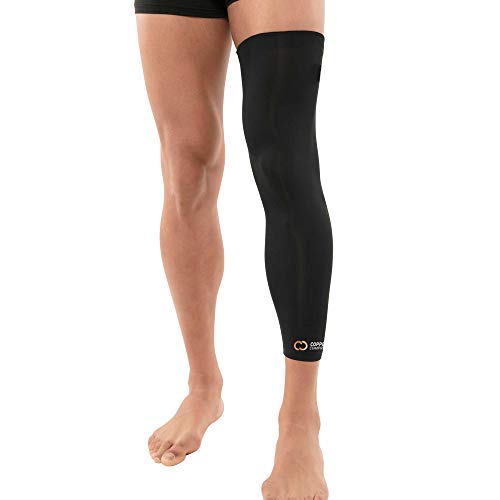
Unlike calf- or knee-only styles, this sleeve runs from the thigh to just above the ankle. It is made from 85% copper-infused nylon and has a sweat-wicking knit; the flexible fabric is intended to fit under joggers or a knee brace. The maker recommends measuring around the widest part of the thigh while standing relaxed and checking the size chart. This is one medium sleeve, so it may not suit someone who wants a pair or needs a different size. Its broad coverage may also be more than needed if the goal is a calf-only sleeve.
Bottom line: Choose this if you want one sleeve covering the thigh, knee and calf.
BLITZU Calf Compression Sleeves, S/M

Unlike the full leg option, this footless style is focused on the calf. Its sizing guidance calls for measuring the thickest part of the calf with a soft tape; it recommends sizing up for a looser fit or down for a tighter fit when between sizes. The specifications also identify graduated compression and intended uses that include running, travel and work on your feet. The size is small/medium. Because the sleeve stops at the calf, it will not provide the thigh coverage of a full leg style; check that the calf measurement matches the maker’s chart before choosing.
Bottom line: Pick this when calf coverage and a calf-based sizing method are the priority.
Rymora Calf Compression Sleeves, Large, Pair
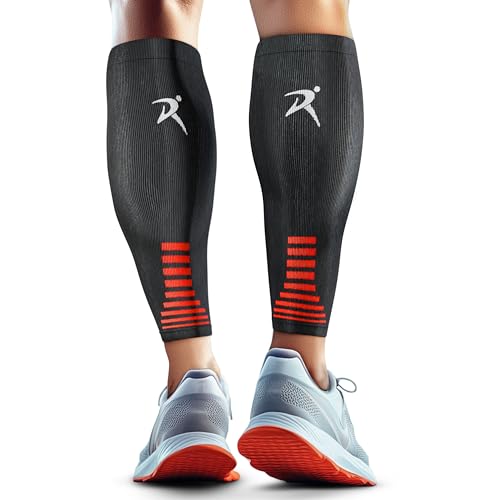
This is the only option identified as a pair, making it distinct from the single full leg sleeve. The calf-focused sleeves are intended for sports, running and shin-splint support, and the maker emphasizes using its size chart rather than estimating from height, weight or clothing size. This version is large and black. It is not a full leg garment, so it will not cover the thigh; the chart-based approach also means the size should not be assumed from another brand’s sizing. Measure and compare against the maker’s chart before selecting this size.
Bottom line: Choose this if you want a pair of calf sleeves and can use its size chart.
Flytex Knee Compression Sleeves, Large

Unlike the thigh-to-calf or calf sleeves, this option is designed around the knee. The specifications describe a black, large knee sleeve and identify multiple knee-related intended uses. They also describe compression technology as the maker’s approach to circulation and swelling; that performance language is the maker’s claim, not a reason to treat a medical condition. The fields recommend wearing both sleeves for optimal protection, but do not establish the package quantity here. This focused coverage is a mismatch if you want compression along the calf or full leg.
Bottom line: Choose this when knee coverage is more important than calf or thigh coverage.
How to Choose Leg Compression Sleeves
Choose a leg compression sleeve by matching its coverage to the area you want covered, then use that product’s sizing method. A thigh-to-calf sleeve covers more of the leg than a calf sleeve, while a knee sleeve concentrates coverage at the joint. For a calf sleeve, measure the thickest part of the calf; for the full leg style here, the maker calls for measuring the widest part of the thigh. Do not transfer one brand’s size to another, since the Rymora maker specifically cautions against assuming sizes match competitors. If the maker provides a chart, compare your measurement with that chart rather than guessing from height or clothing size. When you fall between sizes, use the maker’s fit guidance where available.
Calf and Thigh Sizing
Measure the body area named by the sleeve’s sizing instructions, not a neighboring area. The calf-focused guidance here uses the thickest point of the calf, while the full leg sleeve uses the widest point of the thigh with the wearer standing relaxed. Keep the tape level and snug without pulling it tight enough to indent the skin; an uneven or overly tight measurement can lead to an inaccurate size choice. Follow the particular maker’s chart because size labels such as medium or large are not interchangeable across brands. For the BLITZU calf sleeves, the maker says to size up for a looser fit and down for a tighter fit between sizes. Confirm the lift range before ordering.
Compression Levels and Safe Wear
Compression strength is commonly expressed in millimeters of mercury (mmHg), but these specifications do not provide a pressure range for the sleeves. Medical compression garments often use graduated pressure, with the greatest compression at the ankle and less farther up the leg; do not assume every athletic sleeve has a medical compression rating. People with circulation problems, reduced sensation, diabetes-related nerve problems or a history of blood clots should ask a clinician before using compression garments. Remove a sleeve if it causes numbness, tingling, skin color changes or increasing pain. A sleeve should fit snugly without folds or a band that digs into the skin; a too-tight garment can create pressure points rather than comfortable support.
Leg Sleeve Types at a Glance
Coverage is the clearest way to distinguish leg sleeve types: knee sleeves center on the knee, calf sleeves cover the calf, and full leg styles span a longer section. Decide by the area you want covered, not by a broad claim about sports or recovery. A footless calf sleeve does not cover the foot, while the full leg style here ends above the ankle. The table compares garment coverage and is useful when deciding how much of the leg to include.
| Type | Typical coverage | Choose when |
|---|---|---|
| Knee sleeve | Knee area | You want focused knee coverage |
| Calf sleeve | Calf | You want calf-only coverage |
| Full leg sleeve | Thigh to lower leg | You want broader coverage |
Check that the garment does not bunch behind the knee or roll at an edge during movement. A sleeve that shifts, pinches or leaves persistent marks may be the wrong size or style.
Frequently Asked Questions
How do I measure for calf compression sleeves?
Measure around the thickest part of your calf with a soft tape and compare that number with the maker’s size chart. Use the specific chart for the sleeve because size labels do not reliably transfer between brands.
Should compression sleeves cover the feet?
Calf sleeves are often footless, while compression socks include the foot. Choose a footless design when you want calf coverage without covering your foot, and check the garment’s coverage before selecting a style.
Can I wear compression sleeves while running?
Many calf and leg sleeves are designed for athletic use, but a snug fit should not cause tingling, numbness, skin discoloration or increasing pain. Stop wearing a sleeve that causes those symptoms, and consult a clinician first if you have circulation or sensation problems.
What is graduated compression in a leg sleeve?
Graduated compression means pressure is greatest lower on the limb and decreases higher up, a pattern commonly used in medical compression garments. An athletic sleeve should not be assumed to have a particular medical pressure rating unless that rating is provided.
How tight should a leg compression sleeve feel?
A sleeve should feel snug and stay in place without folds, pinching or a band digging into the skin. If you experience numbness, tingling, color changes or increasing pain, remove it and reassess the fit.