
Best Cool Mini Golf Obstacles for Creative Putting

Mini Golf Obstacles Bridge Arch suits most players because its bridge creates either an underpass or an over-the-top route for a standard golf ball. Choose Mini Golf Hole Drive Obstacle for a focused aiming gate, or Backyard Putting Green Obstacle Arch if you want a portable arch you can reposition; these obstacles add route choices to a putting setup.
We earn a commission if you buy through links on this page. As an Amazon Associate I earn from qualifying purchases. Products are compared on manufacturer specifications, not hands-on testing.
- Best overall: Mini Golf Obstacles Bridge Arch – Its arch offers two routes and is sized around standard golf balls.
- Best for aiming practice: Mini Golf Hole Drive Obstacle – The opening creates a focused passage for direction and speed control.
- Best for a taller arch: My MINI Golf Bridge – Its approximate 8-inch height and 26.5-inch length provide a distinct bridge profile.
| Product | Best for | Route style | Color | Shop |
|---|---|---|---|---|
| Mini Golf Obstacles Bridge Arch | Two-route practice | Underpass or over route | Green | Check Price on Amazon |
| Backyard Putting Green Obstacle Arch | Portable layouts | Over or under arch | Brown | Check Price on Amazon |
| Mini Golf Hole Drive Obstacle | Aiming drills | Opening passage | — | Check Price on Amazon |
| My MINI Golf Bridge | Long bridge shape | Bridge obstacle | Yellow | Check Price on Amazon |
Cool Mini Golf Obstacles Compared
Compare each obstacle’s route options and footprint before adding it to a putting course.
Mini Golf Obstacles Bridge Arch

Mini Golf Obstacles Bridge Arch stands out for giving a standard golf ball two ways through the obstacle: through the opening or over the sloped bridge. That makes it useful when you want to vary a putting line without changing the rest of a backyard green, mat or artificial-turf layout. Place it on a flat surface, then reposition it to alter the target line and approach. The maker says the opening is sized around standard golf balls; measure the opening if your ball or surface setup differs. The green color is the only color given.
Bottom line: Choose this if you want an over-or-under route for standard golf balls.
Backyard Putting Green Obstacle Arch

Backyard Putting Green Obstacle Arch is a repositionable arch for players who want to change a course layout between rounds or move an obstacle between indoor and outdoor play spaces. Its defining choice is whether to send the ball over or under the arch, opening up different angles and approaches. The portable setup suits temporary backyard games and home practice where a fixed feature would get in the way.
Bottom line: Pick this for a movable arch and changing over-under challenges.
Mini Golf Hole Drive Obstacle
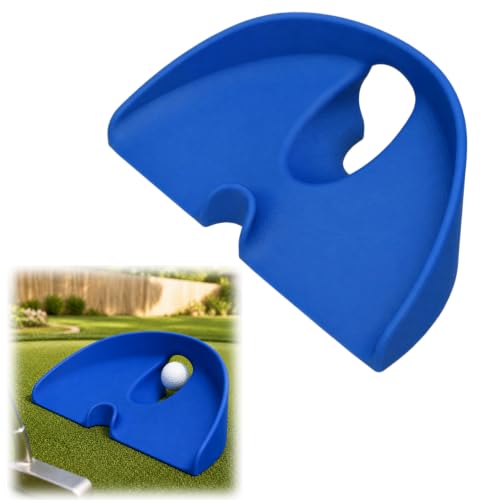
Mini Golf Hole Drive Obstacle focuses the challenge on guiding a putt through an opening rather than choosing between an overpass and underpass. The freestanding design is intended for placement on flat surfaces without tools or complicated assembly, so it can be moved to different angles or distances for a new line. It suits players practicing direction, speed and club control in a home, office or backyard setup. Because an opening’s clearance is crucial, measure it before use if your ball size or surface could make passage tight.
Bottom line: Choose this for a simple gate-style aiming challenge.
My MINI Golf Bridge

My MINI Golf Bridge is distinguished by its bridge dimensions: approximately 26.5 inches long, 4.25 inches wide and 8 inches tall. That elongated shape may suit a course where the obstacle itself should span more of the putting line than a small gate. The yellow bridge is identified as a small size, though the dimensions are the more useful measure for planning space. The feature is limited to size, so choose it for its footprint rather than assuming a particular opening, ball clearance or over-under route.
Bottom line: Pick this when an approximately 26.5-inch bridge fits your layout.
How to Choose Mini Golf Obstacles
Choose an obstacle by the shot it creates: a passage tests aim, while a bridge or arch can add a route choice. A standard golf ball is 1.68 inches in diameter, so a gate should have more than 1.68 inches of clear width to avoid binding; leave extra room if the surface is uneven or the shot is angled. For an obstacle that changes the ball’s path vertically, compare the ball clearance with the arch opening and intended route. A practical rule is to choose a passage at least 2 inches wide for a standard ball, then test placement on the actual mat or turf. Flat, stable positioning matters because a loose obstacle can shift during a putt.
Over-Under Bridges and Aiming Gates
Over-under bridges create a choice of route, while aiming gates concentrate practice on sending the ball through a defined opening. A ball traveling underneath needs enough vertical clearance for its 1.68-inch diameter, plus room for small surface irregularities; a ball going over a sloped bridge depends on the ramp and approach angle. Gates reward a straight line, but a narrow opening becomes frustrating if the ball arrives off-center. Use this guide to match the obstacle to the intended shot.
| Obstacle type | Practice focus | Check before setup |
|---|---|---|
| Bridge or arch | Choose over or under | Opening clearance and stable base |
| Aiming gate | Direction and speed | Passage width versus ball diameter |
A single course can mix the types, but leave enough approach space to make each obstacle’s challenge clear.
Placing Obstacles on a Putting Surface
Set obstacles on a flat, stable surface and keep the ball’s approach line clear; a tilted or bunched mat can alter the route before the ball reaches the obstacle. Put a gate where a straight putt is possible, then move it farther from the starting point to lengthen the aiming challenge. For a bridge route, test both paths from the same starting area so the route choice—not a different distance—creates the change. On a small indoor mat, measure the obstacle footprint and leave room behind it for a missed putt. Repositioning an obstacle is a simple way to make new angles, but avoid placing it where a player may step on it during a turn.
Common Mini Golf Obstacle Setup Mistakes
The most common setup mistake is choosing a tight opening without checking ball clearance: a standard golf ball measures 1.68 inches across, and an angled approach needs additional room. Another mistake is placing an obstacle on an uneven surface, which can cause a ball to veer or the obstacle to move. Start with a level patch, roll a few putts through the intended line, and adjust the approach angle if the ball repeatedly clips an edge. Keep the challenge appropriate to the group: a wide opening is easier for younger or newer players, while a narrower line demands more precision. Make sure players have a clear path around obstacles when taking turns.
Frequently Asked Questions
How wide should a mini golf obstacle opening be?
A standard golf ball is 1.68 inches in diameter, so an opening needs to be wider than that to let the ball pass. Around 2 inches is a practical minimum for a straight approach; allow more clearance for angled shots or uneven surfaces.
Can standard golf balls fit under a bridge obstacle?
A standard golf ball measures 1.68 inches across, so the bridge opening must provide greater vertical clearance for an underpass. Check the specific opening before play, especially if the putting surface is uneven.
How do I make a putting obstacle harder?
Narrow the approach angle or place the obstacle farther from the starting point to demand more control. Keep enough space for a clean putt, and change one factor at a time so the challenge stays predictable.
Where should I place a mini golf obstacle indoors?
Use a flat putting mat with clear space for the approach and for players to walk around the obstacle. Measure the obstacle footprint first, particularly on short mats where an obstacle can leave too little room for a putt.
Are mini golf obstacles safe to leave on the floor?
Keep obstacles out of walkways and have players step around them rather than over them. A loose obstacle on a hard floor can move underfoot, so place it on a stable surface and put it away after play.