
Best Cowboy Boot Stretcher: 4 Options Compared

The HOUNDSBAY Cowboy Boot Stretcher suits most people seeking a cowboy boot stretcher because its Western-boot focus and six steel plugs target small pressure points. Choose another option if the tightness is over the instep, calls for broader width-and-length adjustment, or needs leather softening rather than a rigid tool.
We earn a commission if you buy through links on this page. As an Amazon Associate I earn from qualifying purchases. Products are compared on manufacturer specifications, not hands-on testing.
- Best overall: HOUNDSBAY Bloodhound Cowboy Boot Stretcher – Western-boot focus and six steel plugs let you target localized pressure points.
- Best for width and length: Exshoiu Four-Way Boot Stretcher – The adjustable design offers four-way stretching and five plastic plugs.
- Best for instep pressure: Leather Hero Instep Stretcher – The cast-aluminum tool raises the vamp to create room above the foot.
- Best for stiff leather: Bickmore Boot & Shoe Leather Stretcher Spray – The spray is made for softening leather and can be used with a stretcher.
| Product | Best for | Target area | Fit or size | Material | Shop |
|---|---|---|---|---|---|
| HOUNDSBAY Bloodhound Cowboy Boot Stretcher | Western boot fit | Localized pressure points | Men’s 10–11.5 | Metal and beech hardwood | Check Price on Amazon |
| Exshoiu Four-Way Boot Stretcher | Width and length | Width and length; spot stretching | Men’s 10–14; women’s 11–14 | Plastic with metal components | Check Price on Amazon |
| Leather Hero Instep Stretcher | Instep pressure | Instep and vamp | One size | Cast aluminum | Check Price on Amazon |
| Bickmore Boot & Shoe Leather Stretcher Spray | Stiff leather | Leather softening | 4 ounces | Spray formula | Check Price on Amazon |
Cowboy Boot Stretchers
Match the tool to the source of pressure: a localized spot, the instep, broader width or length, or stiff leather.
HOUNDSBAY Bloodhound Cowboy Boot Stretcher

For Western boots and small pressure points, this model stands apart with six steel bunion plugs and a metal-and-beech-hardwood construction. HOUNDSBAY says the tool is made specifically for cowboy boots; the plugs can be positioned to target multiple spots. Its size is men’s medium, 10–11.5. That makes it a fit to consider when your boot is within that size range and a specific area feels tight. Its focused sizing and localized approach are limitations if you need a different size or want to raise the instep across a wider area.
Bottom line: Choose this if your Western boot fits the size range and pressure is localized.
Exshoiu Four-Way Boot Stretcher

For a broader fit adjustment, the Exshoiu differs from the Western-specific and instep tools by offering four-way width-and-length adjustment. The package includes five plastic plugs for specific-area stretching and a shoe bag. Its size range is men’s 10–14 or women’s 11–14, and the body is heavy-duty plastic with internal metal components. Consider it when your boot is in range and needs general width or length work. Its broad shoe-stretcher design is less specialized for cowboy boots than a tool made expressly for Western boot shapes.
Bottom line: Pick this when width or length adjustment matters more than a Western-specific shape.
Leather Hero Instep Stretcher
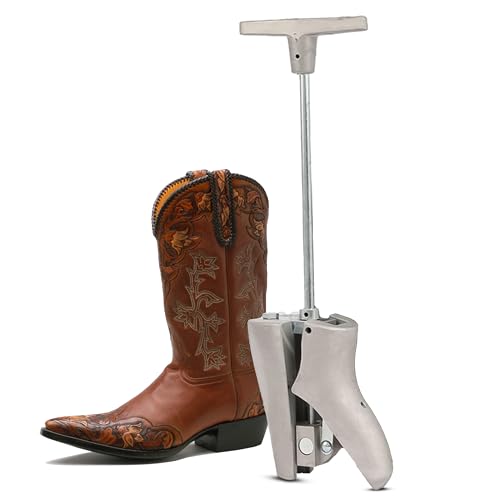
For pressure over the top of the foot, the Leather Hero tool is the specialized choice: it raises the vamp rather than aiming to widen the whole boot. Its adjustable cast-aluminum body applies pressure through a screw mechanism, and it is intended for suitable cowboy, Western, work, hiking, and riding boots. That makes it relevant when the fit problem is specifically at the instep. It is one size, and its focused shape will not address a tight calf opening, short length, or every boot construction; check boot compatibility before use.
Bottom line: Choose this when the tight spot is above the foot and the boot accepts the tool.
Bickmore Boot & Shoe Leather Stretcher Spray
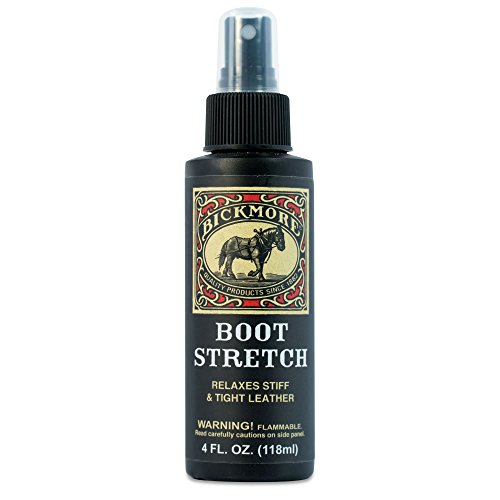
For stiff leather rather than a mechanical adjustment, Bickmore is a pump spray designed to soften tight footwear while it is worn or alongside a wooden stretcher. It is intended for suede, nubuck, smooth leather, and other footwear materials, including Western and cowboy boots. The bottle holds 4 ounces. This option fits someone addressing stiffness across an area, but it does not provide a rigid frame or targeted plugs on its own. Because leather finishes can react differently, test an inconspicuous spot before applying it broadly.
Bottom line: Pick this for stiff leather when you want a softening aid, not a standalone tool.
How to choose a cowboy boot stretcher
Choose by the location of pressure: plugs suit a small spot, a vamp raiser targets the instep, and a four-way tool addresses width and length. Boot stretchers apply gradual mechanical force; leather conditioners or stretching sprays soften material but do not replace a tool when the boot needs a shaped adjustment. For a single painful pinch point, choose a tool with plugs; for pressure across the top of the foot, choose an instep tool. Avoid forcing any screw or handle: stop if the boot resists sharply or its seams distort. Stretchers can improve snugness, but they cannot reliably fix a boot that is substantially too short or the wrong overall size.
Where cowboy boots feel tight
The location of discomfort is the most useful fit clue: toe length, forefoot width, instep height, and calf opening are different problems. A boot stretcher for the foot portion cannot correct a narrow shaft opening, and a vamp raiser is not a calf stretcher. Compare the tight spot with the adjustment point before inserting a tool. Western boots also vary in construction and opening shape, so confirm that a tool can enter and sit securely without bending or catching on the lining. If the boot is tight in several areas, adjust one area at a time and reassess rather than increasing pressure everywhere at once.
| Fit problem | Tool type to consider |
|---|---|
| One small pressure point | Stretcher with removable plugs |
| Pressure over the top of the foot | Instep or vamp raiser |
| Broad width or length tightness | Adjustable four-way stretcher |
| Stiff leather across an area | Leather stretching spray with a suitable stretcher |
How to stretch leather boots carefully
Leather generally responds best to gradual adjustment rather than sudden force or heat. Place the tool so its contact point matches the tight area, then make small turns and check the fit between adjustments; forcing a stretcher can stress seams, lining, or the upper. Spray products should be tested on a hidden area first, especially on suede or nubuck, since finishes may react differently. Heat guns, soaking, and aggressive stretching can damage leather or change its shape. When pressure persists after a modest adjustment, or the boot has delicate construction, a cobbler can assess whether stretching is appropriate.
When a boot stretcher cannot fix the fit
A stretcher changes room in a limited area; it does not turn a short boot into a longer one or make every shaft opening compatible with every calf. If toes press against the front or the boot will not accept the tool, start by checking whether the size and shape are suitable rather than adding force. A snug leather boot may ease somewhat with wear, but persistent numbness or pain is a reason to stop wearing it and reassess the fit. Choose localized stretching only when the rest of the boot fits correctly; broad discomfort usually calls for a different size or last.
Frequently Asked Questions
Can a cowboy boot stretcher make boots longer?
Some adjustable shoe stretchers offer length adjustment, but a stretcher cannot reliably correct a boot that is substantially too short. If your toes press against the front, choose a better-fitting size instead of forcing the tool.
How do I stretch the instep of cowboy boots?
Use an instep or vamp raiser when pressure is over the top of the foot. Increase screw pressure gradually and stop if the upper or seams begin to distort.
Can I use stretching spray on suede boots?
Some sprays are formulated for suede, but test a hidden area first because finishes can react differently. Apply only where you need added room and pair it with a suitable stretcher if the fit needs mechanical adjustment.
Do cowboy boot stretchers work on the shaft?
A foot-shaped stretcher generally addresses the foot portion, not a tight calf opening. Check that a tool is designed to reach and support the shaft before using it; otherwise seek a cobbler’s assessment.
How much pressure should I use with a boot stretcher?
Use only gradual pressure and reassess after small adjustments; do not force the handle or screw against strong resistance. Stop if stitching, lining, or leather begins to deform.