
Best Dental Floss for Bridges: 3 Designs Compared

Oral-B Super Floss is the best fit for most people with bridges because its stiffened end guides floss under appliances and its spongy section cleans around them. Choose a three-section design instead if you want a regular floss section in the same strand for tighter gumline spaces.
Bridge floss is shaped to pass beneath a fixed bridge, where ordinary floss may be difficult to position. Work gently beneath the bridge; snapping floss against the gums can cause injury.
We earn a commission if you buy through links on this page. As an Amazon Associate I earn from qualifying purchases. Products are compared on manufacturer specifications, not hands-on testing.
- Best overall: Oral-B Super Floss – Combines a stiffened end for threading beneath bridgework with a spongy-fiber section.
- Best for three-zone cleaning: VINSULLA 3-in-1 Orthodontic Floss – Each strand combines a threader, spongy mesh and regular floss.
- Best for unflavored floss: RAZOKO 3-in-1 Floss – Offers a three-section design in unflavored pre-cut strands.
| Product | Best for | Pre-cut strands | Design | Flavor | Shop |
|---|---|---|---|---|---|
| Oral-B Super Floss | Bridge thread-through | 100 | Stiffened end, spongy-fiber section | Mint | Check Price on Amazon |
| VINSULLA 3-in-1 Orthodontic Floss | Three-zone routine | 160 | Threader, spongy mesh, regular floss | Unflavored | Check Price on Amazon |
| RAZOKO 3-in-1 Floss | Unflavored option | 120 | Threader, spongy, regular floss | Unflavored | Check Price on Amazon |
Dental floss for bridges
Compare the strand design and count to find a flossing style that fits your bridge-cleaning routine.
Oral-B Super Floss
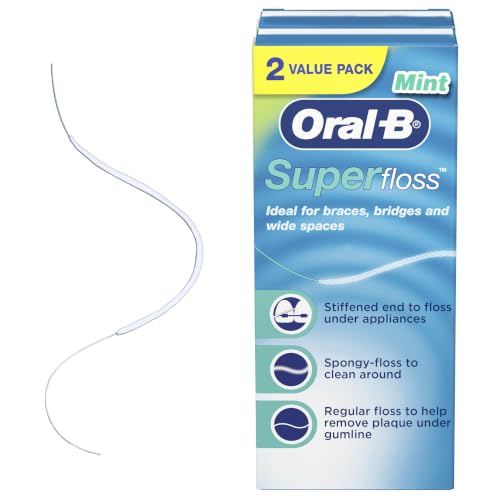
Oral-B Super Floss uses a stiffened end and a spongy-fiber section, rather than the three separate zones found in the other floss picks. Oral-B says the stiffened tip is for threading beneath appliances such as bridges, and the spongy fiber is for cleaning around appliances and wide spaces. The package contains 100 pre-cut strands and the floss is mint flavored. This is a straightforward option if threading and a spongy cleaning section are the priorities. Its design does not include the regular floss section found in the three-in-one alternatives, which may matter if you want one strand for both bridge spaces and tighter gumline areas.
Bottom line: Pick this if a dedicated threader and spongy section are your main needs.
VINSULLA 3-in-1 Orthodontic Floss

VINSULLA 3-in-1 Orthodontic Floss is the only option here with an expressly described regular floss zone alongside its threader and spongy section. The maker says the stiffened end is for insertion beneath wires, while the mesh handles wider gaps and the smooth section is for tighter gumline spaces. Its package has 160 pre-cut strands, and the floss is unflavored. This may suit someone who wants to move between bridge gaps and narrow spaces without switching strand styles. The three zones also mean more design features to handle than a simple threader-and-spongy floss; check that the strand feels manageable for your routine.
Bottom line: Choose this if you want threader, spongy and regular sections in each strand.
RAZOKO 3-in-1 Floss

RAZOKO 3-in-1 Floss gives you a three-part strand like the other 3-in-1 option, but the package contains 120 pre-cut strands. Its maker describes use around bridges, braces, implants and narrow or wide gaps, and identifies the sections as a built-in threader, spongy floss and regular floss. The floss is unflavored. That combination can fit a routine that needs both threading and different strand textures, without a mint flavor. The count is lower than the other two picks, so consider how often you floss and whether the three-zone format is useful to you before choosing.
Bottom line: Pick this if you want unflavored, three-section floss in pre-cut strands.
How to choose dental floss for bridges
Choose bridge floss with a stiffened end if you need to guide a strand beneath fixed bridgework, then use a spongy section to clean along the underside and around supporting teeth. A three-zone strand adds regular floss for tighter spaces. The right design depends on the spaces around your bridge: wide gaps benefit from a thicker section, while a close gumline may call for a thinner segment. Bridge floss is not the only cleaning tool; an interdental brush can suit open spaces if it fits without force. Use this decision rule: if regular floss cannot pass under the bridge without being forced, choose a threader-style strand rather than pushing floss through a tight contact.
How to floss under a fixed bridge
Pass the stiff end gently beneath the bridge, then move the spongy portion back and forth along the bridge underside and around the supporting teeth. Pull the strand through rather than snapping it toward the gum. A bridge has an artificial tooth connected to crowns or abutments, leaving an underside that needs cleaning; flossing only between the visible teeth misses that surface. If the strand catches, do not yank it: back it out and rethread from the other side. A floss threader can help position ordinary floss, while a water flosser can be an additional cleaning method, not a reason to skip brushing or professional guidance.
Bridge floss designs compared
Bridge floss designs mainly differ in whether they combine a threader with one or more cleaning textures. Use the table to match the strand format to the spaces you need to clean.
| Design | Useful for | What to consider |
|---|---|---|
| Threader plus spongy section | Passing under bridgework and cleaning wider gaps | May not include a regular floss zone |
| Threader, spongy and regular sections | Moving between wider gaps and tighter spaces | Requires using the right section for each area |
| Separate threader and floss | People who already have preferred floss | Requires threading floss separately |
Choose based on actual access, not the number of features alone. A strand that passes beneath the bridge gently is more useful than one that is too bulky to maneuver.
Bridge flossing mistakes and gum safety
The main mistake is snapping floss into the gum or pulling hard when it catches. Use a slow, controlled motion and guide the strand beneath the bridge without forcing it through a tight contact. Clean both the underside of the artificial tooth and the areas around the supporting teeth; food and plaque can collect where the bridge meets the gum. If floss repeatedly shreds, catches or causes bleeding, ask a dentist or hygienist to check the bridge fit and demonstrate a suitable technique. Bleeding that continues despite gentle cleaning also deserves professional advice. Do not use a threader or brush that must be forced into a space.
Frequently Asked Questions
How often should I floss beneath a dental bridge?
Clean beneath a dental bridge daily as part of your regular oral hygiene routine. A threader-style floss can help pass beneath the bridge, and gentle movement reduces the risk of snapping the strand against the gums.
Can regular floss clean under a fixed bridge?
Regular floss can work beneath a bridge when guided with a separate floss threader. A stiffened-end strand combines the threading aid with the floss, which can be simpler when cleaning beneath bridgework.
Is a water flosser enough for bridge cleaning?
A water flosser can help rinse around bridgework, but it should not replace brushing or any cleaning method your dental professional recommends. For floss, select a strand that can pass beneath the bridge without force.
Why does floss catch under my bridge?
Floss can catch because of the bridge shape, a rough edge or a tight space. Back the strand out gently rather than yanking, and have a dentist or hygienist check repeated catching or shredding.