
Best Dishwashing Detergent for Hard Water Compared

For most people, Truly Free Dishwasher Detergent Powder is the closest match because it is a dishwasher detergent powder that says it tackles mineral buildup and hard-water spots. Choose BLUELAND Dishwasher Detergent Tablets, 60 Count instead if plastic-free tablets are your priority, or a booster such as Lemi Shine Natural Dish Detergent Booster, 2 Pack or ACTIVE Dishwasher Detergent Booster Powder, 32 oz if you want to keep using your regular detergent.
Hard water leaves mineral deposits as water dries; a dishwasher detergent cleans food soils, while a booster is an additive used alongside detergent.
We earn a commission if you buy through links on this page. As an Amazon Associate I earn from qualifying purchases. Products are compared on manufacturer specifications, not hands-on testing.
- Best overall: Truly Free Dishwasher Detergent Powder – A dishwasher detergent powder whose maker says it targets hard-water mineral buildup and spots.
- Best for plastic-free tablets: BLUELAND Dishwasher Detergent Tablets, 60 Count – The product is sold as plastic-free tablets and comes in a 60-count pack.
- Best for citric-acid boosting: Lemi Shine Natural Dish Detergent Booster, 2 Pack – A citric-acid additive intended to pair with dishwasher detergent.
| Product | Best for | Product type | Form | Hard-water role | Shop |
|---|---|---|---|---|---|
| Truly Free Dishwasher Detergent Powder | Hard-water powder | Detergent | Powder | Targets mineral buildup | Check Price on Amazon |
| BLUELAND Dishwasher Detergent Tablets, 60 Count | Plastic-free tablets | Detergent | Tablet | No specific hard-water role | Check Price on Amazon |
| Lemi Shine Natural Dish Detergent Booster, 2 Pack | Citric-acid booster | Additive booster | Liquid | Targets mineral spots | Check Price on Amazon |
| ACTIVE Dishwasher Detergent Booster Powder, 32 oz | Booster powder | Additive booster | Powder | Targets residue and limescale | Check Price on Amazon |
Dishwashing Detergents for Hard Water
Compare detergent formats with additive boosters, which supplement rather than replace regular dishwasher detergent.
Truly Free Dishwasher Detergent Powder
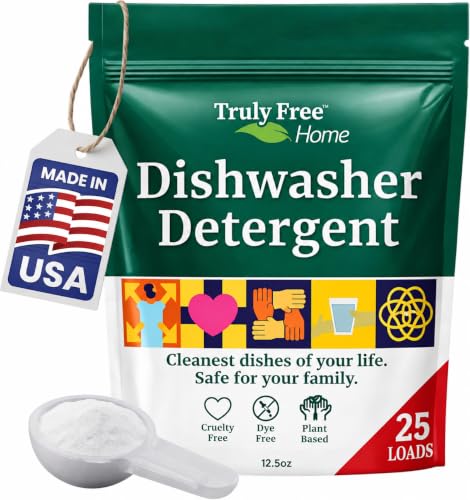
Unlike the other options, this is a standalone dishwasher detergent powder marketed for hard-water stains as well as grease. Truly Free says its plant-derived surfactants and biodegradable cleaning ingredients help break down grime and mineral buildup; the package contains 12.5 ounces and is described as 25 loads. It suits shoppers who want a powder detergent rather than tablets or a separate additive. The limitation is the smaller stated load count compared with the 60-tablet pack, so it may not suit households that prefer premeasured tablets.
Bottom line: Choose this if you want a powder detergent specifically marketed for hard-water stains.
BLUELAND Dishwasher Detergent Tablets, 60 Count

These tablets stand apart with a plastic-free format, rather than a powder or a hard-water additive. BLUELAND says the formula uses enzymes to lift baked-on food and oxi action for coffee, tea and wine stains; the pack contains 60 tablets. The maker directs users to place one tablet in the main dispenser, making this a fit for people who prioritize premeasured doses and avoiding plastic-wrapped pods. The product is not presented as a dedicated mineral-spot solution, so hard-water households may need to consider a separate booster or rinse aid.
Bottom line: Pick these if plastic-free tablets matter more than a dedicated mineral-residue formula.
Lemi Shine Natural Dish Detergent Booster, 2 Pack

Unlike the standalone detergents, this Lemi Shine product is a booster that must be paired with dishwasher detergent. The maker says its citric-acid formula targets hard-water spots, film and mineral deposits; it is also described as plant-based and EPA Safer Choice Certified, without dyes, phosphates or bleach. The package is two 24-ounce containers. It suits people who want to supplement an existing detergent, but it is not a replacement wash detergent, so it is the wrong fit for shoppers seeking a single product to clean a full load.
Bottom line: Choose this to add a citric-acid booster to detergent you already use.
ACTIVE Dishwasher Detergent Booster Powder, 32 oz
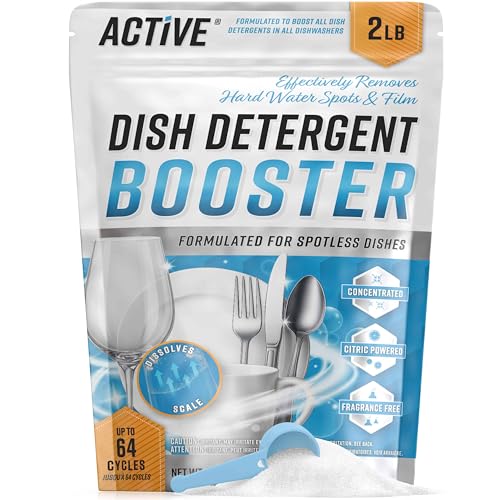
ACTIVE differs from the other choices by serving as a prewash powder additive rather than a standalone detergent or tablet. The maker says it works alongside pods, gel and powder detergent to address hard-water residue and limescale; it also cautions that the powder will not reverse permanently etched glass or address grease and oil-based residue. The container holds 32 ounces. This suits households that want to supplement their usual detergent for mineral film, but it cannot take the place of a detergent that handles food soils.
Bottom line: Choose this when you want a powder additive for mineral residue, not a standalone detergent.
How to choose a hard-water dishwasher detergent
Start by separating detergent from additives: detergent handles food soils, while a booster addresses a narrower cleaning problem alongside detergent. Water hardness is commonly measured in grains per gallon (gpg); water above 7 gpg is generally classified as hard, and above 10.5 gpg as very hard. If your glasses show removable cloudy film, a detergent or booster aimed at mineral residue may help; permanent etching cannot be cleaned away. For a convenient premeasured dose, choose a tablet; for an adjustable powder format, choose powder. If you have hard-water spots but already like your detergent, a booster is the relevant category rather than another detergent.
What hard water does to dishwasher results
Hard water contains dissolved minerals, chiefly calcium and magnesium, that can leave spots or a cloudy film when droplets dry. A visible white residue may be removable mineral deposit, while etched glass has lasting surface damage; a booster cannot reverse etching. Check your local water utility report or use a hardness test strip to estimate hardness in gpg before changing products. Water hardness also affects whether a dishwasher’s built-in softener, where available, needs salt. Rinse aid helps water sheet off dishes and can reduce drying spots, but it does not replace detergent for food soils. If residue is greasy rather than chalky, changing to an additive for limescale is unlikely to address the main issue.
Detergent, tablet and booster formats
Choose a format based on whether you need a complete wash detergent or a targeted additive. Tablets provide a premeasured dose, while powders can be measured to the dispenser’s fill line; do not overfill, since excess detergent can leave residue. Boosters are not interchangeable with detergent: they supplement detergent and generally target mineral film rather than food and grease. The table distinguishes the roles of the four options.
| Need | Product type | Practical distinction |
|---|---|---|
| Complete dishwasher wash | Detergent powder or tablet | Handles food soils; format determines dosing |
| Existing detergent, mineral film | Booster additive | Use alongside detergent, not instead |
| Permanent glass etching | No wash additive reverses it | Prevention matters; deposits and etching differ |
Using boosters and preventing residue
Use a booster only with standard dishwasher detergent when the product is an additive; adding a booster alone leaves the load without its main detergent. Typical residential dishwashers have separate main-wash and rinse-aid dispensers, and a booster belongs only where its own directions specify. Avoid mixing cleaning products in the dispenser or adding extra detergent to compensate for hard water, because overdosing can contribute to film. For hard water above 7 gpg, first distinguish mineral spotting from etched glass and greasy food residue; each has a different cause. Keep the filter clear and scrape large food scraps so water can circulate through the load.
Frequently Asked Questions
How hard does water need to be for spots to appear?
Hard water is generally above 7 grains per gallon, and spotting can become more noticeable as hardness rises. Actual results also depend on drying and rinse-aid use, so a water test helps distinguish mineral issues from other residue.
Can dishwasher detergent remove etched glass?
No, permanent etching is surface damage rather than a removable deposit. A mineral booster may address removable film, but it cannot restore etched glass.
Should I use rinse aid with hard water?
Rinse aid can help water sheet off dishes and reduce drying spots, but it does not replace detergent for food soils. Check whether your dishwasher has a rinse-aid dispenser and use the product’s directed dose.
Can a dishwasher booster replace detergent?
No, a booster is an additive and should be used alongside standard dishwasher detergent. Detergent is needed to clean food and grease soils during the wash.
Why are dishes still cloudy after washing?
Cloudiness may be removable mineral film or permanent glass etching, and the two need different expectations. Test water hardness in grains per gallon and inspect whether the haze changes when cleaned by hand; unchanged haze may be etching.