
Best Doberman Dog Coats for Winter: 4 Fits Compared

AOFITEE Full Body Coat, XXX-Large is the strongest match for most Dobermans because its full-body design is explicitly sized with Great Danes and Dobermans in mind. Doberman owners who want a shorter coat, built-in harness points, or an easier layering style may prefer one of the other cuts, but should check the coat’s measurements against their dog.
We earn a commission if you buy through links on this page. As an Amazon Associate I earn from qualifying purchases. Products are compared on manufacturer specifications, not hands-on testing.
- Best overall: AOFITEE Full Body Coat, XXX-Large – Full-body coverage and the specifications explicitly name Dobermans.
- Best for leg coverage: IDOMIK Full Body Coat with Harness, XL – The full-body fleece jacket includes legs, a high collar, and a back zipper.
- Best for built-in harness: QBLEEV Warm Jacket with Harness, XL – Two D-rings and an adjustable back strap make leash attachment part of the coat.
| Product | Best for | Coverage | Closure | Leash attachment | Shop |
|---|---|---|---|---|---|
| AOFITEE Full Body Coat, XXX-Large | Doberman coverage | Four legs | Back zipper | Built-in harness | Check Price on Amazon |
| IDOMIK Full Body Coat with Harness, XL | Leg coverage | Four legs | Back zipper | Built-in D-ring | Check Price on Amazon |
| QBLEEV Warm Jacket with Harness, XL | Harness access | Vest | Back buckle and strap | Two D-rings | Check Price on Amazon |
| Yoochee Winter Coat, XL | Reflective vest | Vest | Zipper with Velcro flap | Leash hole | Check Price on Amazon |
Doberman winter dog coats
Compare each coat’s coverage and fastening style, then select a size using your Doberman’s measurements.
AOFITEE Full Body Coat, XXX-Large
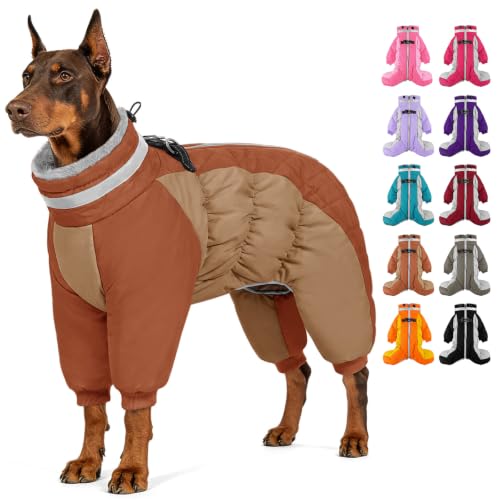
AOFITEE Full Body Coat, XXX-Large is the only option here whose product name explicitly identifies Dobermans, and it uses a four-legged design rather than a vest cut. The maker says the polar fleece lining retains warmth and the water-resistant outer layer helps shield against cold-weather moisture. A back zipper and zipper guard form the closure, with a buckle intended to keep the zipper from sliding. This choice suits Dobermans that tolerate leg coverage; dogs that dislike sleeves or need a quick on-and-off layer may do better in a simpler vest. Measure chest girth and back length before choosing XXX-Large.
Bottom line: Choose this if your Doberman needs full-body coverage and accepts sleeves.
IDOMIK Full Body Coat with Harness, XL

IDOMIK Full Body Coat with Harness, XL adds leg coverage and a foldable high collar, making it distinct from the shorter vest-style coats. The maker describes its outer layer as water-resistant and says fleece lining adds warmth; a back zipper handles dressing, and a built-in D-ring provides a leash attachment point. This cut suits a Doberman comfortable wearing fabric over all four legs, particularly when neck coverage is useful. Its XL size is not enough on its own to establish a Doberman fit, so compare your dog’s chest girth and back length with the size chart before ordering.
Bottom line: Pick this for a Doberman that needs leg and neck coverage.
QBLEEV Warm Jacket with Harness, XL

QBLEEV Warm Jacket with Harness, XL stands apart with two D-rings and an adjustable strap on the back, so the leash connection is built into a vest-style coat. The maker says the water-resistant fabric, fleece lining, and windproof turtleneck are intended for cold-weather use; reflective strips add visibility in low light. The vest cut may suit Dobermans that resist full-leg garments, while adjustable collar straps allow some change in neck fit. The specifications give an XL size but no measurements, so check the brand’s chart against chest girth and back length rather than relying on the size label.
Bottom line: Choose this when built-in leash points matter more than leg coverage.
Yoochee Winter Coat, XL

Yoochee Winter Coat, XL offers a vest-style layer with an integrated leash hole, rather than the harness rings or four-leg coverage found on other choices. The maker says its plush lining adds warmth and its waterproof exterior helps keep a dog dry in drizzle or snow. A zipper has a Velcro flap and an inner guard, while reflective strips are intended to improve nighttime visibility. This simpler coverage suits Dobermans that need a coat over the body but not sleeves; the XL label alone cannot confirm fit, so compare actual chest and back measurements before buying.
Bottom line: Pick this for a reflective vest cut with a leash opening.
How to choose a winter coat for a Doberman
Choose by body measurements and movement, not the breed label or weight alone. Measure chest girth at the widest part of the rib cage and back length from the base of the neck to the tail base; a deep chest can make a coat that fits the back feel tight around the body. A practical fit check is to slide two fingers beneath the coat at the chest and neck, then watch the dog walk, sit, and turn. If fabric pulls across the shoulders or limits stride, choose a different cut. Short-haired dogs generally benefit more from insulated coverage in cold, wet, or windy weather than heavily coated breeds, but activity level and individual tolerance matter.
Vest or full-body Doberman coat
Vest coats cover the trunk while leaving the legs free, whereas full-body coats add sleeves and often extend coverage toward the neck. A vest is usually easier for dogs that dislike garments around their legs; a four-leg style can cover more of the body but must allow unrestricted shoulder, elbow, and hock movement. Dobermans have a deep chest, so confirm chest girth before choosing a size even if the back length appears right. Use this comparison to prioritize the feature that matters most to your dog.
| Need | Coat style to consider | Fit check |
|---|---|---|
| Less leg fabric | Vest | Chest and back length |
| More body coverage | Full-body coat | Chest, back, and leg movement |
| Leash connection on coat | Built-in leash point | Attachment position and fit |
How to measure a Doberman for a coat
Measure chest girth at the widest rib-cage point and back length from the neck base to the tail base; use both numbers when a chart offers both. Keep the tape snug but not tight, and measure while the dog stands naturally. A size label such as XL is not interchangeable across brands, and coat patterns can change how a garment sits on a deep-chested dog. If the coat has legs, compare leg openings and sleeve length as well as the torso measurements. Recheck fit with the coat fastened: two fingers should fit beneath the neck and chest without forcing the fabric, and the dog should be able to walk and sit normally.
Cold-weather coat safety for Dobermans
Use a coat that stays clear of the throat, armpits, and joints; rubbing at those points can irritate skin during repeated walks. Reflective trim helps a dog be seen in dim conditions, but it does not replace a leash or other visibility measures. Remove wet clothing indoors and let the coat dry fully before reuse; damp fabric against skin can chill the dog and cause rubbing. Watch for shivering, reluctance to walk, or repeated attempts to remove the garment, and move indoors if the dog seems uncomfortable. Never leave a dressed dog unattended if the coat can snag or catch on objects.
Frequently Asked Questions
How should a winter coat fit a Doberman?
A Doberman coat should sit close without restricting breathing or stride. Leave room for two fingers beneath the chest and neck, and check for pulling at the shoulders when the dog walks.
Should a Doberman wear a coat in winter?
A short-haired Doberman may benefit from a coat in cold, wet, or windy conditions, especially on slower walks. Use the dog’s comfort and the weather rather than a fixed temperature cutoff, since activity and individual tolerance change warmth needs.
Can a dog wear a coat with a harness underneath?
A separate harness can add bulk beneath a coat, so check that straps do not pinch or shift the garment. A coat with built-in leash points avoids layering a separate harness, but the attachment and fit still need to be secure.