
Best Floor Cleaning Soap: 4 Formulas Compared

Lapew Baccarat Mop Soap, 36 oz suits most people because its 2-ounce-per-gallon dilution gives a clear starting point for cleaning sealed hard floors. Choose another formula if a particular scent, smaller bottle, or broader stated mop compatibility matters more to you.
We earn a commission if you buy through links on this page. As an Amazon Associate I earn from qualifying purchases. Products are compared on manufacturer specifications, not hands-on testing.
- Best overall: Lapew Baccarat Mop Soap, 36 oz – It gives a specific dilution of 2 ounces per gallon and is formulated for several sealed hard-floor types.
- Best for mop flexibility: Mop Soap Brazilian Bliss, 32 oz – Its product name and features describe compatibility with steam, spin, flat, and microfiber mops.
- Best for smaller bottles: Blyss Mop Soap Brazilian Waves, 16.9 oz – The 16.9-fluid-ounce bottle is smaller than the other products here.
| Product | Best for | Bottle size | Dilution guidance | Stated floor types | Shop |
|---|---|---|---|---|---|
| Lapew Baccarat Mop Soap, 36 oz | Measured dilution | 36 fl oz | 2 oz per gallon | LVP, laminate, tile | Check Price on Amazon |
| Mop Soap Brazilian Bliss, 32 oz | Mop flexibility | 32 fl oz | — | Hardwood, tile, laminate and stone | Check Price on Amazon |
| Luxury Mop Soap Grand Luxe, 32 oz | Concentrated formula | 32 fl oz | Small amount; exact dose not given | Tile, sealed hardwood, laminate | Check Price on Amazon |
| Blyss Mop Soap Brazilian Waves, 16.9 oz | Smaller bottle | 16.9 fl oz | — | LVP, sealed hardwood, tile | Check Price on Amazon |
Best floor cleaning soap
Compare these mop soaps by bottle size, dosing guidance, and the sealed surfaces named for each formula.
Lapew Baccarat Mop Soap, 36 oz
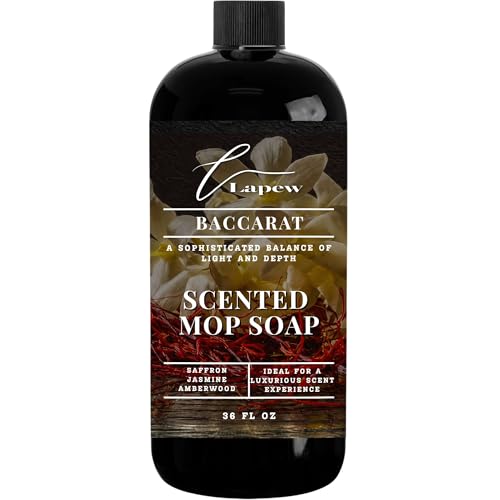
The clearest dosing guidance sets this concentrate apart: the maker recommends 2 ounces per gallon of warm water. The 36-ounce bottle is intended for sealed hard floors, including LVP, laminate, ceramic tile, sealed hardwood, and sealed stone. Its low-foam formula is described as compatible with traditional mops, refillable spray mops, and select wet/dry vacuum systems. That dosing makes it a practical choice for buyers who want a defined mix rather than estimating a small amount. The limitation is that compatibility with wet/dry vacuums is selective, so verify the machine accepts cleaning solution before using it.
Bottom line: Choose this if you want a dose and clean sealed surfaces with a compatible mop.
Mop Soap Brazilian Bliss, 32 oz

The compatibility with steam, spin, flat, and microfiber mops distinguishes this 32-ounce cleaner. The Brazilian Bliss fragrance is described with pistachio, salted caramel, and vanilla notes, and the product name also calls out a low-suds, no-residue formula for hardwood, tile, laminate, and stone. That broad mop-type language may appeal to households using more than one kind of mop. The limitation is that no specific dilution amount appears in the specifications, so buyers who want an exact bucket ratio should favor a formula with a dose.
Bottom line: Pick this for varied mop types and its Brazilian Bliss fragrance.
Luxury Mop Soap Grand Luxe, 32 oz
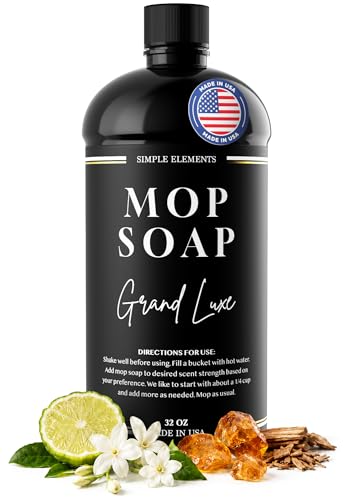
The Grand Luxe formula emphasizes concentration and a hotel-inspired fragrance rather than an exact dose. Its 32-ounce bottle is named for use on tile, sealed hardwood, laminate, vinyl, and stone, and the product claims a no-streak, no-residue, no-white-cast finish. Bergamot, jasmine, amber, and cedarwood are the scent notes given. The concentrate may suit buyers looking for a smaller measured pour and a fragrance-forward cleaner.
Bottom line: Choose this if scent and a concentrated formula matter more than precise dosing.
Blyss Mop Soap Brazilian Waves, 16.9 oz

The 16.9-ounce bottle is the smallest option here, making Brazilian Waves the compact pick for buyers who do not want a larger container. The formula is described as plant powered and intended for LVP, sealed hardwood, tile, laminate, vinyl, and other sealed hard surfaces. Its tropical fragrance combines ocean breeze, citrus blossoms, and coconut; the product also claims a streak-free finish without sticky residue, cloudy buildup, wax, or oils.
Bottom line: Pick this if you prefer the smallest bottle and clean the named sealed floors.
How to choose floor cleaning soap
Choose a floor cleaner by matching its surface compatibility first, then compare dilution and mop compatibility. Hardwood and stone require particular attention to whether the surface is sealed: these formulas name sealed flooring, so do not assume the same guidance applies to unfinished wood or unsealed stone. Concentrates need the correct water ratio; adding extra cleaner is not a shortcut because excess cleaner can leave a film. Among these options, one gives a measured dose of 2 ounces per gallon, while the others do not provide a specific ratio in their fields. If you use a wet/dry floor machine, confirm the machine permits detergent; compatibility claims can be limited to select systems.
Floor finish and moisture matter
Sealed and unsealed floors are not interchangeable cleaning surfaces. A finish creates a barrier on wood or stone, while unsealed material can absorb moisture or cleaner; these products name sealed floors, not unfinished surfaces. For wood, use a damp mop rather than leaving standing water, and dry spills promptly. Tile can have different needs at the grout lines: grout is porous even when the tile face is glazed, so avoid flooding joints. If your floor care instructions prohibit water-based cleaners, do not infer that a multi-surface label overrides that restriction. A useful rule is to use only products that name your floor’s surface and finish, and wring the mop until it is damp rather than dripping.
Concentrates, foam, and mop type
Concentrated cleaners need less liquid than ready-to-use formulas, but the usable amount depends on the mix ratio. A precise dose helps prevent overuse; for the formula with a 2-ounce-per-gallon direction, measure rather than pouring by eye. Low-foam formulas are useful in machines that require low suds, but they are not automatically compatible with every wet/dry vacuum. Traditional string mops, flat mops, and microfiber pads also hold different amounts of solution, so saturating a pad can leave excess liquid on flooring. Use this quick guide to match a feature to a need.
| Need | Product feature to prioritize |
|---|---|
| Exact bucket mix | An ounce-per-gallon ratio |
| Several mop styles | Explicit compatibility with the mop types used |
| Machine cleaning | Low foam plus confirmed machine compatibility |
| Smaller container | Compare fluid-ounce bottle sizes |
Common floor-cleaning mistakes
Using too much cleaner is a common cause of residue; more concentrate does not necessarily mean cleaner floors. Measure the recommended dose when one is given, and change the solution if it becomes visibly dirty instead of adding extra product. Excess water is another avoidable risk on wood and around grout, so use a well-wrung mop and keep liquid from pooling. Do not treat a scent or a broad multi-surface claim as proof of compatibility with every finish: check that the floor is sealed and named for the formula. For an unfamiliar cleaner, test a small inconspicuous area first and let it dry before cleaning the full room.
Frequently Asked Questions
How much floor cleaner should I add per gallon?
Use the formula’s dilution when available; one option here specifies 2 ounces per gallon of warm water. For concentrates without a measured ratio, do not assume that the same dose applies.
Can I use floor soap on unsealed hardwood?
These products name sealed hardwood, not unsealed wood. Unsealed wood can absorb moisture, so use a cleaner specifically approved for that floor and avoid wet mopping.
Can floor cleaner go in a wet-dry vacuum?
Only when the machine is designed to use detergent and the cleaner is compatible with that model. A low-foam label alone does not establish compatibility with every wet-dry vacuum.
Why does my floor feel sticky after mopping?
Excess cleaner can leave residue, particularly when a concentrate is overdosed or poorly rinsed. Measure the recommended dilution and use a well-wrung mop to avoid leaving too much solution behind.
Should I use a steam mop with floor soap?
Only use a cleaner in a steam mop if its manufacturer permits detergent; many steam systems are designed for water only. Also confirm that the floor’s finish is approved for steam, since moisture and heat can damage some surfaces.