
Best Glue for Cast Iron: 3 Repair Types Compared

For a cast-iron casting repair, choose Strong Foundry Glue Casting Repair because it is specifically made for casting repairs and its maker says it withstands temperatures up to 302°F. Choose Heavy-Duty Metal Epoxy, 1.76 oz for a broader metal-repair epoxy; for a pipe leak, Waterproof Pipe Repair Glue is the more targeted type, but adhesive is not a substitute for a sound pipe or joint.
Cast-iron glue is generally an epoxy or sealant for surface repairs, not a way to restore a cracked, load-bearing part to its original strength.
We earn a commission if you buy through links on this page. As an Amazon Associate I earn from qualifying purchases. Products are compared on manufacturer specifications, not hands-on testing.
- Best overall: Strong Foundry Glue Casting Repair – It is specifically described for casting repairs and has a 302°F temperature limit.
- Best for general metal repairs: Heavy-Duty Metal Epoxy, 1.76 oz – Its epoxy is described for iron and multiple other repair materials.
- Best for pipe leaks: Waterproof Pipe Repair Glue – It is designed for sealing leaks in cast-iron and other pipe types.
| Product | Best for | Repair type | Package | Shop |
|---|---|---|---|---|
| Strong Foundry Glue Casting Repair | Casting repairs | Casting and metal repair | 2-piece pack | Check Price on Amazon |
| Heavy-Duty Metal Epoxy, 1.76 oz | General metal repairs | Metal and multi-material repairs | 1.76 oz | Check Price on Amazon |
| Waterproof Pipe Repair Glue | Pipe leak sealing | Pipe leak sealing | Dual-tube pack | Check Price on Amazon |
Glue for Cast Iron Compared
Match the adhesive to the part being repaired, since casting epoxies and pipe sealants serve different jobs.
Strong Foundry Glue Casting Repair

Strong Foundry Glue Casting Repair is the most directly targeted option here for cast-iron casting defects, rather than a general-purpose metal adhesive or pipe leak sealant. The maker says it resists temperatures up to 302°F, sets within minutes and fully cures in 4–6 hours. Its two-part format is meant to be mixed before application, and the maker says a hardened tube can be softened by soaking it in hot water. This is a better fit for a small casting repair than for a hot, pressurized, or load-bearing part; the temperature ceiling is a practical limit to respect.
Bottom line: Choose this for a nonstructural casting repair that stays below 302°F.
Heavy-Duty Metal Epoxy, 1.76 oz
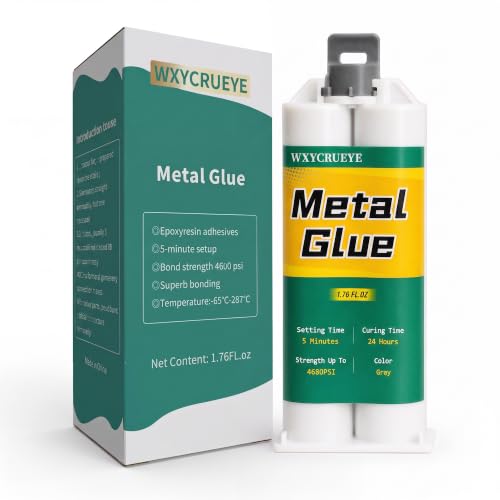
Unlike Strong Foundry Glue Casting Repair, Heavy-Duty Metal Epoxy, 1.76 oz is presented as a broad metal-repair epoxy rather than a casting-specific product. The maker says the two-part adhesive mixes at a 1:1 ratio and can be used on iron, aluminum, stainless steel, fiberglass and hard plastics. That range may suit a cast-iron repair that also involves another material, such as a hard-plastic shell. The package is 1.76 ounces and includes a pusher and squeegee.
Bottom line: Choose this for mixed-material repairs when heat exposure is not a deciding factor.
Waterproof Pipe Repair Glue

Waterproof Pipe Repair Glue is a pipe-focused sealant, so it fits a leaking cast-iron drain or radiator pipe better than a casting defect. The maker says it is compatible with PVC, PPR, metal and cast iron, and describes the cured layer as waterproof and resistant to pressure, heat, impact and corrosion. Application calls for shutting off the water and drying the surface before mixing and applying. No pressure or temperature figures are provided, so it is not a sound choice where a specific operating limit must be verified. It also should not be used to disguise a badly damaged or unsafe pipe.
Bottom line: Choose this for a small pipe leak when the pipe itself remains serviceable.
How to Choose Glue for Cast Iron
Choose by repair location first: a casting epoxy is aimed at a metal defect, while pipe sealant is aimed at a leak. Epoxy bonds depend on clean, dry, abraded surfaces; remove rust, oil, paint and loose scale so adhesive contacts sound metal rather than debris. A two-part epoxy must be mixed in its specified ratio, and the working time begins once the components meet. For a small, nonstructural defect, a metal epoxy may be suitable; a crack in a load-bearing or pressure-containing part calls for repair or replacement, not an assumed glue fix. Heat rating also matters: keep the repair below the adhesive’s limit, with a margin for temperature spikes.
Cast-Iron Repair Types and Limits
Cast iron is brittle, and a crack can continue through the metal even when a surface adhesive covers it. An epoxy patch can fill a small, stable defect, but it does not recreate the strength of an intact casting or a welded joint. Pipe sealants target leak sealing, not restoring a damaged pipe’s pressure rating. Heat and pressure are separate limits: a material rated for heat may still lack a published pressure rating for a particular pipe. Use this decision guide before choosing:
| Repair need | Better-matched type | Decision point |
|---|---|---|
| Small casting defect | Metal or casting epoxy | Nonstructural and within temperature limit |
| Dripping serviceable pipe | Pipe repair sealant | Water shut off and surface dried |
| Structural crack or failed pressure part | Professional repair or replacement | Do not rely on adhesive alone |
Preparing Cast Iron for an Epoxy Bond
Surface preparation determines whether an epoxy bonds to metal or merely to dirt and rust. Scrape away loose corrosion and coatings, then roughen the repair area with abrasive paper or a file; a slightly keyed surface gives adhesive more area to grip. Degrease the metal and let it dry fully before mixing the epoxy, since oil and moisture can interfere with adhesion. Keep the repair aligned while the adhesive sets, and avoid loading or heating it before the maker’s cure time. Typical household epoxies often need about 24 hours for full cure, but formulations differ, so use the product’s own cure time rather than that general benchmark.
When a Cast-Iron Glue Repair Is Unsafe
Do not use an adhesive patch as the sole repair for a cracked support, lifting point, pressure vessel or pipe carrying hot or hazardous contents. Cast iron can fail suddenly because it is brittle, and a surface bond may hide an advancing crack. For plumbing, close the supply and drain the affected section before working; a sealant is not a safe substitute for isolation. For a cooking surface, food-contact suitability matters, and none of these products is identified here as food-safe. If the part is structural, pressurized, or exposed to heat above the adhesive’s limit, stop and use a qualified repair method or replace it.
Frequently Asked Questions
Can epoxy glue repair a cracked cast-iron part?
Epoxy can patch a small, stable, nonstructural defect, but it does not restore the original strength of cracked cast iron. For a load-bearing or pressure-containing part, use a qualified repair method or replacement.
How should I prepare cast iron before gluing it?
Remove loose rust, paint, oil and scale, then roughen the metal and make sure it is fully dry. Clean metal gives the adhesive a better chance of bonding to the casting rather than to contamination.
How long does cast-iron epoxy take to cure?
Many household epoxies need about 24 hours for full cure, although formulas vary. Use the product’s cure time and avoid loading or heating the repair before it is complete.
Can cast-iron glue seal a pressurized pipe?
Shut off and drain the line before repair, and replace or professionally repair a damaged pressure-bearing section.
Can cast-iron adhesive withstand high heat?
Only use an adhesive below its temperature limit, allowing for temperature spikes near stoves, furnaces or engines. A 302°F limit is about 150°C, and other formulations may have different limits.