
Best Golf Ball GPS Tracking Options Compared

Chiping GPS Tracked Golf Balls, 6 Pack is the closest match for golfers seeking golf ball GPS tracking because it is a six-ball set paired with a GPS app and access to 35,000 courses. Choose a different type if you want automatic club-by-club round records, course yardages from a handheld, or swing metrics rather than a ball with tracking technology.
We earn a commission if you buy through links on this page. As an Amazon Associate I earn from qualifying purchases. Products are compared on manufacturer specifications, not hands-on testing.
- Best overall: Chiping GPS Tracked Golf Balls, 6 Pack – The six-ball set is the only option specifically described as GPS-tracked golf balls.
- Best for round tracking: Arccos Smart Sensors, GEN 3+ – Fourteen sensors are designed for automatic shot tracking across clubs in a bag.
- Best for course distances: MILESEEY GeneSonic Pro GPS Speaker – The detachable handheld GPS provides course distances and audible yardages.
| Product | Best for | What it tracks | GPS or course feature | Count or battery | Shop |
|---|---|---|---|---|---|
| Chiping GPS Tracked Golf Balls, 6 Pack | Ball tracking | Golf balls | App; 35,000 courses | 6 balls | Check Price on Amazon |
| Arccos Smart Sensors, GEN 3+ | Round tracking | Shots and club data | GPS rangefinder app | 14 sensors; first year included | Check Price on Amazon |
| MILESEEY GeneSonic Pro GPS Speaker | Course distances | Course distances | 43,000+ courses; handheld GPS | 15-hour battery | Check Price on Amazon |
| Rapsodo Mobile Launch Monitor | Swing practice | Shot and swing metrics | GPS satellite view | — | Check Price on Amazon |
Golf Ball GPS Tracking Options
These choices cover ball tracking, round data, course distances and practice metrics, so match the device to the information you want.
Chiping GPS Tracked Golf Balls, 6 Pack

Chiping GPS Tracked Golf Balls, 6 Pack is the only option here built as GPS-tracked golf balls, rather than a separate device for course distances or swing data. The set contains six white balls measuring 1.68 inches and weighing 0.5 ounce each, paired with the Chiping GPS app and 35,000 courses. Its construction combines a four-piece design, urethane core, active mantle and Surlyn cover. It suits golfers who want the ball itself connected to a GPS app; the trade-off is that the maker does not explain how the ball is located during play, so verify the tracking workflow before relying on it.
Bottom line: Choose this if the ball itself needs to be part of the tracking setup.
Arccos Smart Sensors, GEN 3+

Arccos Smart Sensors, GEN 3+ tracks a golfer’s game through club sensors, not through a GPS-equipped golf ball. The GEN 3+ system includes 14 weather-resistant, ultra-light sensors—13 regular sensors and one putter sensor—and automatic shot tracking. Its app also provides an A.I.-powered GPS rangefinder with yardages adjusted for conditions including wind and elevation, according to Arccos. This setup suits golfers seeking club-by-club round data and course distances. It requires an app membership after the included first year, so it is a different fit for someone who specifically wants to locate or track a ball.
Bottom line: Pick this for automatic shot and club tracking instead of ball tracking.
MILESEEY GeneSonic Pro GPS Speaker
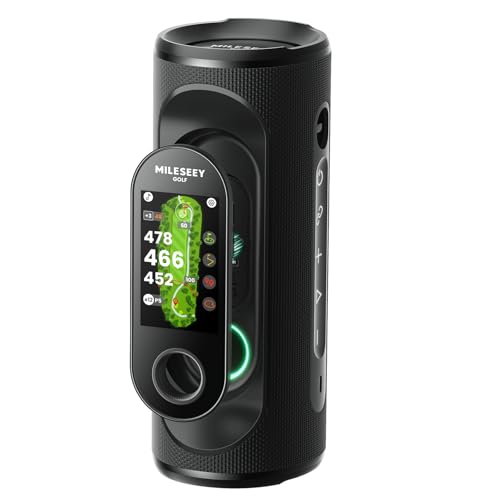
MILESEEY GeneSonic Pro GPS Speaker is a course-navigation device with a detachable GPS handheld and speaker, not a GPS-tracked ball. Its features include more than 43,000 courses, automatic course and hole recognition, audible and visual yardages, and a 15-hour battery. The handheld can detach for use away from the speaker, making this option relevant to golfers who want distance information while moving around the course. It does not fill the ball-location role of Chiping GPS Tracked Golf Balls, 6 Pack; choose it for course distances and audio features rather than ball tracking.
Bottom line: Choose this for handheld course yardages and speaker functions.
Rapsodo Mobile Launch Monitor

Rapsodo Mobile Launch Monitor tracks practice shots and swing metrics rather than locating a GPS-equipped ball. Its app-based system provides ball speed, club speed, launch angle, carry distance and shot shape, with video replay and a shot tracer. The specifications specify use with iPhone and iPad, and describe indoor and outdoor practice. This makes it a better match for golfers working on measurable practice feedback than for finding a ball on the course. It is limited to iPhone and iPad, so golfers using other devices should confirm compatibility before choosing it.
Bottom line: Pick this for practice-session swing and ball-flight metrics.
How to Choose Golf Ball GPS Tracking
Start by deciding whether you need the ball located, your shots recorded, or distances measured. These are different jobs: a ball-tracking system is tied to the ball, a sensor system logs shots and clubs, and a GPS rangefinder reports course yardages. GPS position outdoors comes from satellite signals, but a position reading is not the same as a continuous view of a fast-moving ball in flight. Ask how the product reports a ball’s position and when that information updates before choosing. For practical selection, choose a ball-focused product only if ball location is the priority; choose club sensors for round records and a handheld GPS for distances to course features. A launch monitor is aimed at practice metrics such as carry and launch angle.
Golf GPS Tracking Types Compared
Golf tracking products differ most in what they measure and where the sensor sits. Ball-connected tracking is the closest match for finding a ball, while a club sensor records strokes and a GPS rangefinder calculates distances from the golfer’s position. Launch monitors focus on swing or shot measurements and may add a GPS-based course view. GPS reception and course coverage are separate considerations: satellite positioning needs an open view of the sky, and a device’s course database must include the course being played. Use this table to match the tool to the task rather than treating every product with “GPS” in its name as interchangeable.
| Need | Device type | What it provides |
|---|---|---|
| Locate a ball | Ball-connected tracker | Ball-related position information |
| Record shots by club | Club sensors | Round and shot data |
| Measure course yardages | GPS rangefinder | Distances from the golfer’s position |
| Improve practice sessions | Launch monitor | Shot and swing metrics |
GPS Accuracy and Course Coverage
GPS yardages are estimates based on a device’s location and mapped course points, so they can differ from laser measurements or course markers. Tree cover, steep terrain, and a weak satellite view can affect reception; wait for a stable fix before relying on a number. Course mapping matters too: a device can acquire satellites yet lack a newly opened course or accurate hole data. Before a round, check that your intended course is covered and that the device has recognized the right hole. For a golf ball tracker, verify the reporting method and update behavior specifically, since ordinary GPS positioning should not be assumed to show the ball continuously while it is airborne.
Golf Ball Tracking Safety and Use
Do not walk into a landing area while another golfer is preparing or swinging; ball-tracking technology does not replace normal awareness or the call of “fore.” A golf ball can travel well beyond 200 yards on a full shot, so keep clear of the entire likely landing zone, not just the point shown on a screen. GPS and app readings can lag, lose reception, or identify the wrong location, especially around trees and uneven terrain. Use tracking as an aid after a shot, not as proof that a course is clear or that a ball is safe to approach. Keep attention on play and other golfers when checking a device.
Frequently Asked Questions
Can GPS track a golf ball while it is flying?
A GPS position reading does not by itself provide continuous visual tracking of a ball in flight. Check whether a ball-focused system reports a post-shot location and how often it updates before relying on it.
How far can a golf ball travel on a full shot?
A full golf shot can send a ball more than 200 yards, so remain clear of the likely landing area until play is safe. The actual distance depends on the club, swing, and conditions.
Why can GPS yardages change during a round?
GPS yardages can shift when satellite reception or the device’s position estimate changes. Trees, terrain, and a weak view of the sky can affect the fix, so allow the reading to stabilize.
Do golf GPS devices need course maps?
Devices that display hole features or course yardages need mapped course data to identify those features. Confirm that the course is covered, especially if it is newly opened or recently changed.
What is the difference between golf GPS and a launch monitor?
Golf GPS tools estimate position or course distances, while launch monitors measure shot and swing data such as ball speed or launch angle. Choose based on whether you need on-course yardages or practice feedback.