
Best Golf Clubs 5 Iron: 4 Single Irons Compared

Callaway Big Bertha BB23 5 Iron suits most golfers seeking a forgiving 5 iron, with its maker highlighting a large face and low, forward center of gravity. Choose MAZEL Individual 5 Iron or XM-01 5 Iron if you prefer a steel shaft, or Callaway Elyte 5 Iron for a steel-shaft Callaway with a different sole design.
A 5 iron is a mid-to-long iron for longer approach shots, but loft and shaft fit affect launch and distance; compare those against your current clubs before choosing.
We earn a commission if you buy through links on this page. As an Amazon Associate I earn from qualifying purchases. Products are compared on manufacturer specifications, not hands-on testing.
- Best overall: Callaway Big Bertha BB23 5 Iron – The maker cites a large, forgiving face and low, forward center of gravity.
- Best for steel shaft: MAZEL Individual 5 Iron – It pairs a steel shaft with a 23-degree loft and low-CG cavity design.
- Best for sole design: Callaway Elyte 5 Iron – Its maker describes a tri-sole intended for smooth turf interaction.
| Product | Best for | Shaft | Flex | Shop |
|---|---|---|---|---|
| Callaway Big Bertha BB23 5 Iron | Forgiving feel | Graphite | Regular | Check Price on Amazon |
| MAZEL Individual 5 Iron | Steel shaft | Steel | Stiff | Check Price on Amazon |
| XM-01 5 Iron | Steel control | Steel | Stiff | Check Price on Amazon |
| Callaway Elyte 5 Iron | Turf interaction | Steel | Regular | Check Price on Amazon |
Best Golf Clubs 5 Iron
Compare each single 5 iron by shaft, flex, and the design details that distinguish it.
Callaway Big Bertha BB23 5 Iron
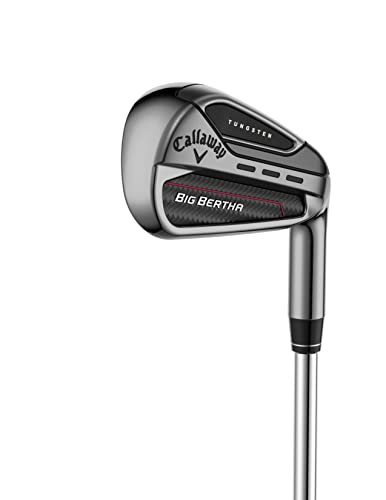
Callaway Big Bertha BB23 5 Iron is the graphite-shaft option among these single irons, and its maker emphasizes a large face and low, forward center of gravity. The right-handed club has a regular flex, which may suit golfers who prefer that combination over the steel-shaft choices here. Its product features also describe lightweight Jailbreak A.I. and an A.I.-designed face.
Bottom line: Pick it if you want a right-handed graphite 5 iron with a regular flex.
MAZEL Individual 5 Iron

MAZEL Individual 5 Iron stands out with a 23-degree loft, the only explicit loft among the single irons in this group. Its steel shaft is stiff flex and the club is made for right-handed golfers. The maker says its cavity design places the center of gravity low for easier launch, while deep CNC-milled grooves are intended to support consistency and control. The main compromise is the stiff shaft: golfers whose tempo or ball flight suits regular flex may find this a poor fit, even if the loft matches their gap.
Bottom line: Choose it if 23 degrees and a stiff steel shaft suit your set.
XM-01 5 Iron

XM-01 5 Iron combines a steel shaft with a stiff flex and a concave-back head with a broad sole, according to its feature set. The maker says the CNC grooves are designed for control and the low center of gravity for stable contact. The stiff shaft is also a limiting factor for players who need regular flex or a different shaft feel.
Bottom line: Pick it if you want a right-handed steel 5 iron with a stiff flex.
Callaway Elyte 5 Iron

Callaway Elyte 5 Iron is the regular-flex steel-shaft alternative to the graphite-shaft Callaway here. Its maker describes a tri-sole with a sharper leading edge and chamfered trailing edge for turf interaction, along with a Speed Frame intended to support face flex and damp vibration. The Ai 10X face is also presented by the maker as a distance, control, and launch feature.
Bottom line: Choose it if you want a regular-flex steel shaft and a turf-focused sole design.
How to choose a 5 iron
Choose a 5 iron by matching its loft and shaft to the clubs around it, not by name alone. Modern 5 irons commonly fall around 21 to 27 degrees of loft, and stronger lofts can travel farther while launching lower. A 23-degree 5 iron sits near the stronger-loft end of that general range. Shaft flex is also a fit variable: a golfer with a smoother tempo may need a different flex than a golfer with a forceful transition. Compare the candidate’s shaft and flex with the club you currently use for the same distance. If that club’s loft is unknown, have the gap checked before selecting a replacement.
5 iron loft and distance gaps
Loft determines how a 5 iron launches, but the number stamped on the sole does not guarantee a fixed distance. A typical 5 iron loft range is about 21 to 27 degrees, and a gap of roughly 3 to 5 degrees between neighboring irons is common; set designs can differ. Use the lofts of your 4 and 6 irons as the comparison points, and avoid choosing a 5 iron whose loft duplicates one of them. The MAZEL single iron gives a 23-degree figure, while the other three single-iron entries do not provide loft. Confirm loft and gapping for those candidates before ordering if exact yardage spacing is important.
Steel and graphite 5 iron shafts
Steel and graphite shafts offer different weight and feel options, but material alone does not establish the right fit. Graphite is generally lighter than steel, which can help golfers seeking less shaft weight; steel is often chosen for its firmer feel and feedback. Flex must be considered separately from material: the options here include regular and stiff flex, and shaft flex labels are not perfectly standardized across manufacturers. A practical decision rule is to match the candidate’s material and flex to an iron you strike consistently, then check that launch and carry remain useful. Do not select a stiff shaft solely because it sounds more powerful.
When a 5 iron is the wrong club
A 5 iron is useful when a golfer can launch it reliably and needs its distance gap, but a hybrid or higher-lofted iron can be easier for some swings. Long irons have less loft than short irons, so off-center contact and low launch can make them harder to use from rough or uneven lies. If you cannot carry your current 5 iron reliably or it repeatedly flies lower than the next club, consider a higher-launching club type rather than choosing by iron number. On the course, keep the clubhead clear of people and check that the landing area is open before swinging; a long iron can send a ball a substantial distance.
Frequently Asked Questions
What loft is typical for a 5 iron?
Many modern 5 irons are around 21 to 27 degrees of loft. Stronger lofts tend to launch lower, so compare loft with adjacent clubs rather than relying on the number alone.
How much loft gap should irons have?
A gap of about 3 to 5 degrees between neighboring irons is common. Set designs vary, so compare the actual lofts of your 4, 5, and 6 irons to avoid overlaps.
Should a 5 iron have a steel shaft?
Steel is a common choice for golfers who prefer its firmer feel, while graphite is generally lighter. Choose by shaft weight and flex that fit your swing rather than material alone.
Can beginners use a 5 iron?
Some beginners can use a 5 iron, but its lower loft makes consistent launch harder than with a higher-lofted club. If you struggle to carry it reliably, compare a hybrid or higher-lofted iron.
What does stiff flex mean in a 5 iron?
Stiff is a shaft-flex category, not a guarantee of extra distance or accuracy. Flex labels differ among manufacturers, so compare the feel and ball flight with a club you strike consistently.