
Best Hydrating Microcurrent Gel: 4 Formulas Compared

KARUNO Hydrating Conductive Gel, 10 oz suits most people seeking a hydrating microcurrent gel because its formula pairs hyaluronic acid with aloe and is described as fragrance-free. Choose another formula if you want niacinamide, soluble collagen, or gel intended for facial and body machines.
Conductive gel helps maintain contact between a microcurrent device and skin; use only a gel compatible with your device.
We earn a commission if you buy through links on this page. As an Amazon Associate I earn from qualifying purchases. Products are compared on manufacturer specifications, not hands-on testing.
- Best overall: KARUNO Hydrating Conductive Gel, 10 oz – Combines hyaluronic acid and aloe in a fragrance-free formula.
- Best for facial and body use: INIA Conductive Gel, 10.56 oz – The maker identifies it for facial and body machines and includes aloe and sodium hyaluronate.
- Best for collagen: Conductive Gel, 2-Pack – Its formula includes both hyaluronic acid and soluble collagen.
- Best with niacinamide: Age-Defying Conductive Gel with Niacinamide – Pairs hyaluronic acid with niacinamide in a non-greasy formula.
| Product | Best for | Size | Highlighted ingredients | Formula notes | Shop |
|---|---|---|---|---|---|
| KARUNO Hydrating Conductive Gel, 10 oz | Fragrance-free formula | 10 fl oz | Hyaluronic acid, aloe | Fragrance-free; paraben-free | Check Price on Amazon |
| INIA Conductive Gel, 10.56 oz | Face and body devices | 10.56 fl oz | Aloe, sodium hyaluronate | Lightweight; non-greasy | Check Price on Amazon |
| Conductive Gel, 2-Pack | Collagen ingredient blend | 250 g per tube* | Hyaluronic acid, soluble collagen | Alcohol-, mineral oil-, sulfate-free | Check Price on Amazon |
| Age-Defying Conductive Gel with Niacinamide | Niacinamide formula | — | Hyaluronic acid, niacinamide | Hypoallergenic; non-greasy | Check Price on Amazon |
Hydrating Microcurrent Gels
Compare the ingredient blends and stated uses to find a conductive gel that suits your device and routine.
KARUNO Hydrating Conductive Gel, 10 oz

KARUNO Hydrating Conductive Gel, 10 oz stands out for its fragrance-free, paraben-free formula with hyaluronic acid and aloe. The 10-fluid-ounce bottle is intended for microcurrent devices, and the maker says its balanced viscosity supports smooth glide and device contact. The maker also describes it as suitable for all skin types, including sensitive skin. Choose it if you want a straightforward hydrating gel without added fragrance. The formula’s highlighted ingredients do not include niacinamide or soluble collagen, so buyers specifically seeking either of those ingredients may prefer a different option.
Bottom line: Choose this if a fragrance-free formula with hyaluronic acid and aloe is your priority.
INIA Conductive Gel, 10.56 oz

INIA Conductive Gel, 10.56 oz differs by being identified for facial and body beauty machines, with aloe leaf extract and sodium hyaluronate as its highlighted ingredients. The maker recommends applying a thin, even layer and describes the texture as lightweight and non-greasy. It is also presented for use on hair-removal areas after treatment, which gives it a broader stated role than a microcurrent-only gel. Pick it if that multi-use positioning fits your routine. The maker’s claims about soothing skin after hair removal are not a substitute for checking whether your device’s instructions permit this gel.
Bottom line: Choose this if you want a gel identified for face and body devices.
Conductive Gel, 2-Pack

Conductive Gel, 2-Pack is distinguished by soluble collagen alongside hyaluronic acid, and the product name presents it as a two-pack for microcurrent and radio-frequency devices. The maker describes the formula as alcohol-free, mineral-oil-free, sulfate-free, non-greasy, and slow to dry. Those qualities may suit someone who wants a gel marketed for extended glide across more than one beauty-device type. Its package size is inconsistent across the fields, so confirm the tube quantity before choosing it if the amount matters to your routine.
Bottom line: Choose this if soluble collagen and stated RF use are important to you.
Age-Defying Conductive Gel with Niacinamide
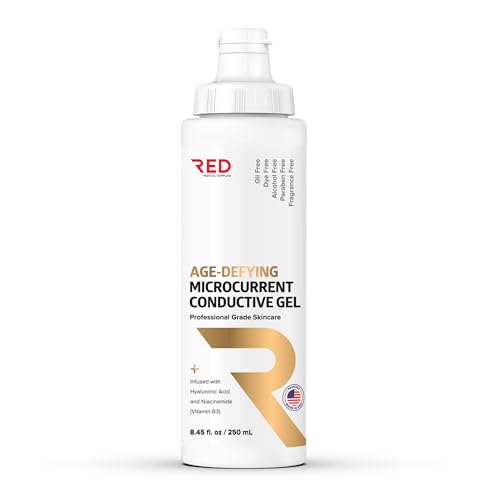
Age-Defying Conductive Gel with Niacinamide is the only option here whose highlighted ingredients include niacinamide as well as hyaluronic acid. The maker describes the gel as hypoallergenic and non-greasy, and says its texture stays wet during treatment. That makes it a fit for buyers specifically looking for a niacinamide-containing conductive gel rather than an aloe- or collagen-focused blend. The maker’s claims about brightening and lift are performance claims, not guaranteed outcomes. Confirm the package size before ordering because the size figures conflict.
Bottom line: Choose this if you specifically want niacinamide in your conductive gel.
How to Choose a Hydrating Microcurrent Gel
Choose a gel that your device maker permits and that spreads into a continuous layer between the treatment head and skin. A microcurrent device needs conductive contact; a patchy or drying layer can interrupt the glide and contact needed during a pass. Water-based conductive gels are common for this purpose, while oils and rich creams are not interchangeable with a purpose-made conductive gel. Ingredient priorities can narrow the options: hyaluronic acid appears in all four products, aloe appears in KARUNO Hydrating Conductive Gel, 10 oz and INIA Conductive Gel, 10.56 oz, soluble collagen in Conductive Gel, 2-Pack, and niacinamide in Age-Defying Conductive Gel with Niacinamide. If you have reactive skin, patch-test a small area first and stop using the gel if irritation occurs.
Device Compatibility and Skin Preparation
Device compatibility comes before a gel’s skincare ingredients: check the device manual for the permitted conductive medium, especially if the device combines microcurrent with radio frequency or another treatment. Clean, dry skin gives the gel a more even surface to spread across; apply enough to keep the treatment head gliding rather than dragging. Do not apply conductive gel over broken or irritated skin, and keep it away from the eyes and mucous membranes. A gel marketed for multiple beauty devices is not automatically suitable for every model. If the device maker limits use to a specific gel type, follow that limit rather than assuming all water-based formulas conduct alike.
Microcurrent Gel Ingredients and Texture
Hyaluronic acid is a moisture-binding ingredient, while aloe and niacinamide serve different roles in a formula; none replaces the conductive function of the gel base. Texture also matters during a session: a gel that becomes tacky or dries can make the device drag, so pause and reapply according to the device instructions rather than pressing harder. The four choices differ in their additional highlighted ingredients and texture claims, not just package size. Avoid reading cosmetic ingredient claims as proof of a particular lifting or brightening result. People sensitive to topical products can patch-test first, even when a formula is described as gentle or hypoallergenic.
Common Mistakes When Using Conductive Gel
The most common mistake is using too little gel for continuous contact or letting a layer dry during treatment. Add gel when glide is lost instead of increasing pressure, which can irritate skin. Another mistake is substituting a serum, moisturizer, or oil because it feels slippery; surface slip alone does not establish electrical conductivity or device compatibility. Use the applicator and treatment sequence specified by the device maker, and clean the treatment head after each session so residue does not build up. Store the container closed and avoid dipping fingers into the gel repeatedly; clean hands or a clean spatula help limit contamination.
Frequently Asked Questions
Can I use moisturizer instead of microcurrent gel?
A regular moisturizer is not a reliable substitute because it may not provide the conductive contact required by a microcurrent device. Use only a medium the device maker permits, and choose a purpose-made conductive gel when required.
How much gel should I apply for microcurrent?
Apply enough gel to form a continuous layer under the treatment head and keep it gliding without dragging. If the head begins to stick or the gel dries, pause and add more rather than pressing harder.
Can I use conductive gel with radio frequency devices?
Only if the device maker approves that gel for radio-frequency use. Conductive Gel, 2-Pack is marketed for microcurrent and RF devices, but compatibility still depends on the specific device’s instructions.
Should I patch test hydrating microcurrent gel first?
Yes, patch testing a small area is prudent, particularly if your skin is sensitive or reacts to new topical products. Stop using the gel if redness, burning, or irritation develops.
Can microcurrent gel be used around the eyes?
Keep gel and device treatment away from the eyes unless the device maker specifically gives an eye-area procedure. The thin skin around the eyes is easily irritated, and device placement instructions vary.