
Best Ink Pad for Embossing: 3 Clear Pads Compared

Ranger Emboss It Clear Pad suits most crafters looking for a clear embossing ink pad, while ForraFun 4-Inch Clear Pad Set is the better fit if you want two pads and refill bottles in the same set. Clear embossing ink holds powder on stamped areas so heat can melt it into a raised finish.
Choose Craftelier Slow-Drying Clear Pad if you need an explicitly slow-drying pad for paper, cardstock or vellum; check the dimensions against your stamp before choosing a pad.
We earn a commission if you buy through links on this page. As an Amazon Associate I earn from qualifying purchases. Products are compared on manufacturer specifications, not hands-on testing.
- Best overall: Ranger Emboss It Clear Pad – A clear embossing ink pad with a compact format for stamping.
- Best for refills: ForraFun 4-Inch Clear Pad Set – Includes two pads and two 0.5-ounce refill bottles.
- Best for vellum: Craftelier Slow-Drying Clear Pad – Its slow-drying ink is specified for paper, cardstock and vellum.
| Product | Best for | Pad size | Included pads | Shop |
|---|---|---|---|---|
| Ranger Emboss It Clear Pad | Compact stamping | 3.25 × 0.75 in. (listed dimensions) | 1 | Check Price on Amazon |
| ForraFun 4-Inch Clear Pad Set | Refill-ready set | 4 in. pad | 2 | Check Price on Amazon |
| Craftelier Slow-Drying Clear Pad | Paper and vellum | 3.54 × 1.85 in. | 1 | Check Price on Amazon |
Ink Pads for Embossing
Compare the clear pads by format, included supply and the surfaces named for use.
Ranger Emboss It Clear Pad
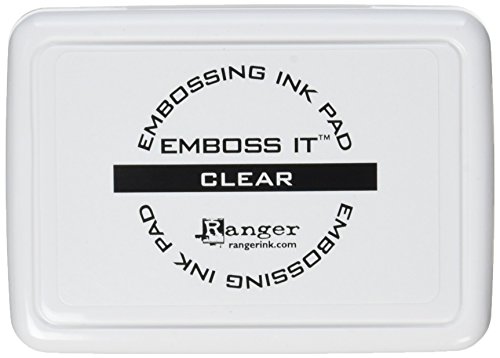
Ranger Emboss It Clear Pad is the compact-format option among these embossing pads, with a clear ink pad sized for stamping rather than a multi-pad kit. The product size is given as 0.1 fl oz, and its dimensions are 3.25 inches long by 0.75 inch wide. Clear ink lets colored embossing powder supply the visible color of a stamped design.
Choose this pad for occasional projects or smaller stamps. Its small ink quantity is the limitation for anyone planning repeated, large-area stamping; a refill is a separate purchase, so it is less convenient than a set that includes refill ink.
Bottom line: Pick this for a compact single pad and occasional stamped embossing.
ForraFun 4-Inch Clear Pad Set

ForraFun 4-Inch Clear Pad Set is the only set here that bundles multiple pads with refill ink: it includes two clear pads and two 0.5-ounce bottles. The set is aimed at card making and scrapbooking, and its pad is identified as 4 inches. Refill bottles can help maintain an inked pad without requiring a separate refill purchase.
Choose this if you want spare pad capacity or expect to replenish ink. The set takes more storage space than a compact single pad, and its larger format may not be necessary for occasional work with small stamps. The product identifies the refill ink as clear and the formula as acid-free.
Bottom line: Choose this when two pads and included refill bottles matter.
Craftelier Slow-Drying Clear Pad
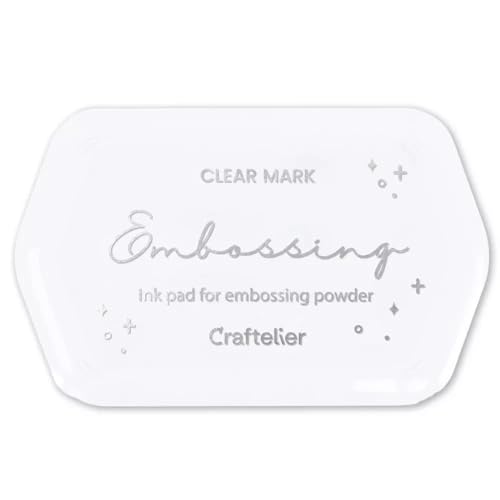
Craftelier Slow-Drying Clear Pad stands out for specifying slow-drying, acid-free clear ink and naming paper, cardstock and vellum as suitable porous surfaces. Its pad measures 9 × 4.7 centimeters, or about 3.54 × 1.85 inches, giving it a broader rectangular format than a narrow compact pad. It is intended for acrylic or rubber stamps.
Choose this for a larger stamping area or when vellum is part of the project. The package does not include refill ink, so frequent users should account for a separate refill. Its transparent ink leaves the color choice to the embossing powder.
Bottom line: Pick this for its slow-drying use on paper, cardstock and vellum.
How to Choose an Embossing Ink Pad
Choose a pad that covers your stamp face and stays tacky long enough for powder to adhere. Embossing ink is formulated to remain wet longer than many dye inks; the powder is sprinkled over the stamped image before heat is applied. A pad’s surface dimensions matter most when you use large stamps, while included refills matter more for repeated projects. For a stamp wider than 4 inches, check whether the pad surface can ink it evenly before choosing a compact format. Clear ink keeps the powder color in control of the final look. Acid-free labeling may matter for paper crafts intended for long-term storage, but it is not a substitute for suitable paper and storage conditions.
Applying Embossing Powder Evenly
Stamp once, cover the wet impression with embossing powder, then tap away excess powder before heating. A fine powder generally captures small lettering and intricate line work better than coarse powder; coarse grades create a more textured finish and can obscure fine details. Keep a separate, clean brush nearby to remove stray grains from the paper before heat-setting. Powder clinging outside the impression can melt into unwanted specks, especially around detailed stamps. Work on a clean, dry surface and return unused powder to its container rather than contaminating it with ink or paper fibers. A slow-drying pad helps preserve the tacky window, but avoid touching the stamped area before powder is applied.
Heat-Setting Embossing Powder Safely
Use a craft heat tool to melt embossing powder, not a household hair dryer; airflow from a hair dryer can scatter loose powder before it melts. Hold the tool several inches from the paper and keep it moving so one spot does not overheat. The powder changes from grainy to smooth and glossy as it melts, which is the cue to move on rather than continuing to heat the same area. Hot paper and melted powder can burn skin, so let the project cool before handling it. Keep the heat tool away from flammable materials and use a heat-resistant work surface. Children should use heat tools only with close adult supervision.
Matching Pad Format to Stamp Size
Match the pad’s usable surface to the stamp rather than relying on the package footprint. A stamp smaller than the pad is easy to ink with a light tapping motion; an oversized stamp may need careful coverage by turning the stamp or pad without dragging it. For a 4-inch stamp, a 4-inch pad is a closer format match than a narrow pad, but the stamp’s shape and ink surface dimensions still matter. Clean stamps after use so leftover pigment or debris does not transfer into clear ink. A soft stamp-cleaning method suited to the stamp material helps preserve fine details and keeps colors from mixing into later impressions.
Frequently Asked Questions
Can regular ink work for heat embossing?
Embossing ink is designed to stay tacky long enough for powder to stick; many fast-drying inks may dry before powder is applied. Use a slow-drying or embossing-specific pad for more reliable powder coverage.
How much embossing powder should I use?
Cover the wet stamped image completely, then tap off the excess before heating. Fine powder is a better choice for small text or detailed line art because coarse grains can fill narrow gaps.
Can I emboss on vellum with an ink pad?
Yes, provided the pad is suitable for vellum and remains wet long enough for powder to adhere. Vellum is nonporous compared with ordinary paper, so allow for a careful powder application and avoid smearing the stamped impression.
Why does embossing powder stick outside the stamp?
Stray powder often clings to fingerprints, static or residual ink outside the impression. Keep the paper surface clean and dry, brush away stray grains before heating, and avoid touching the stamped area.
How do I avoid scorching paper while embossing?
Keep the heat tool moving several inches above the paper and stop heating an area once the powder turns smooth. Thin paper can warp or scorch if exposed to concentrated heat for too long.