
Best Kind of Celtic Salt: 3 Forms Compared

For everyday cooking and baking, Celtic Sea Salt Fine Ground, 1 lb is the most versatile kind of Celtic salt here because its fine grains dissolve evenly. Choose coarse crystals instead if you want a grinder or a larger finishing texture; the right grind depends on how you use and measure salt.
Celtic sea salt is unrefined sea salt, often sold in moist grey crystals; grain size affects how it dissolves and how much fits in a spoon.
We earn a commission if you buy through links on this page. As an Amazon Associate I earn from qualifying purchases. Products are compared on manufacturer specifications, not hands-on testing.
- Best overall: Celtic Sea Salt Fine Ground, 1 lb – Fine grains dissolve evenly for everyday cooking and baking.
- Best for stocking up: Celtic Sea Salt Light Grey Coarse, 2 lb – Two 1 lb bags of coarse crystals suit grinder use and larger quantities.
- Best for a grinder: Celtic Sea Salt Light Grey Coarse, 1 lb – A single 1 lb bag offers coarse whole crystals for grinding or finishing.
| Product | Best for | Grind | Package | Color | Shop |
|---|---|---|---|---|---|
| Celtic Sea Salt Fine Ground, 1 lb | Daily cooking | Fine | 1 lb | — | Check Price on Amazon |
| Celtic Sea Salt Light Grey Coarse, 2 lb | Bulk grinder use | Coarse | 2 lb | Light grey | Check Price on Amazon |
| Celtic Sea Salt Light Grey Coarse, 1 lb | Single-bag grinder | Coarse | 1 lb | Grey | Check Price on Amazon |
Kinds of Celtic Salt Compared
Choose between fine grains for dissolving and coarse crystals for grinding or texture.
Celtic Sea Salt Fine Ground, 1 lb
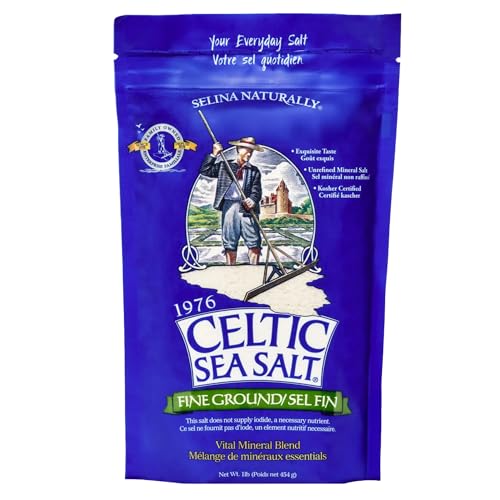
For recipes that need salt to blend in quickly, this fine-ground option is the easiest fit among these choices. The 1 lb package contains finely ground, unrefined sea salt, and the product features describe it as suitable for cooking, baking, seasoning, and finishing. Its texture is the main distinction: fine grains are convenient when measuring by volume or mixing into liquids and batters. The trade-off is that it lacks the coarse texture useful in a grinder or as a distinct finishing crystal; cooks who want that texture should choose a coarse form instead.
Bottom line: Choose this for everyday cooking and baking where fine grains dissolve readily.
Celtic Sea Salt Light Grey Coarse, 2 lb

This two-bag pack is the largest quantity here, making it a practical option for households that regularly refill a grinder. It contains two 1 lb bags of light grey coarse crystals; the product features say the crystals are unrefined and free from additives. Coarse grains also provide a more noticeable texture when scattered over food just before serving. The limitation is recipe precision: coarse crystals do not dissolve or measure by teaspoon like fine salt, so recipes that call for a specific volume of salt are easier to handle with a fine grind.
Bottom line: Pick this when you want coarse crystals and a two-bag supply.
Celtic Sea Salt Light Grey Coarse, 1 lb

For a smaller quantity of coarse salt, this single 1 lb bag gives the same broad grind category as the larger pack without doubling the amount. The product features identify it as coarse-ground and describe it as suitable for seasoning; its grey crystals can be ground or used where a larger grain is wanted. Compared with the fine-ground choice, the coarse texture is less convenient for quickly dissolving in sauces or baking mixtures. Choose it for grinder refills or finishing, and choose a fine grind when uniform spoon measurements matter more.
Bottom line: Choose this for coarse crystals when one 1 lb bag is enough.
How to Choose a Celtic Salt Grind
Choose fine grains when the salt needs to dissolve or distribute evenly, and coarse crystals when texture or grinding matters. Fine salt mixes readily into soups, doughs, and batters; coarse grains work well in grinders and as a finishing texture. Volume measurements are not interchangeable across grinds: a teaspoon of fine salt can contain more salt by weight than a teaspoon of coarse crystals because the smaller grains pack more tightly. When converting a recipe, weigh the salt if the recipe gives a weight; otherwise use the grind it calls for. A practical rule is to choose fine ground for baking or spoon-measured recipes, and coarse for grinder use or a visible finishing sprinkle.
What Grey Celtic Salt Means
Grey sea salt gets its color and moisture from contact with mineral-rich clay and residual brine during harvesting; color and dampness can vary by source and processing. Celtic-style salt is still primarily sodium chloride, like other culinary salts, so its trace minerals do not make it a low-sodium substitute. The specifications describe these coarse choices as unrefined and mineral-containing, but do not quantify mineral amounts beyond the broad claim of 70-plus trace minerals. For nutrition planning, salt type does not remove sodium from the calculation. The FDA’s general daily value for sodium is less than 2,300 mg, and salt added during cooking and at the table both contribute.
Match the Salt to the Recipe
For baking and sauces, use fine salt when a recipe gives a teaspoon measure, since it disperses more evenly through dry and wet ingredients. For finishing, coarse crystals add a more distinct crunch, though their impact depends on crystal size and how much lands on each bite. This table summarizes the useful choice by cooking task.
| Need | Choose | Reason |
|---|---|---|
| Baking or measured seasoning | Fine ground | Disperses and dissolves evenly |
| Grinder refills | Coarse crystals | Designed for grinding or larger grains |
| Finishing texture | Coarse crystals | Leaves a more noticeable grain |
When a recipe specifies salt by weight, match the weight rather than assuming a spoonful of one grind equals a spoonful of another.
Frequently Asked Questions
Is Celtic sea salt better fine or coarse?
Fine Celtic salt is better for baking and recipes measured by volume because it dissolves and distributes evenly. Coarse salt is more useful in a grinder or when you want visible crystals on finished food.
Can I substitute coarse Celtic salt for fine salt?
Yes, but do not assume equal spoonfuls contain equal amounts of salt. Use the same weight when a recipe provides one, or grind the coarse salt before using it in a volume-measured recipe.
Does grey sea salt contain less sodium?
Grey sea salt is still primarily sodium chloride, so it should not be treated as a low-sodium alternative. The FDA’s general daily value for sodium is less than 2,300 mg from all foods and seasonings combined.
Why is Celtic sea salt sometimes moist?
Some grey sea salts retain moisture from residual brine after harvesting, so damp crystals can be normal. Keep salt in a dry, sealed container to limit clumping.
Which Celtic salt should I use for baking?
Fine-ground salt is the straightforward choice for baking because smaller grains distribute through flour and dissolve in mixtures more evenly. If a recipe specifies salt by weight, use that measurement regardless of grind.