
Best Kitchen Towels for Embroidery: 4 Styles Compared

For most embroidery projects, Aunti Em’s Flour Sack Towels, 13-Pack is the best fit because its plain, tightly woven cotton offers a generous, uninterrupted surface for stitching. Choose a smaller or textured towel if your design is compact or you want a decorative weave, but expect to plan around the fabric’s pattern or texture.
We earn a commission if you buy through links on this page. As an Amazon Associate I earn from qualifying purchases. Products are compared on manufacturer specifications, not hands-on testing.
- Best overall: Aunti Em’s Flour Sack Towels, 13-Pack – Plain, tightly woven cotton and a 27-inch square provide an open surface for embroidery.
- Best for stripes: Aunti Em’s Vintage Striped Towels, 13-Pack – The 25.5-by-15.5-inch cotton towels combine a striped design with an embroidery-ready surface.
- Best for flour sack style: Simpli-Magic Flour Sack Towels, 12-Pack – A 24-inch square cotton towel offers a lightweight, plain surface for needlework.
- Best for waffle texture: COTTON CRAFT Waffle Towels, 12-Pack – The 16-by-28-inch cotton waffle towel is specifically suited to crafting and embroidery.
| Product | Best for | Fabric and weave | Dimensions | Pack | Shop |
|---|---|---|---|---|---|
| Aunti Em’s Flour Sack Towels, 13-Pack | Large designs | Ring-spun cotton, plain weave | 27 × 27 in | 13 towels | Check Price on Amazon |
| Aunti Em’s Vintage Striped Towels, 13-Pack | Striped designs | Cotton, striped weave | 25.5 × 15.5 in | 13 towels | Check Price on Amazon |
| Simpli-Magic Flour Sack Towels, 12-Pack | Lightweight blanks | Cotton, diagonal knit | 24 × 24 in | 12 towels | Check Price on Amazon |
| COTTON CRAFT Waffle Towels, 12-Pack | Textured towels | Cotton, waffle terry | 16 × 28 in | 12 towels | Check Price on Amazon |
Kitchen Towels for Embroidery
Compare the fabric surface, size, and pack count to match a towel to your design and intended kitchen use.
Aunti Em’s Flour Sack Towels, 13-Pack
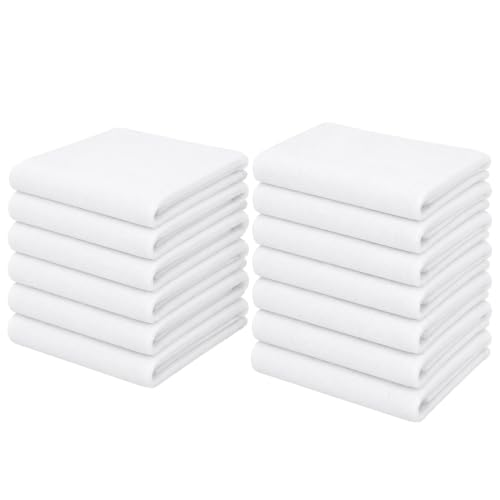
Aunti Em’s Flour Sack Towels, 13-Pack stands out for its square format and plain, tightly woven cotton, giving lettering or a larger motif room without stripes or a waffle pattern to work around. The set includes 13 white towels with hemmed edges, and the fabric is intended for embroidery, cross-stitch, and monograms as well as everyday dish drying. That makes it a practical choice when you want matching blanks for a coordinated set. The limitation is its plain white appearance: choose another style if you want color or a decorative woven texture to show around the stitching.
Bottom line: Pick this set for larger designs on a plain white towel.
Aunti Em’s Vintage Striped Towels, 13-Pack

Aunti Em’s Vintage Striped Towels, 13-Pack brings red, green, and blue stripes to a smaller rectangular format, so it suits a name or compact motif that can sit in a clear area between stripes. The 100% cotton towels measure 25.5 by 15.5 inches and have fully hemmed edges and hanging loops. Their woven surface is presented for embroidery and monograms as well as dish drying. The pattern is the key tradeoff: detailed stitching may compete with the stripes, so check the design width against the blank space before choosing this set.
Bottom line: Choose this set when stripes are part of the finished look.
Simpli-Magic Flour Sack Towels, 12-Pack

Simpli-Magic Flour Sack Towels, 12-Pack differs from the plain-weave flour sack option with a diagonal-knit cotton fabric, while keeping a square shape suited to centered motifs. Each towel measures 24 by 24 inches, and the 12-pack is described as lightweight and lint-free; embroidery and needlework are among its intended uses. The fabric also serves general kitchen and household tasks, making this a flexible choice if some towels will be stitched and others kept for cleanup. The diagonal texture may be more visible beneath delicate designs than a smooth plain weave.
Bottom line: Choose this set for square, lightweight towels and medium-size motifs.
COTTON CRAFT Waffle Towels, 12-Pack
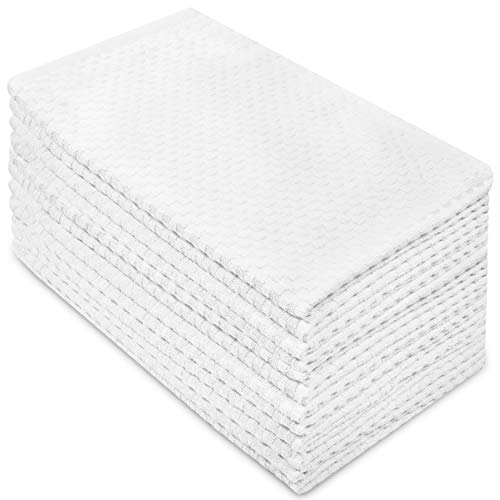
COTTON CRAFT Waffle Towels, 12-Pack is the textured alternative: its 100% ringspun cotton waffle terry has a raised pattern rather than a flat flour sack surface. The towels measure 16 by 28 inches, weigh 420 GSM, and are identified for crafting and embroidery as well as kitchen drying and cleaning. Pick this style if you want the weave to remain part of the finished design. The limitation is the raised texture, which can make tiny lettering or fine, evenly spaced stitches harder to position; it is better suited to simpler motifs that accommodate the surface.
Bottom line: Pick this style for bold designs that work with a raised weave.
How to Choose an Embroidery Towel
A smooth, stable weave is usually easiest to stitch because the needle can pass through a consistent surface and small lettering stays legible. Flour sack and plain cotton styles are useful starting points; waffle terry has raised cells, while stripes can interrupt a design. Match the open stitching area to the design rather than relying on the towel’s full dimensions. For example, leave at least a 1-inch margin around a motif so stitches do not crowd the hems or hanging loop. Use a wash-away or tear-away stabilizer behind lightweight fabric to limit puckering, and test the thread and stitch density on a corner or spare piece first.
Embroidery Towel Sizes and Layout
Measure the finished design in inches, then center it within the towel’s usable field rather than the full hem-to-hem size. On a 16-inch-wide towel, a 12-inch-wide design leaves only 2 inches on each side before accounting for hems; choose a smaller motif if you want a wider border. Rectangular towels work well for names or horizontal motifs, while square towels offer more flexibility for centered designs. Keep stitching clear of hems and hanging loops, which add bulk under a hoop and can distort placement. Mark the center with removable fabric marker, and confirm that the planned area remains flat when the towel is folded or hung.
Flour Sack, Striped, and Waffle Weaves
Flour sack towels typically have a light, relatively smooth cotton surface, while waffle towels have a raised grid and striped towels add visual lines that can affect placement. A flatter surface is generally easier for fine lettering; larger motifs can accommodate more texture. Use this quick guide to match a weave to the design before you start stitching.
| Towel surface | Works well for | Plan around |
|---|---|---|
| Plain or flour sack | Fine lettering and detailed motifs | Lightweight cloth may need stabilizer |
| Striped cotton | Names or motifs placed between stripes | Pattern alignment and clear space |
| Waffle terry | Bold designs that suit texture | Raised cells and stitch placement |
Preparing Towels for Stitching and Care
Prewash a cotton towel before stitching if it will be laundered, because cotton can shrink and remove finishes during its first wash. Dry it as you plan to care for the finished towel, then press the stitching area flat before marking or hooping. Avoid pulling the fabric tight in the hoop; taut fabric can relax unevenly and leave puckers after removal. For kitchen use, keep the embroidered area away from heavy daily scrubbing and use a stabilizer compatible with the thread and fabric. Trim loose thread tails carefully, and follow the thread and stabilizer care guidance so the design remains intact through washing.
Frequently Asked Questions
Do flour sack towels work well for embroidery?
Yes, flour sack towels are often a good choice because their lighter, flatter cotton surface is easier to mark and stitch than a raised waffle weave. Use stabilizer behind lightweight fabric to help prevent puckering.
Should I wash a towel before embroidering it?
Prewash cotton towels before stitching if the finished piece will be washed, since cotton can shrink during its first laundering. Press the fabric flat after drying so the design can be marked accurately.
How much space should I leave around embroidery?
Leave about 1 inch of clear fabric around the design as a practical starting point, while keeping stitches clear of hems and loops. Increase the margin for larger motifs or towels with a prominent pattern.
Can you embroider on waffle weave towels?
Yes, but waffle weave has raised cells that make fine lettering and evenly spaced stitches harder to position. Choose a simpler, bolder motif that can work with the texture.
What stabilizer should I use for kitchen towel embroidery?
A tear-away or wash-away stabilizer behind lightweight cotton can help control stretching and puckering. Test it with the towel and thread first, especially when the design has dense stitching.