
Best Knee Pads for Skating: 3 Sets Compared

The JBM Protective Gear Set with Helmet suits most skaters who want knee pads plus a helmet, elbow pads and wrist guards in one set. Skaters who only need knee protection should choose a different setup, since these picks are protective-gear sets rather than knee pads alone.
Skating knee pads use padding and an outer cap to cushion the knee; a secure fit keeps the cap centered while moving.
We earn a commission if you buy through links on this page. As an Amazon Associate I earn from qualifying purchases. Products are compared on manufacturer specifications, not hands-on testing.
- Best overall: JBM Protective Gear Set with Helmet – Includes knee, elbow and wrist protection plus a helmet.
- Best for age 12+: JBM Classic Pads and Wrist Guards – Pairs knee pads with elbow pads and wrist guards for ages 12+.
- Best for adult padding: Tanden Adult Skating Pads – Uses a 9 mm EVA layer beneath impact-resistant PP shells, according to the maker.
| Product | Best for | Included gear | Age fit | Padding and shell | Shop |
|---|---|---|---|---|---|
| JBM Protective Gear Set with Helmet | Full gear set | Knees, elbows, wrists, helmet | 14+ years | EVA padding, plastic plates | Check Price on Amazon |
| JBM Classic Pads and Wrist Guards | Age 12+ set | Knees, elbows, wrists | 12+ years | EVA padding, plastic plates | Check Price on Amazon |
| Tanden Adult Skating Pads | Adult shell pads | Knees, elbows, wrists | 14+ years | 9 mm EVA, PP shells | Check Price on Amazon |
Knee Pads for Skating
Compare these skating protective-gear sets by what they include, their age fit and their padding construction.
JBM Protective Gear Set with Helmet
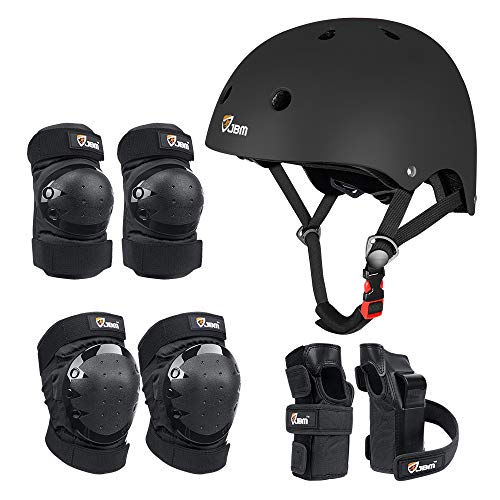
The JBM Protective Gear Set with Helmet is the only set here that adds a helmet to knee, elbow and wrist protection. It is sized Large and intended for ages 14 and up. The knee, elbow and wrist pieces use soft EVA padding with tough plastic plates; the helmet has multiple vents and adjustable fit features. The maker says the set suits inline skating, roller skating, skateboarding and scootering. Choose it when you need several kinds of protective gear together; it is more than a knee-pad-only purchase, so it may be unnecessary if you already have the other pieces.
Bottom line: Pick this set if you need a helmet and several kinds of pads together.
JBM Classic Pads and Wrist Guards

The JBM Classic Pads and Wrist Guards covers knees, elbows and wrists without adding a helmet, making it the simpler choice for skaters who already own head protection. It is the Large size for ages 12 and up, with multiple adjustable elastic straps intended to fit different knee girths. The pads combine soft EVA material with tough plastic plates. The maker identifies inline skating, roller skating, skateboarding and scootering as suitable activities. Its age range starts younger than the other JBM set, but buyers should still check that the straps secure the pads without shifting.
Bottom line: Choose this if you want knee, elbow and wrist pads for ages 12+.
Tanden Adult Skating Pads

The Tanden Adult Skating Pads specifies a 9 mm EVA layer beneath impact-resistant PP shells, a construction detail that sets it apart from the other two sets. It is an adult set for ages 14 and up, with knee and elbow pads plus wrist guards. The maker says breathable elastic fabric at the back supports airflow and that adjustable straps fit most adults. Choose it when you want adult-focused pads and the foam thickness matters to your comparison. The maker gives a broad “fits most adults” fit claim, so check the fit on your own knees before skating.
Bottom line: Pick this adult set if you want a specified 9 mm EVA layer.
How to Choose Knee Pads for Skating
Choose pads that stay centered over the kneecap through a deep bend, since a shifted cap can leave the joint exposed during a fall. Hard caps and soft sleeves serve different purposes: a plastic cap can slide across pavement, while foam-only sleeves focus on cushioning and may grip the surface instead. For repeated falls on concrete or ramps, favor a secure, cap-style pad; for light practice on smooth ground, comfort and unrestricted knee flexion may matter more. Skateboarding and roller skating can involve abrupt forward falls, so knee protection works best as part of a set that also covers wrists and elbows. Do not size by age alone; compare knee circumference with the maker’s sizing chart and test the straps while crouching.
Getting the Knee Pad Fit Right
A well-fitted skate knee pad covers the kneecap when the leg is straight and stays there when the knee bends. Measure around the center of the kneecap with a flexible tape, then use the maker’s size chart; age labels such as 12+ or 14+ do not replace a circumference check. Straps should hold the pad snugly without cutting circulation or restricting a skating stance. A useful fit check is to crouch deeply and take several steps: if the cap slides off-center or the straps loosen, adjust the fit before riding. Avoid placing a pad over bulky clothing, which can change how securely it sits. Replace a pad if a shell cracks or a strap no longer holds.
Hard-Shell Pads Versus Foam Sleeves
Hard-shell knee pads use a cap over cushioning, while foam sleeves rely mainly on padding and fabric. The cap can help a skater slide rather than catch on rough pavement during a fall, whereas a sleeve can feel less bulky and move more freely. Choose based on the surface and intensity: regular sessions on concrete or ramp transitions favor a securely strapped cap; casual low-speed practice may make a lighter sleeve more comfortable. Neither style makes falls risk-free, and no pad compensates for a loose fit. Knee pads also do not protect the head, wrists or elbows, so skaters learning new skills should consider those areas separately. Inspect shells, seams and fasteners before each session.
Frequently Asked Questions
How tight should skating knee pads feel?
Skating knee pads should stay centered when you bend deeply without pinching or restricting movement. If a pad rotates or slides during a crouch, adjust the straps or try another size before skating.
Do hard-shell knee pads slide on pavement?
A hard plastic cap is designed to let the pad slide more readily than fabric against pavement. That can reduce catching during a fall, but it does not prevent injury or replace a secure fit.
How do I measure for skating knee pads?
Measure around the center of the kneecap with the leg relaxed, then compare the circumference with the maker’s size chart. Recheck the fit in a deep bend because a pad that shifts may leave the kneecap exposed.
When should skate knee pads be replaced?
Replace a knee pad when its shell is cracked, padding is badly compressed, or straps and fasteners cannot keep it in place. Inspect the cap, seams and closures before each skating session.