
Best Korean Night Creams: 5 Picks Compared by Skin Need

Lepique Retinol Night Cream suits most people seeking a Korean night cream because its 0.1% retinol formula is paired with centella. Choose SKIN1004 Probio Cica Enrich Cream instead if you want a centella-rich moisturizer without retinol, or BIOHEAL BOH Probioderm 3D Lifting Cream if peptide-focused firming care is your priority.
We earn a commission if you buy through links on this page. As an Amazon Associate I earn from qualifying purchases. Products are compared on manufacturer specifications, not hands-on testing.
- Best overall: Lepique Retinol Night Cream – Its 0.1% retinol is paired with centella in a cream explicitly made for nighttime use.
- Best for barrier-focused moisture: SKIN1004 Probio Cica Enrich Cream – Ceramide NP, phytosterols, shea butter, and centella define its richer moisturizer formula.
- Best for peptide care: BIOHEAL BOH Probioderm 3D Lifting Cream – Its formula features a 17-peptide complex and Probioderm technology.
| Product | Best for | Key ingredients | Size | Night-use fit | Shop |
|---|---|---|---|---|---|
| Lepique Retinol Night Cream | Retinol beginners | 0.1% retinol, centella | 1.69 fl oz | Explicit night cream | Check Price on Amazon |
| SKIN1004 Probio Cica Enrich Cream | Centella moisture | Centella, ceramide NP, shea butter | 1.69 fl oz | Explicit night cream | Check Price on Amazon |
| BIOHEAL BOH Probioderm 3D Lifting Cream | Peptide-focused care | 17 peptides, beta-glucan | 1.69 fl oz (50 mL) | Cream; night use not explicit | Check Price on Amazon |
| CENTELLIAN 24 Madeca Cream Time Reverse | TECA moisturizer | TECA 11,900 PPM, centella | 1.69 fl oz | Moisturizer; night use not explicit | Check Price on Amazon |
| JIYU NAD+ Hydrating Face Moisturizer | Daily hydration | NAD+, 5-layer hyaluronic acid | 50 mL | Daily moisturizer; night use not explicit | Check Price on Amazon |
Korean Night Creams Compared
Compare the formulas by their featured ingredients and whether nighttime use is explicit.
Lepique Retinol Night Cream

Lepique Retinol Night Cream stands apart for pairing 0.1% retinol with centella in a formula aimed at beginners. The 1.69 fl oz cream also includes collagen and hyaluronic acid and is intended for the face and neck. The maker describes it as hydrating and firming overnight. It suits someone who wants a retinol-containing night cream rather than a plain moisturizer. Retinol can irritate skin, especially when introduced too quickly; start on a small area and use it on a limited number of nights before increasing frequency if comfortable.
Bottom line: Choose it if you want a beginner-oriented night cream with 0.1% retinol.
SKIN1004 Probio Cica Enrich Cream
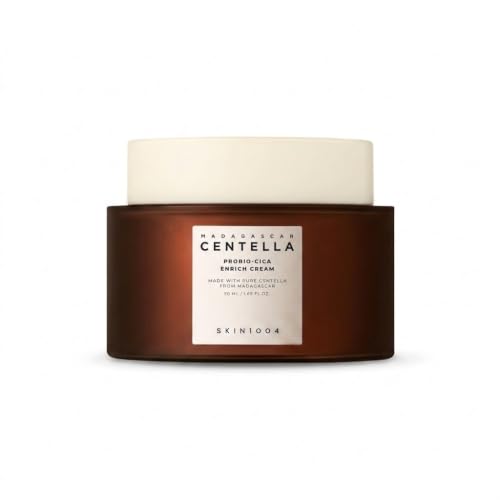
SKIN1004 Probio Cica Enrich Cream is the centella-focused option, combining fermented centella and a probiotic-derived complex with ceramide NP, phytosterols, shea butter, and skin-friendly oils. The 1.69 fl oz cream is specifically presented as a night face moisturizer and is positioned for long-lasting hydration. Its ingredient mix makes it a fit for someone prioritizing a richer moisture step over retinol or a peptide-led formula. The richer emollients may feel heavier than a lightweight lotion, so people who dislike that texture should consider a less rich moisturizer.
Bottom line: Choose it for a centella-rich nighttime moisture step.
BIOHEAL BOH Probioderm 3D Lifting Cream

BIOHEAL BOH Probioderm 3D Lifting Cream differs from the explicitly nighttime creams by focusing on a 17-peptide complex and Probioderm technology rather than naming nighttime use. The 1.69 fl oz (50 mL) cream also features copper peptide and beta-glucan, and the maker positions it for face-to-neck firming care with rich hydration. It suits someone whose main interest is a peptide-focused cream that can fit into an evening routine. Buyers specifically seeking a product labeled for night use should choose one of the explicit night creams instead.
Bottom line: Choose it for a peptide-led cream, not an explicitly nighttime formula.
CENTELLIAN 24 Madeca Cream Time Reverse

CENTELLIAN 24 Madeca Cream Time Reverse centers on TECA at 11,900 PPM, with centella, collagen, and hyaluronic acid, making its ingredient emphasis distinct from retinol and peptide options. It is described as a lightweight, fast-absorbing face moisturizer for hydration and barrier care, but nighttime use is not its explicit focus. The 1.69 fl oz size fits a buyer looking for a centella-based moisturizer that may be used in an evening routine. Its lightweight texture may be less appealing to someone who wants a noticeably rich night cream.
Bottom line: Choose it if TECA and a lightweight moisturizer matter more than explicit night labeling.
JIYU NAD+ Hydrating Face Moisturizer

JIYU NAD+ Hydrating Face Moisturizer is the daily moisturizer alternative, featuring NAD+ and five molecular forms of hyaluronic acid rather than an explicitly nighttime formula. The 50 mL cream is intended for face and body and is positioned for hydration and a non-greasy feel. It may suit someone who wants one moisturizer for daytime and evening use instead of a dedicated night cream. Its daily-use positioning and broader face-and-body purpose make it less targeted to shoppers who want a richer product specifically formulated for overnight care.
Bottom line: Choose it for a face-and-body daily moisturizer usable in an evening routine.
How to Choose a Korean Night Cream
Choose by the ingredient and texture you want to add to your evening routine, not by a broad promise such as firming. Retinol is a vitamin A derivative commonly used in nighttime skincare; a 0.1% formula is a low concentration, but irritation remains possible. Centella-focused creams and moisturizers with humectants or emollients prioritize moisture and comfort instead. Peptide creams are another formula type, but ingredient presence alone does not establish a particular result. If you are new to retinol, begin with one or two nights per week and increase gradually only if your skin tolerates it. A rich cream can be uncomfortable on oily-feeling skin, while a lightweight moisturizer may not feel substantial enough for someone seeking a heavier final step.
Retinol and Nighttime Routine Fit
Retinol is best introduced gradually: apply a pea-sized amount to dry skin at night, starting once or twice weekly rather than nightly. Keep it away from eyelids, corners of the nose, and lips, where irritation is more likely, and use moisturizer to reduce dryness. In the morning, use broad-spectrum SPF 30 or higher because sun protection is a core part of a retinoid routine. Avoid layering a new retinol product on the same night as other potentially irritating actives until you know how your skin responds. If burning, marked redness, or peeling develops, stop use and seek professional guidance. Anyone pregnant or trying to become pregnant should ask a clinician before using topical retinoids.
Night Cream Textures and Ingredients
Night creams vary from lighter moisturizers to richer creams, and the feel depends on the full formula rather than one ingredient. Humectants such as hyaluronic acid draw water into the outer skin layer, while emollients and occlusives help soften skin and reduce moisture loss. Shea butter and oils usually make a cream feel richer than a light lotion. Ceramides are lipids naturally found in the skin barrier; a formula with ceramide NP may appeal to shoppers prioritizing barrier-oriented moisture. Use this quick guide to match the formula style to your goal.
| Need | Formula direction |
|---|---|
| Retinol introduction | Low-concentration retinol, introduced gradually |
| Richer moisture | Emollients such as shea butter and oils |
| Light feel | Lightweight moisturizer texture |
| Peptide emphasis | Peptide-focused cream |
How to Layer a Night Cream
Apply a night cream after cleansing and any thinner water-based serum, usually as the last skincare step. A pea-sized amount is a practical starting point for a face cream; use a separate small amount for the neck if the product is intended for that area. Wait until damp skin has dried before applying retinol, since wet skin can increase irritation for some users. Do not assume a product labeled as a moisturizer replaces sunscreen: daytime protection still matters, particularly when using retinol. Introduce one new active product at a time and give several days between changes so you can identify the source if irritation occurs.
Frequently Asked Questions
How often should a beginner use retinol cream?
Start with one or two nights per week and increase slowly only if your skin remains comfortable. A 0.1% concentration is low, but irritation is still possible.
Can I use a night cream during the day?
A moisturizer can generally be used in daytime if its directions permit, but retinol routines need broad-spectrum SPF 30 or higher each morning. Introduce a retinol product at night and avoid assuming the cream itself provides sun protection.
Should night cream go before or after serum?
Apply a cream after thinner, water-based serum so it can serve as the final moisturizing step. For retinol, let damp skin dry first to reduce the chance of irritation.
How much night cream should I apply?
Start with about a pea-sized amount for the face and spread a thin, even layer. Use more only if the product directions call for it or your skin needs additional coverage.
Can I combine retinol with exfoliating acids?
Avoid starting retinol and exfoliating acids on the same night because the combination can increase irritation. Introduce each active separately, and consider alternating nights only after your skin tolerates both.