
Best Leather Conditioner for Gun Holsters Compared

Blue Wonder Gun Holster Leather Care is the best fit for most gun holsters because it is specifically made for holster leather and has a simple rub-on, dry, and wipe-off application. Choose Brimshiner Leather Conditioner, 8.5 oz if you want a larger conditioner whose maker says it helps holsters retain their shape; Galco Leather Cleaner & Conditioner, 4 oz is a more general cleaner and conditioner with less product-specific guidance.
A leather conditioner replenishes or protects leather, but too much can soften a holster and affect how securely it holds its shape. Use a small amount and check the holster maker’s care guidance before applying a new product.
We earn a commission if you buy through links on this page. As an Amazon Associate I earn from qualifying purchases. Products are compared on manufacturer specifications, not hands-on testing.
- Best overall: Blue Wonder Gun Holster Leather Care – Made for holster leather, with a rub-on, dry, and wipe-off application.
- Best for shape retention: Brimshiner Leather Conditioner, 8.5 oz – Its maker says the deep-conditioning formula leaves holsters supple without becoming floppy.
- Best for cleaner-conditioner use: Galco Leather Cleaner & Conditioner, 4 oz – Combines leather cleaning and conditioning in a 4-ounce size.
| Product | Best for | Size | Holster use | Application or formula | Shop |
|---|---|---|---|---|---|
| Blue Wonder Gun Holster Leather Care | Holster-specific care | — | Made for holsters | Rub on, dry, wipe off | Check Price on Amazon |
| Brimshiner Leather Conditioner, 8.5 oz | Shape-conscious conditioning | 8.5 oz | Holsters listed | Jojoba-based; deep conditioning | Check Price on Amazon |
| Galco Leather Cleaner & Conditioner, 4 oz | Cleaning and conditioning | 4 oz | General leather care | Cleaner and conditioner | Check Price on Amazon |
Leather Conditioners for Gun Holsters
Compare each option’s intended use and application before choosing a treatment for your holster.
Blue Wonder Gun Holster Leather Care
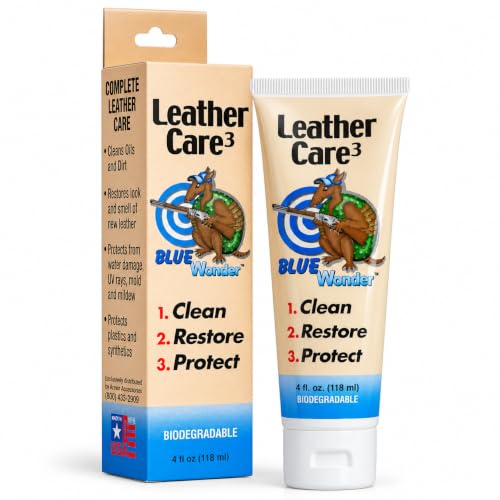
Blue Wonder Gun Holster Leather Care stands out as a holster-specific leather care product with a straightforward application. The maker says it protects against water and moisture damage and UV-related brittleness, and that it covers small scratches and marring. Apply it by rubbing it on, letting it dry, and wiping it off; the product also aims to restore leather feel and smell.
This is the clearest match for someone seeking a treatment expressly intended for a gun holster. Its size is not available in the specifications, so it is harder to compare the amount with the other options. Test a small, inconspicuous area first, especially on light-colored leather.
Bottom line: Choose this if you want a simple care product made specifically for holster leather.
Brimshiner Leather Conditioner, 8.5 oz

Brimshiner Leather Conditioner, 8.5 oz is the larger option here, and its maker explicitly includes holsters among the intended uses. The maker says its jojoba-based formula conditions deeply while helping leather gear retain its shape, and describes the result as water-resistant yet breathable. The 8.5-ounce size may suit someone treating several leather items as well as a holster.
The maker advises spot-testing lighter shades, so this is not a no-test choice for pale leather. Its claims about minimal darkening and shape retention are maker claims, not a guarantee for every holster leather or finish. Use sparingly: a holster that becomes too soft may no longer hold its intended form.
Bottom line: Pick this if you want an 8.5-ounce conditioner intended for holsters and other leather gear.
Galco Leather Cleaner & Conditioner, 4 oz

Galco Leather Cleaner & Conditioner, 4 oz differs from the holster-specific treatments because its name identifies it as a leather cleaner and conditioner rather than a holster-only care product. It comes in a 4-ounce size, making it the smallest clearly sized option in this comparison. The available product facts identify its combined cleaning-and-conditioning purpose but do not establish a holster-specific application method.
This option may suit someone who wants a single product for cleaning and conditioning leather. Because holsters rely on their shape, check the holster maker’s care guidance before using a general leather treatment, and test an inconspicuous spot first. The facts do not support a comparison of its ingredients or protective effects with the other choices.
Bottom line: Choose this if you want a 4-ounce cleaner-conditioner and have confirmed it suits your holster leather.
How to Choose Leather Conditioner for a Gun Holster
Choose a conditioner intended for holsters, then use the least product needed to maintain the leather. A holster must keep its shape to hold a firearm securely; heavy oiling or repeated conditioning can soften leather and affect retention. For a new formula, apply a small amount to a hidden area and let it dry fully before treating the visible surface. Check whether the holster maker permits conditioning, especially for finished, molded, or lined leather. A product described as water-resistant is not the same as waterproof, and conditioning is not a substitute for keeping leather dry. If a holster becomes noticeably floppy or its opening no longer holds shape, stop applying conditioner and consult the maker before using it again.
Why Holster Leather Needs a Light Touch
Holster care is different from conditioning a jacket because shape and retention matter as much as softness. Leather fibers can absorb oils and waxes; repeated or excess application may leave leather too supple for a molded holster to retain its form. Start with a clean, dry surface and a very small amount, then allow the treatment to absorb or dry as directed by its maker. Avoid soaking, saturating seams, or treating a holster while a firearm is inside it. Keep the firearm unloaded and separate from the holster during care, and confirm the chamber is empty before handling. If the leather is cracked, badly distorted, or no longer retains the firearm securely, do not rely on conditioner to restore safe function.
Holster-Specific Conditioner Versus General Leather Care
A holster-specific product is the more direct starting point; a general cleaner-conditioner is a broader-purpose alternative that calls for extra compatibility checking. Formula and intended use are more useful distinctions than a promise of softness alone: leather used to retain a firearm should not become floppy. Compare the options by their purpose and size, then use this guide to narrow the choice.
| Need | Choice direction | Reason |
|---|---|---|
| Holster-oriented care | Holster-specific treatment | Its intended use matches the gear |
| Holster plus other leather gear | Multi-use conditioner | Maker includes several leather items |
| Cleaning and conditioning together | Cleaner-conditioner | Combines those two purposes |
Regardless of type, test first and apply sparingly. A cleaner-conditioner should not be assumed suitable for a particular finish simply because it is made for leather.
How to Apply Conditioner Without Changing Holster Fit
Apply conditioner only to an unloaded, dry holster, and begin with a small test spot on an inconspicuous area. Let the test area dry completely and check whether its color, surface, and stiffness remain acceptable before treating more leather. Follow the product’s application method; for a rub-on treatment, avoid leaving excess product in seams or creases. Do not apply conditioner to a firearm, and keep the firearm separate until the holster is fully dry. After care, check that the holster retains its shape and that its opening and retention still function as intended. A change in fit or retention is a reason to stop using the holster until the maker advises you on next steps.
Frequently Asked Questions
Can leather conditioner make a holster too soft?
Yes, excess or repeated conditioning can soften leather enough to affect a holster’s shape and retention. Apply a small amount, then stop if the leather becomes floppy or no longer holds its form.
Should I condition a new leather holster?
Not automatically; many new holsters do not need immediate conditioning. Check the holster maker’s care guidance first, and test any approved product on a hidden spot before treating the whole holster.
Can I use jacket conditioner on a gun holster?
Only if the holster maker says the formula is suitable for that leather and finish. Jacket treatments may prioritize softness, while a holster also needs to retain its shape.
Should a firearm stay in the holster during conditioning?
No; keep the firearm unloaded and separate while applying or drying conditioner. Confirm the chamber is empty before handling the firearm, and wait until the holster is fully dry before using it.
How much leather conditioner should I apply?
Start with a very small amount on a hidden test area, then let it dry fully before deciding whether to continue. Avoid saturating the leather, seams, or creases because excess treatment can change stiffness.