
Best Lens Cleaning Cloths: 4 Options Compared

The Koala Lens Cleaning Cloth is the best pick for most people because its six 6 x 7-inch cloths fit eyeglasses, phones, and other small surfaces. Choose a different option if you need larger cloths for broad screens, want a higher pack count, or prioritize a specified fabric weight.
We earn a commission if you buy through links on this page. As an Amazon Associate I earn from qualifying purchases. Products are compared on manufacturer specifications, not hands-on testing.
- Best overall: Koala Japanese Microfiber Cloth, 6-Pack – Six 6 x 7-inch cloths suit eyeglasses, phones, and small lenses.
- Best for fabric weight: Crizal Eyeglass Cloth, 4-Pack – Its 240 GSM construction gives a defined microfiber weight.
- Best for a larger supply: SmoTecQ Microfiber Cloths, 12-Pack – Twelve 7 x 6-inch cloths come in six colors.
| Product | Best for | Cloth size | Pack count | Fabric detail | Shop |
|---|---|---|---|---|---|
| Koala Japanese Microfiber Cloth, 6-Pack | Everyday glasses care | 6 x 7 in | 6 | Honeycomb weave | Check Price on Amazon |
| MagicFiber Microfiber Cloth, 6-Pack | Individually packed cloths | 5 in (one dimension) | 6 | Microfiber | Check Price on Amazon |
| Crizal Eyeglass Cloth, 4-Pack | Defined fabric weight | — | 4 | 240 GSM | Check Price on Amazon |
| SmoTecQ Microfiber Cloths, 12-Pack | Multiple carry locations | 7 x 6 in | 12 | Soft microfiber | Check Price on Amazon |
Best lens cleaning cloth options
Compare cloth dimensions, pack sizes, and fabric characteristics to match your everyday cleaning needs.
Koala Japanese Microfiber Cloth, 6-Pack
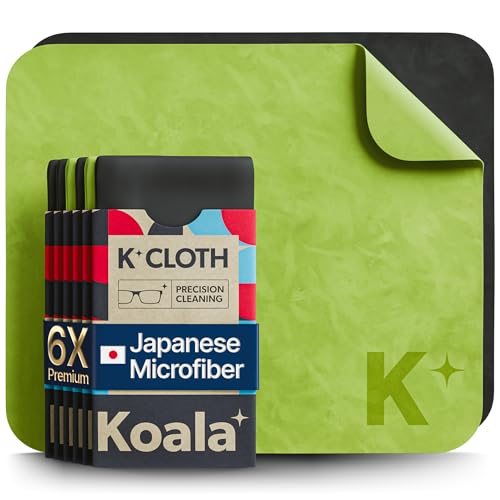
The Koala cloth stands apart with a dense honeycomb weave and six 6 x 7-inch pieces sized for eyeglasses, sunglasses, and phones. The maker says the microfiber is suitable for coated lenses and screens, including camera lenses and tablets. This pack suits someone who wants several small cloths for routine carry and home use. The tradeoff is size: 6 x 7 inches is less convenient for wiping a broad laptop or monitor display than a larger cloth.
Bottom line: Choose this pack for everyday glasses and small-screen cleaning.
MagicFiber Microfiber Cloth, 6-Pack

The MagicFiber pack differentiates itself by putting each cloth in its own polybag, which can keep a spare separated in an eyeglass case or bag. The maker says its microfiber lifts dust, oil, smudges, fingerprints, and dirt from glasses and screens without lint or streaks. Six pieces make sense for people who want individually stored cloths rather than a single loose stack. One dimension is 5 inches, so shoppers who need a roomy cloth for larger displays may prefer an option with dimensions in both directions.
Bottom line: Pick it when individually stored spares matter most.
Crizal Eyeglass Cloth, 4-Pack

The Crizal cloth is the only option here with a microfiber weight: 240 grams per square meter. GSM measures fabric mass per area, making this a useful specification for shoppers comparing cloth construction rather than just pack count. The maker describes the fine fibers as lifting and trapping dust, dirt, fingerprints, and everyday residue. This four-piece pack suits buyers focused on glasses care and a defined fabric weight. Its smaller count may be less practical for someone who wants cloths distributed across several bags or rooms.
Bottom line: Choose it if a microfiber weight is your priority.
SmoTecQ Microfiber Cloths, 12-Pack

The SmoTecQ pack has the largest quantity in this comparison, with 12 cloths in six colors and two of each color. Each cloth measures 7 x 6 inches and comes in an individual protective sleeve, making it convenient to distribute among a car, office, or eyeglass case. The maker says the soft microfiber is washable and reusable and is intended for coated and polarized lenses as well as screens. Its compact size remains best suited to glasses and smaller surfaces, not a fast wipe across a large display.
Bottom line: Pick this set to keep cloths in several places.
How to choose a lens cleaning cloth
For glasses, choose a soft, clean microfiber cloth sized for the lens rather than a paper tissue or clothing. Fine microfiber fibers lift and hold particles; rubbing trapped grit across a lens can scratch coatings. A 6 x 7-inch cloth is a practical everyday size for glasses and phones, while a larger cloth covers broad screens with fewer passes. Choose a washable, reusable cloth if you can keep it clean between uses, and reserve it for lenses rather than using it on dusty household surfaces.
Pack count and construction answer different needs: more cloths help distribute spares, while a GSM number describes fabric mass per square meter. Color can also help keep cloths assigned to separate devices or locations.
Lens cloth sizes and device fit
Small cloths around 6 x 7 inches work well for eyeglass lenses, camera lenses, and phone screens; wide displays are easier to cover with a larger cloth. Surface area, not device brand, is the useful sizing rule: a cloth should span the lens or screen area without forcing a user to bunch it tightly. The Koala cloth maker points to a 12 x 12-inch size for laptops, tablets, and monitors, while the six-pack in this comparison is 6 x 7 inches.
For glasses, keep a dedicated clean cloth in its sleeve or case. Before wiping, check for loose grit and remove it gently; grinding a particle into a coated lens can leave a permanent mark.
Microfiber weight and weave compared
GSM means grams per square meter, a fabric weight measurement; higher GSM alone does not establish how well a cloth cleans. Among these choices, Crizal specifies 240 GSM, while Koala specifies a dense honeycomb weave and the other options identify microfiber without a GSM figure. Compare stated construction only when that detail matters to your choice, and use surface fit and clean handling as the practical deciding factors.
| Need | Useful choice factor | Option |
|---|---|---|
| Glasses and phone | Compact 6 x 7-inch size | Koala 6-pack |
| Defined fabric weight | 240 GSM | Crizal 4-pack |
| Cloths for several locations | 12-piece quantity with sleeves | SmoTecQ 12-pack |
How to care for lens cleaning cloths
Wash reusable microfiber cloths separately from lint-producing fabrics, and avoid fabric softener because residue can reduce microfiber’s ability to pick up particles. Let the cloth dry fully before storing it in a sleeve or case; a damp cloth can hold grime against a lens. A practical rule is to wash a cloth when it looks visibly dirty or leaves smears after wiping, rather than continuing to rub with a contaminated surface.
Keep a cloth used for camera gear or glasses away from greasy kitchen and automotive surfaces. If a lens has grit or dried residue, use an appropriate lens-cleaning solution and avoid scraping or dry-rubbing the debris.
Frequently Asked Questions
Can I use a microfiber cloth on coated eyeglasses?
Yes, a clean, soft microfiber cloth is commonly used on coated eyeglass lenses. Remove loose grit before wiping so particles do not drag across the coating.
How often should I wash a lens cloth?
Wash a reusable lens cloth when it appears dirty or starts leaving smears; frequent use can load the fibers with oil and dust. Keep the cloth fully dry and separate from lint-producing laundry.
Is 240 GSM better for cleaning lenses?
Not by itself: GSM measures fabric weight per square meter, not cleaning performance. Use 240 GSM as a construction comparison, then prioritize clean microfiber and a size that fits your lenses.
What cloth size works for phone screens?
A cloth around 6 x 7 inches is a manageable size for phones and glasses. For a laptop or monitor, a larger cloth such as 12 x 12 inches covers more area per pass.
Can one lens cloth clean both glasses and a camera lens?
A clean microfiber cloth can be used on both, but keep it free of grit and oily residue between uses. For delicate camera optics, remove loose dust first and avoid pressing particles into the glass.