
Best Lung Exerciser Device: 3 Trainers Compared

Inhale Respiratory Trainer suits most people looking for a lung exerciser device because its adjustable resistance supports both inhalation and exhalation practice in a compact 4-inch body. Choose THE BREATHER Trainer instead if guided training matters more; these are breathing-muscle trainers, not substitutes for prescribed respiratory care.
We earn a commission if you buy through links on this page. As an Amazon Associate I earn from qualifying purchases. Products are compared on manufacturer specifications, not hands-on testing.
- Best overall: Inhale Respiratory Trainer – Adjustable resistance is designed for both inhalation and exhalation, and the device is 4 inches long.
- Best for guided practice: THE BREATHER Trainer – Includes access to online self-paced video protocol training.
- Best for a simple control: Expand-A-Lung Trainer – A knob adjusts airflow resistance, with dual-way training and no battery or charging.
| Product | Best for | Adjustment | Length | Shop |
|---|---|---|---|---|
| Inhale Respiratory Trainer | Adjustable dual-way | Adjustable dial | 4 in | Check Price on Amazon |
| Expand-A-Lung Trainer | Knob-adjusted resistance | Adjustment knob | 4 in | Check Price on Amazon |
| THE BREATHER Trainer | Video-guided practice | — | 5.1 in | Check Price on Amazon |
Lung Exerciser Devices Compared
Compare how each breathing-muscle trainer handles airflow resistance and guided practice.
Inhale Respiratory Trainer

Adjustable resistance in both directions sets this trainer apart for people who want to practice inhalation and exhalation with one device. It measures 4 by 2.5 by 1.25 inches and includes a carrying case. The maker says it is designed and assembled in the United States and uses medical-grade silicone. Its compact size may suit a portable routine, while buyers who want video guidance should consider a model that includes training access instead. Resistance training should not replace care or a breathing plan prescribed by a clinician.
Bottom line: Choose this if you want one compact device with an adjustable dial for inhale and exhale practice.
Expand-A-Lung Trainer

A simple adjustment knob is the distinguishing feature of this dual-way trainer, letting users change airflow resistance without batteries or charging. The maker says resistance ranges from very light to challenging, so it may suit people who want to adjust practice over time. The device is 4 inches long. Its appeal is straightforward resistance control rather than included guided video training; people who need a structured protocol should look for professional guidance.
Bottom line: Pick this for a compact, battery-free trainer with knob-adjusted resistance in both directions.
THE BREATHER Trainer
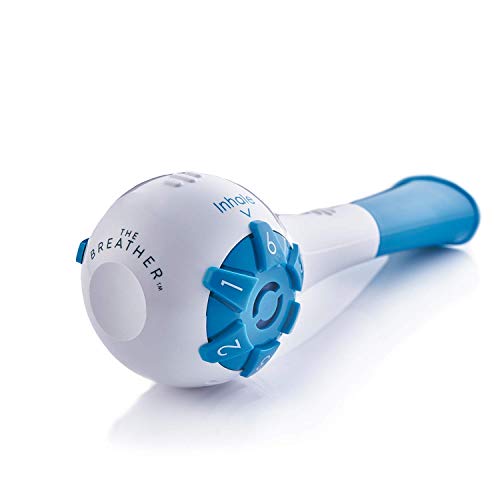
Online self-paced video protocol training distinguishes THE BREATHER from the two compact models with explicit resistance controls. The maker says the trainer supports diaphragmatic breathing and works inhale and exhale muscles. Its dimensions are 5.1 by 1.7 by 1.8 inches, making it longer than the 4-inch options here. It may suit someone who values guided instruction, while buyers specifically seeking a visible adjustable dial should compare another model. Use the videos as general training support, not as a replacement for individualized clinical advice.
Bottom line: Choose this if access to self-paced video protocol training is your priority.
How to Choose a Lung Exerciser Device
Choose by the direction of resistance and the kind of guidance you want. Inspiratory muscle trainers resist air as you breathe in; dual-way trainers can also resist exhalation. A dial or knob makes resistance adjustable, but a control alone does not tell you the force in a measurable unit. Start with a setting that permits steady, controlled breaths rather than straining, and increase challenge only under a plan appropriate to you. If a clinician prescribed a specific device or breathing routine, match that instruction before choosing a general-purpose trainer. Mouthpiece comfort, cleaning instructions, and a resistance scale can matter in daily use; verify those details with the manufacturer when they are essential to your routine.
How Breathing Resistance Works
Resistance training makes breathing muscles work against restricted airflow, unlike a simple visual breathing exercise that mainly cues inhalation. Inspiratory resistance acts during a breath in, while dual-direction trainers add resistance during a breath out. Avoid forcing breaths or continuing through dizziness, unusual shortness of breath, or chest discomfort; stop and seek clinical advice if symptoms occur. A respiratory trainer is not a substitute for prescribed inhalers, airway-clearance therapy, or medical evaluation. People with lung or heart conditions should ask a qualified clinician whether resistance breathing is suitable before starting.
Size and Daily Use Considerations
These compact trainers range from 4 to 5.1 inches in length, so length is a practical portability measure rather than proof of fit or comfort. Check whether the mouthpiece shape, storage method, and cleaning routine work for the person who will use it; those points are not provided for every model. For shared use, do not share mouth-contact parts unless the manufacturer specifically permits it and gives cleaning directions. Moisture and saliva can collect in breathing devices, so follow the device-specific cleaning and drying instructions instead of assuming a universal method. If a trainer will be used during supervised therapy, confirm that its resistance function matches the clinician’s prescribed exercise.
Common Lung Trainer Mistakes
The common mistake is treating every breathing device as interchangeable. A muscle trainer creates airflow resistance for practice, while an incentive spirometer typically gives visual feedback to encourage a slow deep inhalation, and a flutter valve uses oscillating pressure for airway clearance. Those distinct purposes matter: an airway-clearance device is not automatically a resistance trainer, and visual feedback is not the same as adjustable muscle loading. Another mistake is increasing resistance because a session feels easy without considering technique or symptoms. Follow a clinician’s prescribed pace when one exists, and stop if breathing becomes uncomfortable. Do not rely on a trainer to diagnose or manage new or worsening respiratory symptoms.
Frequently Asked Questions
How often should I use a lung exerciser device?
If a clinician prescribed a routine, use that schedule rather than increasing sessions on your own.
Can a breathing trainer replace an incentive spirometer?
No, the devices generally serve different roles: resistance trainers load breathing muscles, while incentive spirometers use visual feedback to cue a slow deep inhale. Follow the device and routine prescribed for your care.
Should I increase resistance during every session?
No, resistance should not be increased automatically each session. Keep breaths controlled and stop if you feel dizzy or unusually short of breath; ask a clinician about progression if you have a medical condition.
How do I clean a lung exerciser mouthpiece?
Use the cleaning and drying method supplied for the specific model, because materials and construction can differ. Never share a mouth-contact device unless its manufacturer permits sharing and explains proper disinfection.
Are lung exercisers safe for people with asthma?
A lung exerciser is not a replacement for asthma medication or an action plan. Ask a clinician before using resistance breathing if you have asthma, and stop if the exercise triggers symptoms.