
Best Mirror Tints for Cars: 4 Options Compared

XhuangTech Blue Mirror Tint is the best fit for most people seeking mirror tint for car windows because its 35% VLT lets more visible light through than JNK NETWORKS Silver Reflective Tint at 12% VLT. Choose JNK NETWORKS Silver Reflective Tint if you want silver reflective film, or consider the clear mirror films only if your goal is wet-weather mirror coverage rather than tinted windows.
Reflective window film darkens or mirrors glass; clear anti-fog stickers are a different product for rearview or side mirrors.
We earn a commission if you buy through links on this page. As an Amazon Associate I earn from qualifying purchases. Products are compared on manufacturer specifications, not hands-on testing.
- Best overall: XhuangTech Blue Mirror Tint – Its 35% VLT is brighter than the 12% VLT silver option.
- Best for silver tint: JNK NETWORKS Silver Reflective Tint – Silver reflective film comes in a 20-inch-by-10-foot roll.
- Best for mirror fog: AVAVXFLY Clear Mirror Film – Clear film is intended for rearview mirrors in wet conditions.
| Product | Best for | Film type | VLT | Size | Shop |
|---|---|---|---|---|---|
| XhuangTech Blue Mirror Tint | Brighter window tint | Blue reflective window film | 35% | 20 in x 10 ft | Check Price on Amazon |
| JNK NETWORKS Silver Reflective Tint | Silver window tint | Silver reflective window film | 12% | 20 in x 10 ft | Check Price on Amazon |
| AVAVXFLY Clear Mirror Film | Wet-weather mirrors | Clear rearview mirror film | — | 2 pieces | Check Price on Amazon |
| Frienda Waterproof Mirror Films | Multiple mirror shapes | Waterproof mirror stickers | — | 18 pieces | Check Price on Amazon |
Mirror Tints for Cars
Compare reflective window films with clear films made for vehicle mirrors.
XhuangTech Blue Mirror Tint

XhuangTech Blue Mirror Tint is the brighter of the two window films here, with a 35% VLT that allows more visible light through than the 12% option. The blue-changing-green film is sized 20 inches by 10 feet, and the maker says it blocks 90% of UV rays. Its mirror effect is intended for daytime privacy; the maker cautions that interior lighting at night can make the inside visible from outside. This suits buyers prioritizing a lighter tint, but the color and reflective appearance may not suit a neutral look.
Bottom line: Choose this for a blue-toned reflective film with 35% VLT.
JNK NETWORKS Silver Reflective Tint

JNK NETWORKS Silver Reflective Tint stands out for its silver finish and 12% VLT, a darker transmission figure than XhuangTech Blue Mirror Tint. The roll measures 20 inches by 10 feet, and the maker claims 80% heat reduction and 99% blocking of infrared and UV rays. Those performance figures are maker claims, not a substitute for checking local tint requirements. This option suits buyers seeking a silver mirror appearance and lower visible-light transmission; its darker VLT may be unsuitable where brighter glass is needed or local rules restrict it.
Bottom line: Pick this for silver reflective film and a 12% VLT.
AVAVXFLY Clear Mirror Film

AVAVXFLY Clear Mirror Film is a clear film for rearview mirrors, not a tinted window roll. The package contains two pieces, and the maker describes the film as an anti-fog and rainproof barrier intended to preserve mirror visibility in wet conditions. Its clear design makes it a better match for someone addressing mist or water on a mirror than someone seeking a colored or reflective window tint. The size is labeled “Trumpet,” so confirm the mirror shape and dimensions before ordering; a two-piece pack may not cover every mirror surface.
Bottom line: Choose this for clear rearview-mirror coverage in wet weather.
Frienda Waterproof Mirror Films
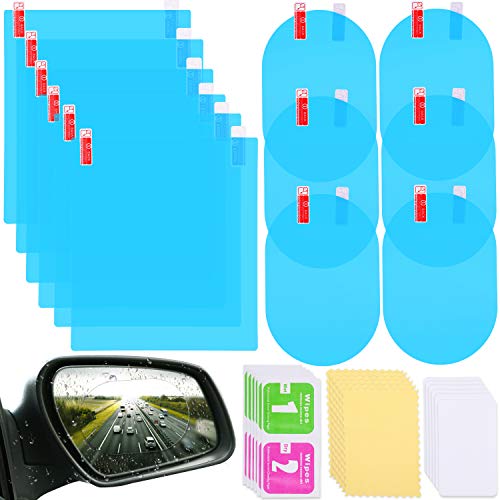
Frienda Waterproof Mirror Films differs from the window tints by providing waterproof films for vehicle mirrors, with oval and square shapes and PET plus nano-coating. The maker says the coating helps water spread and reduces condensation and glare. Its 18-piece pack is suited to someone who needs multiple mirror stickers or varied shapes, rather than a continuous window film. The package dimensions are 9.25 by 9.06 inches, but that does not establish the size of each individual sticker, so match the actual mirror surface before applying.
Bottom line: Pick this for a multi-piece assortment of mirror stickers.
How to Choose Mirror Tint for Car Windows
Choose window film by VLT, finish, and the glass area you plan to cover. Visible light transmission (VLT) is the share of visible light that passes through the film: 35% passes more light than 12%, so use 35% when a brighter cabin view matters more than a darker appearance. Reflective films also depend on the relative light inside and outside; a mirror effect in daylight does not guarantee privacy after dark. Measure each pane before cutting: a 20-inch-wide roll cannot cover a wider pane in one piece, and the usable coverage also depends on overlap and trimming. For vehicles, check the legal VLT and reflectivity limits for the specific window position before installation.
Window Film and Mirror Stickers Are Different
Reflective window tint is a roll for glazing, while clear anti-fog film is a small sticker for a rearview or side mirror. Window film is compared by VLT, color, and roll dimensions; mirror stickers are compared by mirror shape and surface coverage. A clear mirror sticker does not darken a side window, and a window roll is not shaped for a mirror’s curved reflective surface. Some vehicle side mirrors are convex, which changes how objects appear and makes full, bubble-free contact important. Before choosing a sticker, compare its actual dimensions with the mirror’s usable area; a pack count or package size does not tell you the size of each piece.
| Need | Product type | Key measure |
|---|---|---|
| Reflective window finish | Window film roll | VLT and roll width |
| Wet-weather mirror coverage | Clear mirror sticker | Mirror shape and piece size |
VLT, Visibility, and Legal Fit
VLT helps compare brightness, but it does not by itself establish whether film is legal on a particular vehicle window. US tint rules vary by state and can set different limits for front side windows, rear side windows, and the windshield; some rules also address reflectivity. A film’s VLT is not necessarily the final glass VLT, because factory-tinted glass also reduces light transmission. For a practical decision, check the applicable limit for that window and avoid choosing a film whose VLT is already at the legal threshold without accounting for the glass beneath it. Reflective film should not be treated as a nighttime privacy barrier when cabin lighting is brighter than the outside.
Preparing Mirror Surfaces for Film
Clean glass and mirror surfaces thoroughly before applying adhesive film; dust trapped beneath a thin film can create visible bumps and interfere with contact. Many window films are installed with a wet application, a squeegee, and careful trimming, while small mirror stickers require alignment to the mirror outline and removal of trapped water or air. Avoid covering mirror areas beyond the reflective surface, and do not obstruct a driver’s view through required windows. Work in a clean, shaded area rather than hot direct sun, which can make film harder to position as the application fluid dries. Let the adhesive settle before cleaning the surface, and use only a soft cloth to reduce the risk of scratching the film.
Frequently Asked Questions
What does 35% VLT mean for car tint?
A 35% VLT film transmits 35% of visible light through the film. It is brighter than a 12% VLT film, though the finished glass appearance also depends on the vehicle glass.
Does mirror tint keep a car private at night?
Reflective tint does not guarantee nighttime privacy. When the inside is brighter than the outside, people may be able to see into the vehicle, so do not rely on mirror film as a privacy barrier after dark.
Can clear mirror film replace window tint?
No; clear mirror stickers are intended for mirror surfaces, while window tint is made to cover glass panels. Choose by surface and purpose rather than by the word “mirror” in the product name.
How do I choose between 12% and 35% VLT?
Choose 35% when you want more visible light transmission; choose 12% only when a darker tint suits your visibility needs and local rules. Check the legal VLT limit for the specific window before applying either film.