
Best Mops for LVP: 4 Options Compared by Floor Care

O-Cedar H2prO Flat Mop suits most LVP owners because its dual-tank system separates clean and dirty water and its maker identifies vinyl as a compatible floor. Choose a different style if you prefer a bucket-and-spin wringer, a refillable spray bottle, or powered scrubbing.
LVP, or luxury vinyl plank, has a water-resistant wear surface, but seams and edges can still be vulnerable to excess water. A microfiber mop that leaves little moisture is a practical choice.
We earn a commission if you buy through links on this page. As an Amazon Associate I earn from qualifying purchases. Products are compared on manufacturer specifications, not hands-on testing.
- Best overall: O-Cedar H2prO Flat Mop – Its dual-tank system separates clean and dirty water, and vinyl is named as a compatible floor.
- Best for spray cleaning: Refillable 800 ml Spray Mop – The refillable 800 ml bottle and trigger let you apply a mist as you mop.
- Best for hands-free wringing: O-Cedar EasyWring Microfiber Spin Mop – The bucket’s built-in wringer spins out the washable microfiber mop head.
| Product | Best for | Mop style | Water system | Reusable pads | Shop |
|---|---|---|---|---|---|
| O-Cedar H2prO Flat Mop | Everyday mopping | Flat mop | Dual tanks; up to 650 sq ft per fill | Machine-washable microfiber | Check Price on Amazon |
| Refillable 800 ml Spray Mop | Quick spot cleaning | Spray mop | Refillable 800 ml bottle | Three reusable microfiber pads | Check Price on Amazon |
| O-Cedar EasyWring Microfiber Spin Mop | Bucket wringing | Spin mop and bucket | Built-in wringer; splash guard | Machine-washable microfiber | Check Price on Amazon |
| O-Cedar RinseClean Spin Mop | Clean-water bucket | Spin mop and bucket | Separate clean-water system; foot pedal | Machine-washable microfiber | Check Price on Amazon |
Mops for LVP
Choose a mop that matches your routine while limiting moisture left on vinyl plank floors.
O-Cedar H2prO Flat Mop

O-Cedar H2prO Flat Mop stands apart with separate clean- and dirty-water tanks, and its maker names vinyl among the compatible floor types. The clean-water tank covers up to 650 square feet per fill, and built-in jets wet the pad without batteries. Its compact design suits quick cleanups and everyday dirt, including muddy paw prints. The tradeoff is that the features do not describe a wringing mechanism, so buyers who want to control pad dampness by spinning it dry may prefer a bucket system. For LVP, avoid leaving puddles or wet seams behind.
Bottom line: Choose this for routine vinyl-floor cleaning with separate clean and dirty water.
Refillable 800 ml Spray Mop
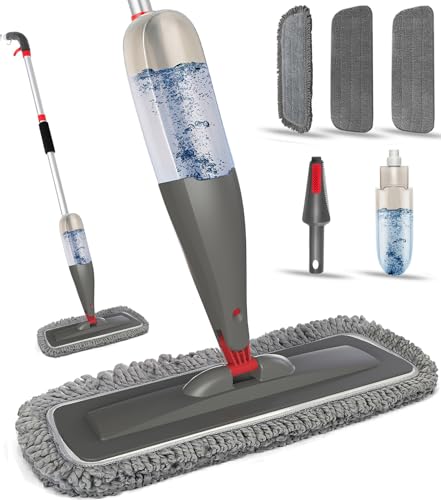
Refillable 800 ml Spray Mop differs from bucket systems by applying a spray from its refillable 800 ml bottle as you mop. It comes with three reusable pads, and its swivel head is designed to reach under furniture and along baseboards. This is a good fit for small spills and frequent touch-ups when carrying a bucket feels like extra work. The limitation is that the features do not specify a water-control setting or pad wringer; use short trigger presses and avoid saturating LVP seams. The maker says the bottle can hold a custom cleaning solution, but use a cleaner approved for your flooring.
Bottom line: Pick this for quick spray-and-wipe cleaning and reusable pads.
O-Cedar EasyWring Microfiber Spin Mop

O-Cedar EasyWring Microfiber Spin Mop is the bucket option among these mops, with a built-in wringer and splash guard to contain water while wringing or moving the bucket. Its machine-washable microfiber head is made to capture dirt and grime with plain water, according to the maker. The wringer can help remove excess water before the mop touches vinyl plank flooring, making it a fit for people who prefer a bucket routine. The tradeoff is carrying and emptying a bucket rather than using a compact spray or flat system. Wring thoroughly and dry any standing water promptly.
Bottom line: Choose this if you prefer a bucket and want to wring out microfiber by hand-free spinning.
O-Cedar RinseClean Spin Mop

O-Cedar RinseClean Spin Mop uses a clean-water system and foot-pedal wringer, distinguishing it from the standard spin bucket and spray options. The microfiber heads are machine washable. The maker claims the mop removes over 99% of bacteria with water; that is a maker claim, not a substitute for disinfecting when a surface requires it. This system suits people who want to rinse the mop with clean water during bucket cleaning. Its bucket format takes more setup and storage space than a flat mop, and LVP owners should wring out the pad well to avoid leaving water at plank seams.
Bottom line: Choose this for a clean-water bucket routine with a foot-pedal wringer.
How to choose a mop for LVP
For LVP, prioritize a soft microfiber pad and a method that leaves the floor only lightly damp. Vinyl plank tolerates routine damp mopping, but water can seep through joints or edges and affect the layers below. Avoid abrasive scrub pads and stiff brushes that may scuff the wear layer. A spray mop gives you control over small amounts of liquid; a spin mop lets you wring out the head before cleaning. For large rooms, consider how often you will need to refill or rinse the system. If you see puddles or water collecting along seams, stop and dry the area rather than continuing to mop over it.
How much water is safe on vinyl plank
Use as little moisture as needed to lift dirt, and do not leave standing water on LVP. Water-resistant does not mean waterproof at every seam: plank joints, transitions, and perimeter edges can provide paths for moisture. A lightly damp microfiber pad is safer than a dripping mop. Work in small sections, and dry visible pools promptly with a clean cloth. If a spill reaches a seam or edge, wipe it up rather than letting it sit. Flooring makers can set different cleaning rules for their wear layers and installation types, so verify any cleaner or method that could affect a warranty.
Cleaning products and methods to avoid on LVP
Avoid steam mops on vinyl plank unless the flooring manufacturer expressly approves them; heat and moisture can damage planks or weaken adhesive. Skip abrasive powders, scouring pads, and wax or polish products that can scratch or leave buildup. Use a pH-neutral cleaner labeled as suitable for LVP when plain water is not enough, and apply it to the pad or in a controlled mist instead of flooding the floor. Strong solvents and ammonia-based cleaners may harm some vinyl finishes. A practical rule is to test a cleaner on an inconspicuous spot first and stop if the finish changes or feels tacky.
Mop styles for LVP compared
Manual microfiber mops are usually the simplest fit for LVP because they can clean without abrasive action and leave little water when properly wrung. Spray mops suit touch-ups, while spin buckets offer a way to rinse and remove moisture. Powered scrubbers can help with stuck-on grime, but verify floor compatibility and pad gentleness before using one on vinyl. The table compares the practical tradeoffs, not cleaning results.
| Mop style | Good fit | Watch for |
|---|---|---|
| Spray mop | Small spills and quick passes | Do not over-spray seams |
| Spin mop and bucket | Rinsing and wringing a pad | Wring thoroughly before use |
| Powered spinning mop | Sticky messes on approved floors | Confirm LVP compatibility first |
Frequently Asked Questions
Can I use a steam mop on LVP flooring?
Avoid steam mops on LVP unless the flooring maker expressly approves the method. Steam combines heat and moisture, which can damage planks or weaken adhesive.
How often should I damp mop vinyl plank floors?
Damp mop when tracked-in dirt or spills need removal; there is no single interval for every household. Sweeping or vacuuming with a hard-floor setting between mops helps keep grit from scratching the wear layer.
What cleaner should I use on luxury vinyl plank?
Use a pH-neutral cleaner labeled for LVP when water alone is insufficient. Test it in an inconspicuous area first, and avoid wax, abrasive powders, and strong solvents that may affect the finish.
Can a spin mop leave too much water on LVP?
Yes, a dripping mop can leave water at plank joints and edges. Wring the microfiber head until it is only damp, and wipe up puddles as soon as they appear.
Are microfiber pads safe for vinyl plank floors?
Soft microfiber pads are generally suitable for routine LVP cleaning because they are nonabrasive when clean. Rinse grit out of the pad and avoid pairing it with a rough scrub surface.