
Best Nasal Moisturizer Gel: 3 Options Compared

Ayr Saline Nasal Gel with Aloe, 0.5 oz is the best nasal moisturizer gel for most people because its saline gel comes in a simple 0.5-ounce tube with soothing aloe. Choose Aquegel Original Unscented, 0.5 fl oz instead if oxygen-therapy compatibility and its maker-claimed 12-hour moisture are priorities; choose a spray if you prefer metered application.
We earn a commission if you buy through links on this page. As an Amazon Associate I earn from qualifying purchases. Products are compared on manufacturer specifications, not hands-on testing.
- Best overall: Ayr Saline Nasal Gel with Aloe, 0.5 oz – A 0.5-ounce saline gel tube with soothing aloe suits straightforward moisture care.
- Best for oxygen therapy: Aquegel Original Unscented, 0.5 fl oz – Its water-based formula is designed with oxygen therapy in mind and is maker-claimed to provide 12 hours of moisture.
- Best for drip-free spray: NeilMed NasoGel Spray, 30 mL, 2-pack – A drip-free gel spray format combines aloe vera and sodium hyaluronate.
| Product | Best for | Format | Volume | Notable ingredients | Shop |
|---|---|---|---|---|---|
| Ayr Saline Nasal Gel with Aloe, 0.5 oz | Simple tube application | Tube gel | 0.5 oz | Saline, aloe | Check Price on Amazon |
| Aquegel Original Unscented, 0.5 fl oz | Oxygen therapy routines | Water-based gel | 0.5 fl oz | 50% water | Check Price on Amazon |
| NeilMed NasoGel Spray, 30 mL, 2-pack | Drip-free gel spray | Gel spray | 30 mL x 2 | Aloe, sodium hyaluronate | Check Price on Amazon |
Nasal moisturizer gels compared
Compare the application style and formula first, then match the choice to your routine and equipment needs.
Ayr Saline Nasal Gel with Aloe, 0.5 oz
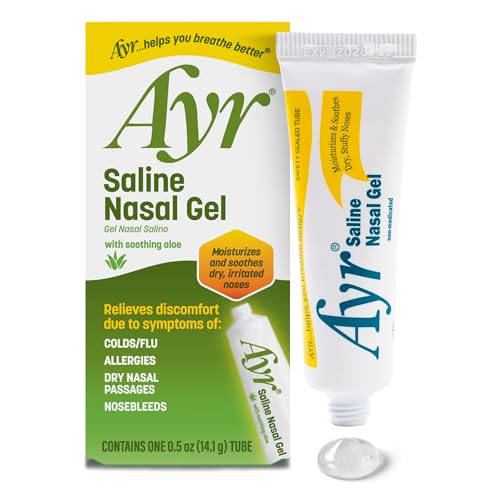
Ayr Saline Nasal Gel with Aloe, 0.5 oz is a straightforward tube gel, while the other choices include a water-based long-duration formula or spray formats. The 0.5-ounce tube contains saline gel with soothing aloe and is intended to restore moisture to dry or irritated nasal membranes. Its maker says the formula is gentle enough for babies and year-round use, with day- and nighttime use in mind.
The tube format suits someone who wants gel rather than a spray. The package is smaller than the 30 mL two-bottle spray set, so it may be less suitable for someone prioritizing a spray routine or a larger combined supply.
Bottom line: Choose this for a simple saline-and-aloe gel in a tube.
Aquegel Original Unscented, 0.5 fl oz

Aquegel Original Unscented, 0.5 fl oz is the option with an oxygen-therapy emphasis and a time-release moisture claim, unlike the saline-and-aloe tube and spray choices. Its water-based gel contains 50% water by weight per volume and is designed with oxygen therapy in mind; its maker says it is non-flammable and will not degrade tubing. The maker also claims body heat activates a dissolving base that provides moisture for up to 12 hours.
This formula may suit people using a cannula or other oxygen equipment who want a gel rather than a mist. The 12-hour duration is a maker claim, and the 0.5-fluid-ounce size is not larger than the tube options.
Bottom line: Choose this if oxygen-therapy compatibility is your main selection factor.
NeilMed NasoGel Spray, 30 mL, 2-pack

NeilMed NasoGel Spray, 30 mL, 2-pack stands out for pairing a gel spray format with two 30 mL bottles, unlike the single tube and single-bottle options. The water-based, water-soluble saline gel spray includes aloe vera and sodium hyaluronate. Its maker presents it for daily moisture when indoor heating, dry climates, or air travel leave nasal passages feeling dry, and describes the application as drip-free.
This set suits someone who wants spray delivery but prefers a gel-style product and a two-bottle pack. It does not have the 12-hour duration claim or oxygen-therapy emphasis of Aquegel Original Unscented, 0.5 fl oz, so those priorities point elsewhere.
Bottom line: Choose this for a drip-free gel spray in a two-bottle pack.
How to choose a nasal moisturizer gel
Start with application format: tube gels let you apply gel directly, while gel sprays and saline sprays use a bottle. Nasal saline products commonly use isotonic saline, about 0.9% sodium chloride, though formulas differ; check the package for the concentration if that matters to you. A gel can remain on the surface longer than a thin mist, but comfort and preference determine which format fits a daily routine.
Look at ingredients and equipment needs next. If you use oxygen equipment, favor a product whose maker specifically addresses tubing compatibility, and confirm compatibility with the equipment manufacturer before use. For a decision rule, choose a tube if you want direct gel placement; choose a metered spray if you want to avoid applying gel with a finger. Do not put petroleum-based products near oxygen equipment because petroleum can increase fire risk.
Nasal gel and spray formats compared
Tube gel, gel spray, and saline spray differ mainly in delivery, not simply in how much moisture they aim to provide. Saline solutions are commonly described as isotonic near 0.9% salt; hypertonic solutions are more concentrated and can feel more irritating for some users. The products here differ in format and formula, so match the label to your preference rather than assuming every nasal spray is interchangeable.
This table is a quick format guide; the exact formula and directions on the package still matter.
| Format | Useful when | Trade-off |
|---|---|---|
| Tube gel | Direct application is preferred | Requires applying gel from a tube |
| Gel spray | Spray delivery with a gel formula is preferred | Uses a spray bottle |
| Saline spray | Metered mist and congestion support are priorities | Not a gel texture |
Those format differences are more useful for choosing than treating all four as identical gels.
Using nasal moisturizers safely
Use only the amount and placement directed on the package, especially for infants and young children; a small amount is easier to control than a large application. For oxygen users, keep petroleum products away from cannulas and oxygen sources because oxygen accelerates combustion. A water-based product designed for oxygen therapy is a more relevant candidate, but compatibility with the specific equipment should still be confirmed.
Persistent nosebleeds, significant pain, or symptoms that continue despite basic moisture care warrant medical advice rather than repeated product changes. Indoor humidity around 30% to 50% is a common comfort range; very dry heated air can worsen nasal dryness, while excessive humidity encourages mold. A clean humidifier and adequate room ventilation can complement topical moisture without substituting for clinical care when symptoms are ongoing.
When dry-nose symptoms need more than gel
Occasional dryness from heated indoor air or travel can often be addressed with a saline mist or nasal gel, but frequent bleeding or crusting deserves attention to the cause. Nosebleeds that do not stop after 15 to 20 minutes of steady pressure, heavy bleeding, or dizziness need urgent medical care. Recurrent bleeding may relate to irritation, medication, or another issue that a gel cannot identify.
Avoid inserting cotton swabs or other objects deeply into the nostril, since small abrasions can prolong irritation. If symptoms began after starting oxygen therapy, CPAP, or a medication, ask a clinician or equipment provider about fit and dryness management instead of changing equipment settings yourself. Babies and people with chronic nasal conditions need age- and condition-appropriate advice before regular use.
Frequently Asked Questions
How often can you use nasal moisturizer gel?
Use a nasal gel as often as its package directs; dosing differs by formula and age. If dryness continues despite regular use for several days, seek clinical advice rather than increasing use on your own.
Is saline nasal gel safe with oxygen therapy?
Choose a water-based gel whose maker addresses oxygen equipment, and verify compatibility with your specific cannula or device. Avoid petroleum-based products near oxygen because oxygen supports rapid combustion.
Can nasal gel help a dry nose at night?
A gel can provide localized moisture during dry indoor nights, while room humidity around 30% to 50% can also support comfort. A clean humidifier may help when heating makes the air unusually dry.
When should a nosebleed get medical attention?
Seek urgent care for heavy bleeding, dizziness, or bleeding that continues after 15 to 20 minutes of steady pressure. Repeated nosebleeds also warrant medical assessment even if each episode stops.
Is nasal gel different from saline spray?
Yes: nasal gel is thicker and is applied as gel or dispensed as a gel spray, while saline spray delivers a liquid mist. A metered bottle may be easier for someone who does not want direct tube application.