
Best Pads for Morton’s Neuroma: 4 Options Compared

Wool Felt Metatarsal Pads, 1/4-Inch suits most people seeking pads for Morton’s neuroma because its 1/4-inch wool felt offers firm lift and can be trimmed to fit. Choose ZenToes Gel Metatarsal Sleeve, Medium or Gel Metatarsal Pads, 2-Piece Set instead if you prefer a gel cushion, or PowerStep Pinnacle Plus Met Insole if you want a full insole with arch support rather than a separate pad.
Metatarsal pads sit behind the ball of the foot to redistribute pressure; placement and shoe room matter as much as material.
We earn a commission if you buy through links on this page. As an Amazon Associate I earn from qualifying purchases. Products are compared on manufacturer specifications, not hands-on testing.
- Best overall: Wool Felt Metatarsal Pads, 1/4-Inch – The 1/4-inch wool felt pad trims with scissors and comes as six pairs.
- Best for arch support: PowerStep Pinnacle Plus Met Insole – A full-length insole combines a built-in metatarsal pad with a contoured arch and heel cradle.
- Best for a sleeve fit: ZenToes Gel Metatarsal Sleeve, Medium – The soft gel sleeve fits women’s shoe sizes 8–12.5 and men’s 7–11.
| Product | Best for | Type | Thickness | Pack | Shop |
|---|---|---|---|---|---|
| Wool Felt Metatarsal Pads, 1/4-Inch | Firm felt lift | Adhesive felt pads | 1/4 in | 12 pads | Check Price on Amazon |
| PowerStep Pinnacle Plus Met Insole | Arch support | Full-length insole | — | Pair | Check Price on Amazon |
| ZenToes Gel Metatarsal Sleeve, Medium | Sleeve cushioning | Gel sleeve | 1/4 in | 4 sleeves | Check Price on Amazon |
| Gel Metatarsal Pads, 2-Piece Set | Basic gel cushion | Gel pads | — | 2 pads | Check Price on Amazon |
Pads for Morton’s Neuroma
Compare separate pads and full insoles by the cushioning style, fit, and shoe space they need.
Wool Felt Metatarsal Pads, 1/4-Inch

Wool Felt Metatarsal Pads, 1/4-Inch stands out for firm felt support rather than gel cushioning. Each pad measures 2 1/4 by 2 3/4 inches, and the 12-pad pack supplies six pairs for multiple shoes; the material can be trimmed with scissors. Position a metatarsal pad just behind the ball of the foot, toward the heel, so it supports the forefoot without pressing directly on the sore spot. The 1/4-inch lift is most suitable when the shoe has room above the toes and forefoot. It may feel too bulky in snug shoes or low-volume dress footwear.
Bottom line: Choose it for firm, trim-to-fit felt support in roomier shoes.
PowerStep Pinnacle Plus Met Insole

PowerStep Pinnacle Plus Met Insole is the full-insole choice, combining a metatarsal pad with neutral arch support, a deep heel cradle, and dual-layer foam cushioning. Unlike separate forefoot pads, it replaces a shoe’s factory insole, so it suits shoes with a removable liner and buyers who also want support through the arch and heel. The model shown is men’s size 11–11.5, so check that size against the intended shoe before choosing it. Its full-length format is not a good match for shoes with a fixed insole or very limited interior volume.
Bottom line: Pick this when you need an insole with forefoot and arch support.
ZenToes Gel Metatarsal Sleeve, Medium
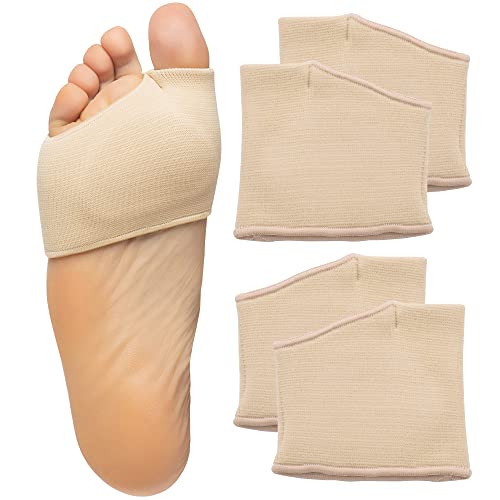
ZenToes Gel Metatarsal Sleeve, Medium uses a fabric sleeve with a gel cushion, unlike adhesive felt pads that attach inside a shoe. The medium size fits women’s shoe sizes 8–12.5 and men’s sizes 7–11; the four-pack provides multiple sleeves. Its low-profile design is intended for sneakers, flats, and heels, and it can be worn under socks. This option suits someone who wants cushioning across the forefoot without sticking a pad to the shoe. A sleeve adds material around the foot, so it may feel constricting in a tight-fitting shoe or on a wider foot.
Bottom line: Choose the sleeve for gel cushioning across the forefoot.
Gel Metatarsal Pads, 2-Piece Set
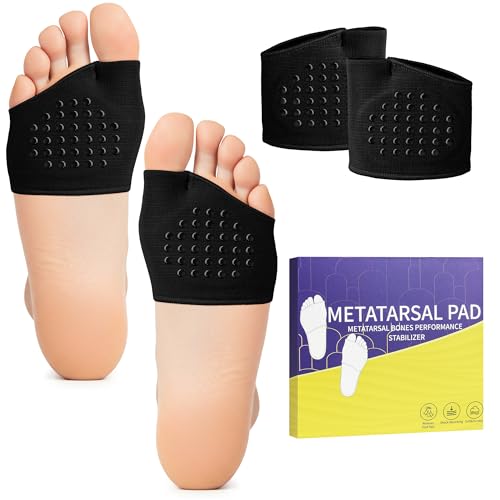
Gel Metatarsal Pads, 2-Piece Set is a two-piece gel cushion set with an anti-slip design, a different format from the sleeve in ZenToes Gel Metatarsal Sleeve, Medium and the felt pads in Wool Felt Metatarsal Pads, 1/4-Inch. The maker describes it for women and men and names high heels, running shoes, and everyday wear as intended uses. Its low-profile fabric design can be worn with socks, making it a possible choice when a separate gel cushion is preferred over a full insole. The size is OS, so fit is less tailored than the measured shoe-size range offered by ZenToes Gel Metatarsal Sleeve, Medium; check that it sits comfortably in the target shoe.
Bottom line: Pick this for a simple, separate gel cushion in assorted shoe types.
How to place a metatarsal pad
A metatarsal pad belongs just behind the ball of the foot, toward the heel, not directly beneath the painful spot. The raised area supports the metatarsal heads and can spread load across the forefoot; a pad placed too far forward may increase pressure where you want less. Start with the pad in a shoe and check that the raised portion sits behind the ball when standing. Walk briefly indoors, then shift it slightly if the pressure feels focused. Adhesive pads need a clean, dry shoe surface, while a sleeve moves with the foot and requires a comfortable fit over the forefoot.
Choose thickness for available shoe space
Choose a pad thickness that leaves room for the forefoot; a 1/4-inch pad adds a noticeable lift, while a thinner 1/8-inch version is intended for tighter dress shoes. Tight shoes can squeeze the toes and forefoot together, defeating the purpose of a pressure-spreading pad. A useful decision rule is to skip a 1/4-inch pad if it makes the shoe feel snug across the toes or raises the foot into the upper. Insoles need more interior volume than a small pad because they run heel to toe. Test the fit while standing, when the foot spreads under body weight.
Felt, gel, sleeve, or full insole
Felt gives a firmer, defined lift; gel cushions feel softer and sleeves hold cushioning against the foot rather than the shoe. Full insoles combine a metatarsal feature with support under more of the foot, but require compatible shoe construction. Use this guide to match format to the shoe and support preference.
| Format | Good match | Fit consideration |
|---|---|---|
| Felt pad | Firm targeted lift | Needs room above forefoot |
| Gel sleeve | Cushion that moves with foot | Can feel tight over a wide foot |
| Full insole | Forefoot plus arch support | Works best when factory liner removes |
When to adjust or stop using a pad
A metatarsal pad should feel supportive rather than create a new pressure point. Stop wearing it if pain, numbness, or skin irritation worsens, and reposition or remove it rather than tightening footwear around it. Keep the toes able to move; narrow toe boxes and high heels increase forefoot loading by shifting weight forward. If symptoms persist or interfere with walking, a podiatrist can assess whether footwear changes, an orthotic, or another approach is appropriate. People with diabetes, reduced sensation, or fragile skin should check their feet after trying a new pad because pressure irritation may be harder to notice early.
Frequently Asked Questions
How far behind the ball should a pad sit?
Place the raised part just behind the ball of the foot, toward the heel. Standing in the shoe helps locate the forefoot because the foot spreads under load.
Can I wear metatarsal pads in heels?
Yes, but choose a thin, low-profile option if the shoe has little vertical room. A 1/4-inch pad can make a snug heel feel tighter and push the foot against the upper.
Should the pad go under the painful spot?
No; position it behind the sore area rather than directly under it. A pad too far forward can add pressure at the sensitive spot.
How do I know if the pad is too thick?
If the shoe becomes tight across the toes or forefoot, the pad is too bulky for that shoe. Try a thinner cushion or a roomier shoe instead of compressing the foot.
When should I stop wearing a foot pad?
Remove the pad if it increases pain, causes numbness, or irritates the skin. Persistent symptoms or difficulty walking warrant assessment by a foot-care professional.