
Best Paint Brush for Brick: 3 Brushes Compared

The Genixart 5-Inch Masonry Brush suits most people painting brick because its 5-inch width and nylon bristles are intended for masonry surfaces and broad coverage. Choose Magimate 5-Inch Threaded Masonry Brush if you want a threaded handle that can accept an extension pole, or Pro Grade 5-Piece Paint Brush Set for trim and detail work rather than broad brick coverage.
We earn a commission if you buy through links on this page. As an Amazon Associate I earn from qualifying purchases. Products are compared on manufacturer specifications, not hands-on testing.
- Best overall: Genixart 5-Inch Masonry Brush – Its 5-inch width and nylon bristles are aimed at masonry surfaces and broad coverage.
- Best for extension reach: Magimate 5-Inch Threaded Masonry Brush – The hollow, threaded grip can accept a universal extension pole.
- Best for trim detail: Pro Grade 5-Piece Paint Brush Set – The five-piece set includes narrow flat and angled brushes for edges and small areas.
| Product | Best for | Width | Bristle type | Handle | Shop |
|---|---|---|---|---|---|
| Genixart 5-Inch Masonry Brush | Broad brick coverage | 5 in | Nylon | — | Check Price on Amazon |
| Magimate 5-Inch Threaded Masonry Brush | Extended reach | 5 in | Synthetic blend | Threaded grip | Check Price on Amazon |
| Pro Grade 5-Piece Paint Brush Set | Brick edge work | 1–2.5 in | Synthetic | Softwood | Check Price on Amazon |
Paint Brushes for Brick
Match brush width and bristle style to the brick surface, coverage area and amount of detail work.
Genixart 5-Inch Masonry Brush

The 5-inch nylon head makes this brush the broad-coverage option among these brick-suitable choices. Its curved synthetic bristles are designed to reach into uneven areas and hold paint, while the brush is also intended for concrete blocks and brick walls. That width can cover larger faces faster than a small trim brush, but it may be cumbersome around narrow joints, corners and detailed brick patterns. Choose this brush when the project is mostly open wall area; use a smaller brush for tight edges that need precise control.
Bottom line: Pick it for large brick faces where a 5-inch head can cover ground efficiently.
Magimate 5-Inch Threaded Masonry Brush
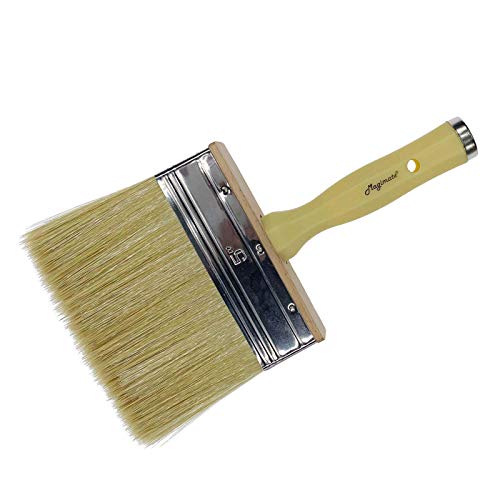
The threaded grip is the key distinction: it can accept a universal extension pole, useful when working higher on a wall without holding the brush at full reach. The 5-inch head combines synthetic filament with natural bristle and is intended for masonry, siding, walls and stains or sealers. The head is 1 inch thick, giving it a substantial profile for broad work. A wide brush on a pole is less suited to tight mortar joints or small repairs, so keep a narrower brush available for edges and controlled touch-ups.
Bottom line: Choose it when extension-pole compatibility matters for reaching higher brickwork.
Pro Grade 5-Piece Paint Brush Set
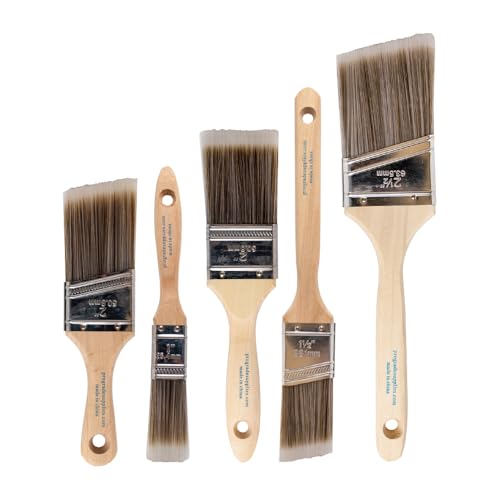
The narrow, mixed-shape brushes make this set better suited to brick edges and detail areas than to coating a large wall. It contains five brushes from 1 to 2.5 inches, including flat and angled shapes, with synthetic bristles and softwood handles. Those smaller heads can help control paint near trim, corners or patterned masonry, but they cover less area per pass than a 5-inch masonry brush. The product is presented as a general wall, trim and stain set, so choose it as a supplement for detail work rather than the main brush for a broad brick surface.
Bottom line: Pick it for edges and small areas where a wide masonry brush is unwieldy.
How to Choose a Paint Brush for Brick
For a broad brick wall, start with a block-style brush around 4 to 6 inches wide; choose a narrower brush when control around trim or mortar joints matters more than speed. Brick texture affects the choice: rough, recessed surfaces need bristles that can reach into uneven areas, while a broad head can be difficult to steer at corners. Synthetic bristles suit water-based coatings, while natural bristle is generally used with oil-based coatings; blended brushes can work across more than one coating type, but confirm compatibility on the coating label. Avoid assuming that any wall paint is suitable for masonry: the coating must be intended for exterior or interior masonry and the conditions where it will be used.
Preparing Brick Before Painting
Brick should be clean, dry and free of loose material before coating; dust and efflorescence can interfere with adhesion. Efflorescence is the white, powdery salt deposit that can appear as moisture moves through masonry, and it should be removed and its moisture source addressed before painting. New mortar commonly needs about 28 days to cure before paint, though the coating maker’s requirements control. Brush loose dust away gently rather than creating airborne debris, and use eye protection and a suitable dust mask when cleaning or scraping masonry. Painting damp brick can trap moisture and contribute to peeling, so wait for dry weather and a dry surface.
Brush Width and Brick Coverage
Brush width is a tradeoff between coverage and control: a 5-inch head makes sense across broad wall faces, while a 1- to 2.5-inch brush is easier to maneuver around narrow details. The following selection guide uses those practical ranges rather than treating one size as right for every brick project.
| Work area | Useful brush width | Reason |
|---|---|---|
| Broad wall faces | 4–6 in | Faster coverage across open areas |
| Edges and corners | 1–2.5 in | More control in confined spots |
| Irregular or recessed sections | About 4–5 in block brush | Broad bristles can work into texture |
If the wall has many narrow joints or decorative patterns, prioritize control and expect slower coverage; a wide brush is most useful when uninterrupted brick face dominates.
Applying Paint to Brick Without Missed Recesses
Work in manageable sections and move the brush in overlapping strokes so paint reaches textured faces and recessed areas. Load the brush without saturating it to the point of dripping, then work paint into the surface rather than skimming only across the high points. Brick and mortar absorb coating differently, so inspect both after the first pass and follow the coating’s recoat interval before adding another coat. Avoid painting over active leaks or persistent dampness; masonry needs a chance to dry, and trapped moisture can damage the finish. Clean reusable brushes promptly using the cleanup method specified for the coating type.
Frequently Asked Questions
What size brush works best for painting a brick wall?
A 4- to 6-inch block brush is a practical size for broad brick faces, while a 1- to 2.5-inch brush is easier to control around edges. Choose the wider size when most of the wall is open and the narrower size when details dominate.
Can I paint brick with a synthetic bristle brush?
Yes, synthetic bristles are commonly used with water-based coatings, but the coating label should confirm brush compatibility. Rough or recessed masonry also calls for enough bristle reach to work paint into surface texture.
How long should new mortar cure before painting?
New mortar commonly needs about 28 days to cure before paint. Follow the coating maker’s cure-time requirements, and do not coat mortar that remains damp.
Should brick be wet or dry before painting?
Brick should be dry before painting so moisture is not trapped beneath the coating. Persistent dampness or efflorescence is a reason to address the moisture issue before applying paint.
How do I keep paint out of brick mortar joints?
Use a narrower brush around joints and edges when precision matters; a 1- to 2.5-inch head is easier to steer than a 5-inch block brush. For textured brick, use controlled overlapping strokes and inspect recessed areas as you work.