
Best Permanent Marker for Plastic: 5 Picks by Use

Sharpie Extreme Fine Point, Black, 4 Count is the best permanent marker for plastic for outdoor gear because its ink is described as fade-resistant in wet and dry outdoor conditions. Choose Sharpie Fine Point, Black, 12 Count instead for everyday fine point marks, or a paint pen if you want opaque, colored coverage rather than a conventional marker line.
We earn a commission if you buy through links on this page. As an Amazon Associate I earn from qualifying purchases. Products are compared on manufacturer specifications, not hands-on testing.
- Best overall: Sharpie Extreme Fine Point, Black, 4 Count – Its fine tip is designed for plastic and its ink is described as resistant to outdoor fading and wet conditions.
- Best for everyday labeling: Sharpie Fine Point, Black, 12 Count – The fine point black marker explicitly covers plastic and most other surfaces.
- Best for colored coverage: Oil-Based Paint Pens, 12 Colors – The oil-based paint-pen set includes 12 colors and a 2 mm line thickness.
| Product | Best for | Tip or line | Ink type | Count | Shop |
|---|---|---|---|---|---|
| Sharpie Extreme Fine Point, Black, 4 Count | Outdoor gear | Fine point | Permanent ink | 4 markers | Check Price on Amazon |
| Sharpie Fine Point, Black, 12 Count | Everyday labeling | Fine point | Permanent ink | 12 markers | Check Price on Amazon |
| Sharpie Chisel Tip, Black, 4 Count | Variable line width | Chisel tip | Permanent ink | 4 markers | Check Price on Amazon |
| Oil-Based Paint Pens, 12 Colors | Colorful projects | 2 mm line | Oil-based paint ink | 12 markers | Check Price on Amazon |
| Artsunlvy Black Oil-Based Paint Pens, 2 Pack | Black paint marks | Medium point | Oil-based paint ink | 2 markers | Check Price on Amazon |
Permanent Markers for Plastic
Choose by the plastic surface, desired line, and whether the mark needs outdoor exposure resistance.
Sharpie Extreme Fine Point, Black, 4 Count

For outdoor plastic gear, Sharpie Extreme Fine Point, Black, 4 Count pairs a fine tip with ink described as fade-resistant in wet and dry outdoor conditions. The set contains four black markers, and its maker names plastic among the surfaces the tip handles. It is aimed at marking sports gear, camping equipment, and boating accessories rather than broad art coverage. Its limitation is color choice: this set is black only, so choose a colored paint pen when a visible non-black mark matters. On slick or flexible plastic, test a hidden area first because plastic formulations vary in how well ink grips.
Bottom line: Pick this for black fine point marks on outdoor plastic gear.
Sharpie Fine Point, Black, 12 Count

For routine plastic labeling, Sharpie Fine Point, Black, 12 Count offers a conventional fine point permanent marker in a 12-count black set. Its ink is specified for plastic and most other surfaces, and the maker says it dries quickly and resists water and fading. That makes this a straightforward option for school, office, and household marking where a narrow line is useful. It is not the paint-style option for opaque colored decoration, and the maker does not make the same outdoor-use emphasis as Sharpie Extreme Fine Point, Black, 4 Count. Smooth plastics can still shed ink, so let the mark dry and avoid rubbing it immediately.
Bottom line: Choose this for frequent black labels and fine writing on plastic.
Sharpie Chisel Tip, Black, 4 Count

For plastic marks that need a broader stroke option, Sharpie Chisel Tip, Black, 4 Count uses a chisel tip rather than a fine point. The four-marker black set is described as marking plastic, metal, paper, and other surfaces; its ink is also described as quick-drying and resistant to water and fading. The angled tip can make either broader strokes or narrower marks depending on how it is held, which suits labels that need to stand out more than fine writing. A chisel tip is less suited to tiny text than Sharpie Fine Point, Black, 12 Count, so choose a fine point for small labels or cramped surfaces.
Bottom line: Pick this when a broader or variable-width black mark is useful.
Oil-Based Paint Pens, 12 Colors
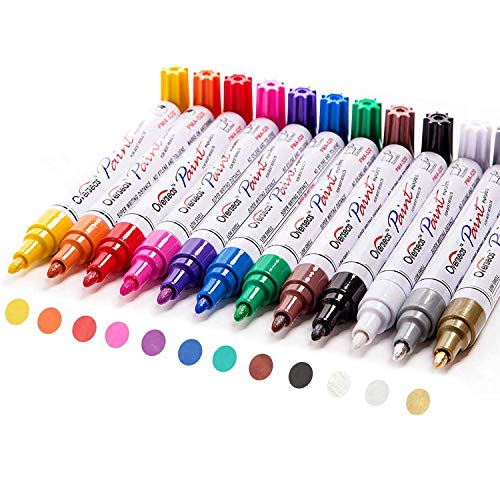
For colored, opaque-looking craft marks rather than standard marker writing, Oil-Based Paint Pens, 12 Colors is an oil-based paint-pen set with 12 colors and a 2 mm line thickness. Its features identify plastic among its intended surfaces, including plastic eggs and holiday ornaments, and describe the ink as quick-drying and lightfast. The medium round nib is intended for smooth application and detail work. This set may be less convenient than a single black fine point marker for small everyday labels: the line is 2 mm, and the package is a dozen-color assortment. Use a test spot on the particular plastic before decorating the full piece.
Bottom line: Choose this for multicolor craft work on plastic.
Artsunlvy Black Oil-Based Paint Pens, 2 Pack

For black paint-style marks in a small set, Artsunlvy Black Oil-Based Paint Pens, 2 Pack supplies two medium-point oil-based pens and names plastic among its intended surfaces. The product features describe a valve-action marker and a round nib for smooth, precise application across crafts and multiple materials. It is a focused alternative to Oil-Based Paint Pens, 12 Colors when a black mark is enough; it does not provide the 12-color selection or a 2 mm line width. The medium point also makes it less suited to very small writing than a fine point marker. Check adhesion on a hidden area, especially on smooth plastic.
Bottom line: Pick this for black paint-pen marks on plastic and crafts.
How to Choose a Permanent Marker for Plastic
Choose the ink and tip by the mark you need: fine point permanent ink suits small labels, while paint pens provide a paint-style line for craft decoration. Plastic is not one uniform surface; polyethylene and polypropylene commonly have low surface energy, so many inks adhere poorly unless the surface is treated. Smoothness, mold-release residue, oils, and handling can also affect grip. For a dependable decision, try the marker on an inconspicuous spot of the same item, allow it to dry, then rub it gently; if the mark smears or lifts, switch ink type or use a plastic-compatible surface treatment. Outdoor use adds another variable: UV exposure and moisture can fade or disturb marks, so favor products whose features specifically describe outdoor resistance when the item will live outside.
Marker Tip and Ink Types for Plastic
Fine point markers are the practical choice for writing small names or codes, while chisel tips can produce broader strokes by changing the angle. Paint pens use opaque, paint-style ink and suit colored decoration or darker surfaces, but the line may be thicker than a conventional fine marker. Match line width to the space: when a label area is under 1/4 inch tall, a fine point is usually easier to control than a medium or 2 mm paint-pen line. A marker described as permanent is not automatically permanent on every plastic; adhesion is determined by both the ink and the surface. The table separates the main approaches so a buyer can choose based on purpose rather than the word permanent alone.
| Marking need | Approach | Best fit |
|---|---|---|
| Small black labels | Fine point permanent ink | Narrow writing |
| More visible strokes | Chisel-tip permanent ink | Variable-width marks |
| Colored decoration | Oil-based paint pen | Craft coverage |
| Outdoor gear | Ink emphasizing outdoor resistance | Exposure to weather |
Preparing Plastic Before Marking
Clean plastic before marking because skin oils, dust, and mold-release residue can interfere with ink adhesion. Wash the area with mild soap and water, rinse, and let it dry fully; avoid aggressive solvents on unknown plastics because they can cloud or damage some finishes. A hidden test is especially useful on polyethylene and polypropylene, which are harder for many inks to grip than treated or higher-energy surfaces. Draw a short line, let it dry, then check for smearing before doing the final mark. Do not assume quick-drying means immediately rub-proof: allow time for the ink to set, and keep the item away from water during that period. If the plastic is valuable or safety-critical, use a marking method specified for that material.
Making Plastic Marks Last Longer
Protect the mark from abrasion as well as moisture: repeated rubbing, flexing, and contact with cleaners can remove ink even when it resists water. Outdoor plastic also receives UV exposure, so choose a product whose features address fading if the item will remain in sunlight. Let paint-style ink dry undisturbed before handling; a thick or layered stroke generally needs more time than a thin line. Do not use marker ink on food-contact areas or children’s items that may be mouthed unless the marker is specifically labeled for that use. For a long-term mark on an item that is washed often, engraved or molded identification is usually more durable than a surface ink mark.
Frequently Asked Questions
How do you get permanent marker to stay on plastic?
Clean the plastic with mild soap and water, dry it completely, then test a small area and let the ink set before rubbing. Polyethylene and polypropylene can resist ink because they have low surface energy, so a test is particularly important on those plastics.
Does permanent marker wash off plastic?
Water-resistant ink can still come off with rubbing, cleaners, or prolonged soaking, and adhesion differs by plastic type. Test a mark after it dries before relying on it for an item that will be washed.
Can permanent markers write on polypropylene plastic?
Some markers can make a visible mark, but polypropylene’s low surface energy often makes ink adhesion difficult. Test a hidden spot and rub it after drying; if it lifts, choose a marking method made for polypropylene.
How long should marker ink dry on plastic?
Quick-drying ink can feel dry within seconds, but a thicker paint-pen stroke may need longer before handling. Let the mark sit undisturbed and keep it dry until it no longer smears under a light touch.
Are paint pens better than permanent markers for plastic?
Paint pens are useful when you want colored or opaque craft marks, while conventional permanent markers suit narrower writing and small labels. On either type, the specific plastic and surface preparation determine whether the ink holds.