
Best Pipe Thread Sealant for Gas: 4 Options Compared

For most gas-line thread sealing, choose Harvey Gas Line PTFE Tape because its yellow, full-density PTFE tape is specifically recommended for natural gas, propane and butane lines.
Choose a paste instead if you need a brush-applied sealant or have metal and plastic threaded connections; check that the product is approved for your gas and fitting materials before use.
We earn a commission if you buy through links on this page. As an Amazon Associate I earn from qualifying purchases. Products are compared on manufacturer specifications, not hands-on testing.
- Best overall: Harvey Gas Line PTFE Tape – Yellow, extra-heavy PTFE tape is specifically recommended for natural gas, propane and butane.
- Best for mixed materials: Gasoila Soft-Set Pipe Thread Sealant – Its soft-setting paste is listed for a broad range of metals and plastics.
- Best for easy disassembly: RectorSeal No. 5 Thread Sealant – The soft-setting, slow-drying compound permits easy breakout.
| Product | Best for | Form | Compatibility | Shop |
|---|---|---|---|---|
| Harvey Gas Line PTFE Tape | Gas-line tape | Yellow PTFE tape | Natural gas, propane, butane | Check Price on Amazon |
| Gasoila Soft-Set Pipe Thread Sealant | Mixed materials | Soft-setting paste | Metals and plastics | Check Price on Amazon |
| RectorSeal No. 5 Thread Sealant | Easy breakout | Soft-setting paste | Metals and polyethylene | Check Price on Amazon |
| RectorSeal Tru-Blu 31631 | Vibration settings | Fast-dry paste | — | Check Price on Amazon |
Gas Pipe Thread Sealants
Compare these gas-line tape and pipe-thread pastes by application form and the fitting materials they suit.
Harvey Gas Line PTFE Tape
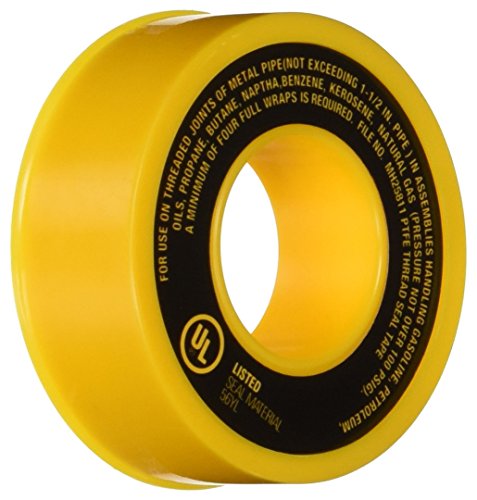
For a tape rather than a brush-applied compound, this yellow PTFE option is specifically recommended for natural gas, propane and butane lines. Its extra-heavy, full-density construction is intended for threaded connections, and it also permits easier disassembly. The uses extend to water, oil and chemical installations, making it useful when a project includes more than gas piping.
Tape can be awkward to apply evenly on short, damaged or irregular threads, so a paste may suit those fittings better. Confirm local code and the fitting maker’s requirements before sealing a gas connection.
Bottom line: Choose tape when the line carries natural gas, propane or butane and the fitting instructions allow PTFE tape.
Gasoila Soft-Set Pipe Thread Sealant

This soft-setting paste stands out for its broad material compatibility, including metals such as brass, copper and stainless steel as well as plastics such as PVC, CPVC and nylon. The maker describes a non-hardening formula that remains pliable across a temperature range of -100°F to 600°F. A brush-cap container makes paste application a practical alternative to wrapping tape around threads.
The material information does not specifically name natural gas, propane or butane as approved services. Do not assume general pipe compatibility makes it suitable for a gas line; verify the product’s gas-service approval and local code before use.
Bottom line: Choose it only when its gas-service approval and fitting compatibility are confirmed.
RectorSeal No. 5 Thread Sealant

RectorSeal No. 5 is a soft-setting, slow-drying paste for threaded pipe connections, with a useful distinction for fittings that may need later separation: the maker says it permits easy breakout without thread damage. Its pipe materials include galvanized steel, iron, brass, copper, aluminum, stainless steel and polyethylene. The formula is also described as lead-free and free of other metals.
The maker does not establish approval for natural gas, propane or butane service, so this is not a gas-line choice without confirmation from the manufacturer and applicable code. Slow drying also matters when a job schedule requires prompt return to service.
Bottom line: Choose it for fittings where easier later disassembly matters, after confirming gas-service approval.
RectorSeal Tru-Blu 31631

RectorSeal Tru-Blu is the fast-drying, PTFE-enriched paste among these options, and the maker positions it for high-vibration environments and thermal expansion or contraction. That distinction may matter in a threaded assembly exposed to movement or changing temperatures. The container is a 1/4-pint size, and the sealant is blue.
The specifications do not identify gas-service approval or compatible pipe materials, so those points need confirmation before using it on gas piping. If the application calls for a gas-specific tape, the purpose of this paste alone does not establish equivalent approval.
Bottom line: Choose it for movement-prone threads only after confirming it is approved for the gas and materials involved.
How to choose gas pipe thread sealant
Choose a sealant that is explicitly approved for the gas service and fitting materials, not merely one described for plumbing. Gas piping commonly uses NPT tapered threads; the sealant fills the helical clearance as the male and female threads tighten. PTFE tape and pipe-joint compound are different application forms, and neither makes a mismatched fitting safe.
Yellow gas-rated PTFE tape is a common option for threaded gas joints, while paste can be easier to work into complex threads. Follow the fitting or appliance maker’s sealant requirements, and confirm local code before installation. Keep sealant off the first thread and out of the pipe opening to reduce the chance of material entering valves or regulators. For a gas connection you cannot confidently identify or assemble, use a qualified gas technician.
Gas-line tape and paste compared
Tape wraps onto the male threads, while paste is brushed or spread onto the threads; the correct option is the one approved for that specific gas and joint. Product forms do not establish gas approval by themselves, so use this comparison as a screening guide and verify the service rating before work.
| Type | How it is applied | Useful distinction |
|---|---|---|
| Yellow PTFE tape | Wrapped on male threads | Gas-line tape option; compatible service still must be confirmed |
| Pipe-joint paste | Brushed or spread on threads | Can suit a brush-applied application; verify gas rating and materials |
Most threaded gas joints use tapered NPT threads rather than straight threads, and tape or compound is not a substitute for the correct thread type. Do not combine tape and paste unless the sealant and fitting manufacturers permit that method.
Apply sealant without compromising the joint
Clean, undamaged threads and correct engagement matter more than adding extra sealant. For tape, wrap the male threads in the direction they tighten so it does not unwind during assembly; keep the first thread clear and avoid loose tails. For paste, apply a thin, even layer only where the fitting maker allows it, keeping compound out of the pipe bore.
Do not use sealant to compensate for cross-threading, cracks or a fitting that will not tighten correctly. After assembly, gas connections must be checked with an approved leak-detection method; never use a flame. If bubbles or a gas odor appear, stop, avoid operating electrical switches, leave the area and contact the gas utility or emergency service from a safe location.
Gas-sealant mistakes to avoid
The most important mistake is treating general plumbing compatibility as proof of gas-service approval. A paste may work on several pipe materials yet still lack a gas rating; confirm the exact gas, pressure application and fitting materials before use. A second mistake is relying on thread sealant for joints designed to seal with a gasket, flare or compression seat, where adding compound can interfere with the seal.
Use only matching thread forms and avoid excessive tape or paste, which can obstruct small passages or foul downstream components. Temperature range alone does not prove suitability for gas service. If a joint is disturbed, replace or reapply sealant as its manufacturer and fitting instructions require, then perform a leak check before returning the line to service.
Frequently Asked Questions
Can PTFE tape be used on natural gas lines?
Yes, when the tape is specifically intended for gas service and the fitting instructions allow it. Yellow gas-line tape is commonly used on threaded joints; wrap it in the tightening direction and keep it out of the pipe opening.
Is yellow tape different from white PTFE tape?
Yellow tape is commonly designated for gas piping, while general-purpose white tape is not automatically approved for gas. Tape color alone is not proof of a rating, so confirm the package and local code requirements.
How do you check a gas pipe joint for leaks?
Use an approved gas leak-detection solution or detector after assembly, never a flame. If bubbles appear or gas is smelled, leave the area and contact the gas utility or emergency service from a safe location.
Should thread sealant go on every gas fitting?
No; sealant belongs only on joints designed to seal at the threads, such as compatible tapered pipe threads. Flare, gasket and compression connections seal at their seats, and compound can interfere with those surfaces.
Can gas pipe thread sealant expire after opening?
Many pipe compounds can dry out or separate in storage, so keep the container sealed and discard material that has hardened or will not mix as intended. Use the maker’s shelf-life guidance and never apply compromised sealant to a gas joint.