
Best Plastic to Metal Glue: 3 Options Compared

Gorilla Super Glue Brush and Nozzle is the best plastic to metal glue choice for most small repairs because it names both materials and offers a brush and precision tip for controlled application. Choose an epoxy such as Cerca de Metal Glue Epoxy when you want a different adhesive type; the cyanoacrylate options suit quick, close-fitting repairs better.
Plastic-to-metal glue joins unlike surfaces, but the plastic’s resin and the joint’s fit can matter as much as the adhesive.
We earn a commission if you buy through links on this page. As an Amazon Associate I earn from qualifying purchases. Products are compared on manufacturer specifications, not hands-on testing.
- Best overall: Gorilla Super Glue Brush and Nozzle – Names both plastic and metal and provides brush or precision-tip application.
- Best for epoxy: Cerca de Metal Glue Epoxy – An epoxy adhesive formulated for metals and many kinds of plastic.
- Best for gel application: Super Glue All-Purpose Gel 1.76 oz – A gel format with a precision tip and listed use on both metal and plastic.
| Product | Best for | Adhesive type | Package size | Application | Shop |
|---|---|---|---|---|---|
| Gorilla Super Glue Brush and Nozzle | Controlled application | Cyanoacrylate | 0.42 oz | Brush and precision tip | Check Price on Amazon |
| Cerca de Metal Glue Epoxy | Epoxy repairs | Epoxy | 1.6 oz | — | Check Price on Amazon |
| Super Glue All-Purpose Gel 1.76 oz | Gel application | Gel adhesive | 1.76 fl oz | Precision tip | Check Price on Amazon |
Plastic to Metal Glue Options
Match the adhesive type and applicator to the joint’s fit, plastic, and repair size.
Gorilla Super Glue Brush and Nozzle

Gorilla Super Glue Brush and Nozzle stands out for application control: its two-way dispenser pairs a brush with a precision tip, and its materials list explicitly includes plastic and metal. The 12 g bottle suits repairs where choosing between spreading glue and placing a narrow bead is useful. Gorilla says it dries in 10–45 seconds and requires no clamping. That fast set is a limitation when parts need careful repositioning; align and dry-fit them before applying adhesive. The product is described as impact resistant, but that does not establish suitability for a load-bearing joint.
Bottom line: Choose this when you want two ways to apply cyanoacrylate to a small plastic-to-metal repair.
Cerca de Metal Glue Epoxy

Cerca de Metal Glue Epoxy differs from the cyanoacrylate choices by using an epoxy adhesive, and its material range includes metals and many kinds of plastic. At 1.6 oz, it is a larger package than the 0.42 oz brush-and-nozzle option. The maker says the cured adhesive contains metal powder and has hardness and some toughness. Its applications are broad, but that breadth does not confirm compatibility with every plastic resin or every repair environment. Check that the specific plastic is compatible and that the joint can remain undisturbed for the required cure period.
Bottom line: Pick this when an epoxy type and a larger package suit the repair.
Super Glue All-Purpose Gel 1.76 oz
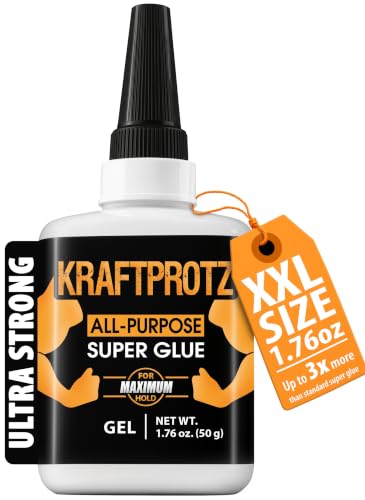
Super Glue All-Purpose Gel 1.76 oz is the gel-format option, with a precision tip and stated use on both metal and plastic. Its 1.76 fl oz size is larger than the 0.42 oz bottle option, making it a distinct choice for having more adhesive on hand. The maker says it dries clear and is waterproof and heat resistant, but those claims do not identify a temperature limit or confirm performance on every plastic. Gel can help with placement, yet it cannot compensate for a loose-fitting joint or incompatible resin. Confirm the plastic type before using it on an important repair.
Bottom line: Choose this when you prefer a gel and want a larger package.
How to Choose Plastic to Metal Glue
For a small, close-fitting repair, start with cyanoacrylate; for a broader or less precise joint, compare epoxy options and verify the cure directions for the specific product. Plastic resin is a key decision: polyethylene (PE) and polypropylene (PP) are low-surface-energy plastics that ordinary adhesives often struggle to bond, while many other plastics are more receptive. A measurable rule is to avoid relying on ordinary super glue for PE or PP unless the adhesive system explicitly supports those plastics. Look for the resin marking, often molded into the part. Also consider whether you need a gel for placement, a liquid for a close seam, or a brush for spreading; the applicator affects control, not resin compatibility.
Prepare Plastic and Metal Surfaces
Clean, dry, close-fitting surfaces give adhesives a better chance than greasy, dusty, or loose joints. Remove oil and residue with a cleaner safe for the plastic, then let both surfaces dry completely; some solvents can damage plastics, so test first in a hidden spot. On bare metal, light abrasion with fine sandpaper can create a fresh surface, followed by removal of dust. Avoid sanding thin or finished plastic unless the repair permits it. Dry-fit the parts before gluing so you know their alignment and whether the joint closes without force. Cyanoacrylate bonds skin and eyes rapidly, so use eye protection, avoid skin contact, and work with ventilation.
Cyanoacrylate and Epoxy for Mixed Materials
Cyanoacrylate, commonly called super glue, is suited to small joints where the pieces meet closely; it sets quickly, which leaves little time for repositioning. Epoxy is a different adhesive family and can suit repairs where its formulation and application fit the job, but the word epoxy alone does not guarantee a bond to every plastic. Plasticizers, surface texture, joint gap, and exposure to heat or moisture can change results. Use the adhesive’s compatibility and cure requirements rather than choosing only by a general claim such as all-purpose. Neither a fast set nor a tough-sounding label proves that a repaired part is safe for structural, vehicle, or high-load use.
| Repair condition | Starting point | What to verify |
|---|---|---|
| Small, tight seam | Cyanoacrylate | Plastic resin compatibility |
| Gel placement preferred | Gel cyanoacrylate | Resin and joint fit |
| Epoxy preferred | Epoxy adhesive | Plastic compatibility and cure time |
| PE or PP plastic | Adhesive explicitly supporting PE or PP | Exact resin match |
Safe Use and Common Bonding Mistakes
Use only enough adhesive to form the joint; excess glue can squeeze out, make cleanup harder, and leave visible residue. Keep bonded parts aligned and undisturbed for the full cure time, which can be longer than the initial set time. Do not treat a quick handling bond as a cured structural repair. Keep adhesives away from children and pets, and use ventilation because cyanoacrylate fumes can irritate eyes and airways. Avoid using a general-purpose glue for a joint that supports a person, carries a critical load, or faces high heat unless the product specifically supports that application. A common mistake is choosing by strength claims before checking the plastic type and joint fit.
Frequently Asked Questions
Will super glue bond plastic to metal?
Cyanoacrylate can bond some plastics to metal when the surfaces fit closely and the plastic is compatible. Ordinary formulas often struggle with polyethylene and polypropylene, so identify the resin before use.
What plastic is hardest to glue to metal?
Polyethylene and polypropylene are among the more difficult plastics because their low-surface-energy surfaces resist many adhesives. For either resin, use a product system that explicitly supports it rather than assuming general-purpose glue will work.
Should plastic be sanded before gluing metal?
Light abrasion can help prepare some surfaces, but it can damage thin or finished plastic. Clean both sides first, test any cleaner on a hidden area, and abrade only when the part’s surface can tolerate it.
How long should a glued joint stay clamped?
Keep the joint supported until the adhesive’s cure time has passed; an initial set can occur before full cure. Cyanoacrylate formulas may set in seconds, while epoxy cure times depend on the formulation.
Can glued plastic and metal handle heat or water?
Only if the adhesive is rated for the joint’s actual conditions; broad claims do not establish a safe temperature limit or immersion rating. Check the product’s limits and allow its full cure before exposure.