
Best Porcelain Sink Repair Kits for Common Chips

For most small porcelain sink chips, choose Ankita White Tub Repair Kit because its thick white paste is described as staying in place instead of sagging. Choose another kit if a cure time, included mixing supplies, or off-white finish matters more.
Porcelain repair kits use a filler or compound to cover localized surface damage; they are not a substitute for replacing a badly damaged fixture.
We earn a commission if you buy through links on this page. As an Amazon Associate I earn from qualifying purchases. Products are compared on manufacturer specifications, not hands-on testing.
- Best overall: Ankita White Tub Repair Kit – Its high-viscosity paste is designed to stay put on chips and cracks.
- Best for included tools: White 50 g Porcelain Repair Kit – The kit includes a scraper, six stickers, and a mixing board.
- Best for a stated cure time: White 1:1 Tub and Sink Repair Kit – The maker specifies a 1:1 mix and 12-hour cure.
- Best for off-white surfaces: Quadence Off-White Repair Kit – The compound is identified as off-white rather than white.
| Product | Best for | Finish | Included components | Shop |
|---|---|---|---|---|
| Ankita White Tub Repair Kit | Vertical chip repairs | White | — | Check Price on Amazon |
| White 50 g Porcelain Repair Kit | Tool-included repairs | White | Scraper, 6 stickers, mixing board | Check Price on Amazon |
| White 1:1 Tub and Sink Repair Kit | Timed curing | White | Two-part compound | Check Price on Amazon |
| Quadence Off-White Repair Kit | Off-white fixtures | Off-white | Two-part compound | Check Price on Amazon |
Porcelain Sink Repair Kits Compared
Compare the repair compound, finish, and work details before choosing a kit for a small sink blemish.
Ankita White Tub Repair Kit

Unlike thinner compounds, this kit emphasizes a high-viscosity paste intended to stay in place on sink chips and tub edges. It is white and is described as suitable for porcelain, fiberglass, acrylic, enamel, cast iron, plastic, and ceramic, with a waterproof finish that resists everyday wear. The maker also claims resistance to heat, scratches, rust, and yellowing.
The paste format may suit localized defects where sagging is a concern. The quantity and curing time are not part of the specifications, so buyers who need to plan a repair schedule should verify those points before ordering.
Bottom line: Choose this for a small chip where a paste that stays in place is the priority.
White 50 g Porcelain Repair Kit
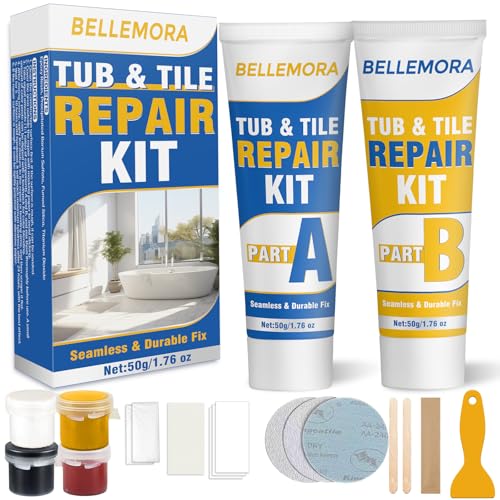
This is the clearest choice when included mixing accessories matter: the kit contains a scraper, six stickers, and a mixing board alongside two repair agents. Its white finish is intended for enamel, acrylic, ceramic, tubs, sinks, and tile, and the maker describes the cured layer as hard, glossy, waterproof, and resistant to yellowing.
The 50 g size gives an amount to compare against the repair area, but no cure duration is given. That makes it less useful when the sink needs to return to service on a specific timetable; verify the cure window before starting.
Bottom line: Pick this when you want a kit quantity and mixing accessories.
White 1:1 Tub and Sink Repair Kit

This kit is distinguished by a clear preparation ratio and cure window: mix parts A and B equally, then allow 12 hours for the compound to become hard. It is described for porcelain sinks as well as fiberglass, acrylic, ceramic, enamel, cast iron, tile, toilets, and cultured marble. The maker calls the cured repair waterproof and firm.
It may be a poor fit for damage that spans a large area or for a repair that cannot stay undisturbed for 12 hours.
Bottom line: Choose this if a 12-hour cure makes scheduling easier.
Quadence Off-White Repair Kit

Unlike the white options, this Quadence kit is specifically identified as off-white, which may better suit a warmer-toned fixture. It is described for porcelain, fiberglass, ceramic, acrylic, and enamel, and for chips, cracks, scratches, rust spots, and holes. The maker says the two-part compound forms a waterproof, hard-curing finish once fully cured.
Color is the key reason to consider it, but an off-white label alone cannot guarantee a close match to an aged sink. Test the color on an inconspicuous area if appearance is critical, and confirm the cure time before planning to use the sink again.
Bottom line: Pick this when an off-white finish is a closer match than bright white.
How to choose a porcelain sink repair kit
Choose by damage size, finish color, and whether the compound can stay in place during curing. Porcelain repair compounds are usually best for small chips, pits, and surface scratches; a crack that runs through the basin or leaks may require fixture replacement rather than cosmetic filling. Compare white and off-white against the sink in daylight, because bathroom lighting can shift how the repair reads. A practical rule is to use a repair kit only when the damaged spot is localized and the surrounding porcelain is stable; if a crack crosses the basin or water escapes underneath, stop and assess the fixture before filling it. Two-part compounds need accurate mixing, while a paste-style product may avoid a mix step.
Color and surface fit for sink repairs
Color match matters most on a visible basin face, while compatibility matters most at the damaged edge. Porcelain is a glazed ceramic surface, and kits may also claim compatibility with enamel, acrylic, fiberglass, or tile; those materials are not interchangeable, so match the kit to the fixture substrate rather than relying on a broad surface list. White and off-white are not exact color standards, and older porcelain can look creamier than a new white repair compound. Clean and dry the repair area before applying any filler, and keep water away until the compound has cured according to its product directions. If the finish is a priority, test a small hidden spot first.
Preparing a sink chip for repair
Preparation has a direct effect on whether a patch bonds: remove soap film, mineral deposits, and loose fragments, then let the area dry fully. A repair compound cannot reliably anchor to loose glaze or damp residue. Protect the drain and nearby surfaces from stray material, and use ventilation and gloves when the product label calls for them; resin and hardener systems can irritate skin. For two-part products, measure and mix only the amount needed using the specified ratio, since unmixed streaks can leave soft spots. Avoid enlarging a stable chip while cleaning it. Keep the sink unused through the full cure period, not merely until the patch feels dry.
Repair limits and common mistakes
Repair kits are for localized surface defects, not structural failures or active leaks. A through-crack, movement in the basin, or water appearing beneath the sink points to a problem that surface filler cannot solve. Common mistakes include choosing a bright white compound for a warm-toned sink, applying over damp porcelain, and returning the sink to service before the full cure. Avoid abrasive scrubbing over a fresh patch; cured coatings can still wear differently from factory glaze. A repair compound is also not a substitute for a plumber when a leak comes from the drain, faucet, or plumbing connection rather than the porcelain itself.
Frequently Asked Questions
Can a porcelain sink repair kit fix a leaking crack?
A surface kit is intended for localized chips and cracks, not an active leak through the basin. If water escapes beneath the sink or the crack crosses the basin, stop using the sink and assess replacement or professional repair.
How long should a sink repair cure before use?
Cure time depends on the compound, and the white 1:1 kit here gives a 12-hour period. Do not expose a repair to water until its product directions allow it.
How do I match white repair compound to porcelain?
Compare the compound with the sink in daylight, since bathroom lighting can make whites appear different. For a visible repair on aged porcelain, test a small hidden spot before filling the chip.
Can one repair kit work on porcelain and acrylic?
Some compounds claim compatibility with both porcelain and acrylic, but the materials have different surface properties. Check that the kit names your fixture material, and follow its surface preparation directions.
When is a sink chip too large to patch?
A kit is better suited to a small localized defect with stable surrounding porcelain. A crack through the basin, a moving section, or any leak means a surface patch is not an adequate fix.