
Best Protectant for Tonneau Cover: 4 Options Compared

Wolfsteins Pro Series Vinyl Protectant is the best protectant for most soft vinyl tonneau covers because it is made for tonneau vinyl and has no silicone. Choose a different formula if you need an included cleaner or have a hard cover made from another material.
A tonneau cover protectant is a surface treatment intended to help protect a truck-bed cover; match it to the cover material before applying.
We earn a commission if you buy through links on this page. As an Amazon Associate I earn from qualifying purchases. Products are compared on manufacturer specifications, not hands-on testing.
- Best overall: Wolfsteins Pro Series Vinyl Protectant – A tonneau cover vinyl protectant with a spray-on, wipe-off formula and no silicone.
- Best for cleaning too: Tyger Tonneau Cover 2-in-1 Spray – Its spray combines cleaner and UV protectant for vinyl and leather surfaces.
- Best for a care kit: Wolfsteins Tonneau Cover Care Kit – The kit pairs a 16-ounce cleaner with a 16-ounce vinyl protectant.
| Product | Best for | Volume | Surface compatibility | Cleaner included | Shop |
|---|---|---|---|---|---|
| Wolfsteins Pro Series Vinyl Protectant | Soft vinyl covers | 16 oz | Tonneau cover vinyl | No | Check Price on Amazon |
| Tyger Tonneau Cover 2-in-1 Spray | Clean-and-protect | 22 fl oz | Leather and vinyl | Yes | Check Price on Amazon |
| Advanced Kotings Tonneau Cover Protectant | Multiple materials | — | Plastic, vinyl, fiberglass, rubber, trim | No | Check Price on Amazon |
| Wolfsteins Tonneau Cover Care Kit | Separate care steps | 16 oz each | Tonneau cover vinyl | Yes, separate | Check Price on Amazon |
Tonneau Cover Protectants
Match the formula to your cover material, then decide whether you want a separate cleaner or a combined cleaner-and-protectant.
Wolfsteins Pro Series Vinyl Protectant
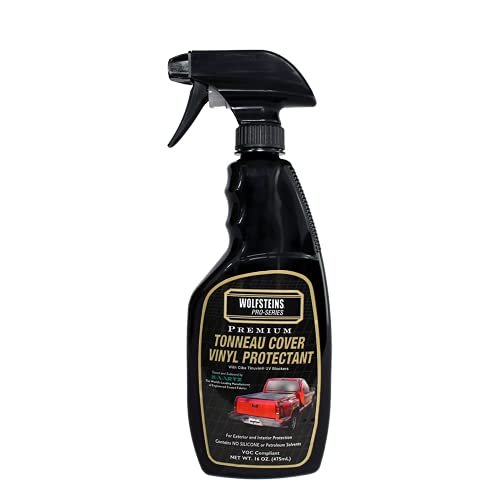
For a dedicated vinyl treatment, this 16-ounce spray is specifically named for tonneau covers, unlike general-purpose convertible-top products. Wolfsteins says its spray-on, wipe-off formula repels dirt, grease, and UV rays, and contains no silicone; the maker also says HAARTZ tested and endorsed it. The straightforward formula suits owners of soft vinyl covers who want a protectant without a bundled cleaner. It is not a cleaner, so remove dirt before applying, and choose another option if you need one product for both cleaning and protection.
Bottom line: Choose this if your cover is vinyl and you want a protectant without silicone.
Tyger Tonneau Cover 2-in-1 Spray
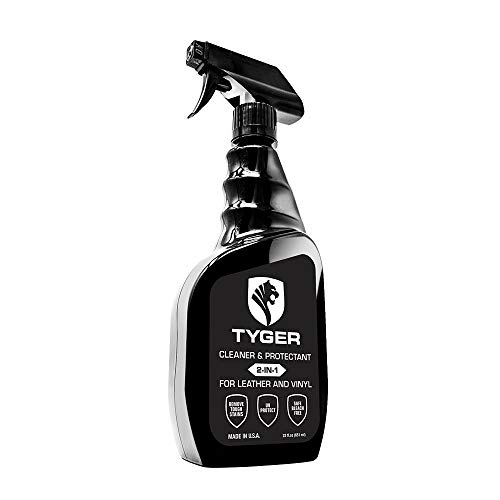
This 22-fluid-ounce spray combines cleaning and protection, making it the clearest fit for someone who wants a single step for vinyl or leather surfaces. Tyger says its UV-protectant finish helps repel dirt, dust, and grease, and leaves a clean, non-glossy finish; the formula is also intended for coated leather seats, door panels, and convertible tops. It suits a cover owner who also wants to use the spray on compatible vehicle surfaces. Because it is a combined formula rather than a standalone treatment, it may not suit buyers who specifically want a separate cleaner and protectant.
Bottom line: Pick this for a combined cleaner and protectant for vinyl or leather.
Advanced Kotings Tonneau Cover Protectant
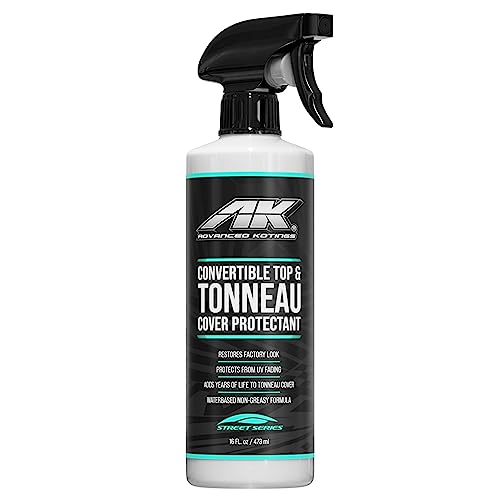
Advanced Kotings lists more surface types than the vinyl-focused sprays: plastic, vinyl, fiberglass, rubber, and trim. The maker says the protectant is intended to help prevent UV-related fading, cracking, and discoloration, so it may suit a truck owner whose cover or adjacent trim uses several of those materials. The single bottle is named for tonneau covers and convertible tops. The maker does not give a volume, so compare bottle size only after confirming it before ordering; this is a protectant, not a cleaner.
Bottom line: Choose this if you need a formula listed for several cover and trim materials.
Wolfsteins Tonneau Cover Care Kit

This kit is the only option here that pairs a named tonneau cover cleaner with a separate vinyl protectant, each in a 16-ounce bottle. That separation suits owners who prefer to wash the cover first and apply protection afterward rather than use a combined spray. Wolfsteins describes the set as complete care for weather-beaten tonneau covers. Since both items are part of one kit, it is less suitable if you only need protectant or want a single bottle; the protectant is identified for vinyl covers, so match it to the cover surface.
Bottom line: Pick the kit if you want a dedicated cleaner and a separate vinyl protectant.
How to choose a tonneau cover protectant
Start with the cover material, then choose between a protectant alone and a cleaner-protectant combination. Soft tonneau covers commonly use vinyl-coated fabric, while hard covers can use different surfaces such as painted metal or plastic; one formula should not be assumed suitable for every construction. If your cover is vinyl, choose a product explicitly intended for vinyl or tonneau covers. If the material is different, select only a formula that names it. A 2-in-1 spray can reduce separate steps, while a kit with cleaner and protectant keeps those jobs separate. Use this rule: when you cannot identify the surface as vinyl, do not default to a vinyl-only protectant; verify compatibility for that specific material first.
| Cover or need | What to look for |
|---|---|
| Soft vinyl cover | A tonneau or vinyl-specific protectant |
| Cleaning and protection together | A cleaner-and-protectant formula |
| Hard or mixed-material cover | Compatibility with the exact surface |
Preparing and applying cover protectant
Clean dirt off before applying a standalone protectant; grit left on a surface can be dragged across it during wiping. Wash with mild soap and water, rinse away residue, and let the cover dry before treatment. For a combined cleaner-protectant, follow its label for whether the surface should be wet or dry. Apply to a small, inconspicuous area first, especially when the cover has aged, faded, or been repaired. Use a clean cloth and avoid transferring product onto glass, paint, or walking surfaces. Keep the cover open or ventilated while it dries, and do not treat a surface that is wet or dusty unless the product specifically allows it.
Soft and hard tonneau covers need different checks
Soft covers are often flexible vinyl-coated fabric, whereas hard tonneau covers may use materials such as aluminum, fiberglass, or plastic. The material difference matters more than the truck-bed shape: a vinyl protectant should not be presumed suitable for a painted hard cover or a different plastic surface. Confirm the manufacturer’s cover material and check whether the treatment is compatible with any seams, windows, or textured sections. If a cover combines materials, use the product only on compatible sections rather than coating every surface uniformly. Keep protectant off the bed rails and any area where added slickness could affect footing or secure contact.
How often to clean and protect a tonneau cover
There is no universal protectant interval that fits every cover and exposure level; dust, road film, direct sun, and frequent washing all change how quickly a surface needs attention. Inspect the cover when washing the truck, and clean it when soil or residue is visible rather than layering treatment over grime. Reapply only at the interval given by the protectant maker, since these options do not establish one shared schedule. More product is not necessarily better: a thin, even application is easier to wipe off and less likely to leave residue. Stop if the finish becomes slippery or uneven, and clean away excess before using the cover.
Frequently Asked Questions
Can I use vinyl protectant on a hard tonneau cover?
Only if the hard cover’s surface is listed as compatible by the product maker. Hard covers can use different materials, so identify the surface before applying a vinyl-only treatment.
Should I clean a tonneau cover before protecting it?
Yes, clean visible dirt and rinse away soap residue before applying a standalone protectant. Dry the surface first unless the product specifically directs otherwise.
Can I use a tonneau cover protectant on the truck bed rails?
Avoid applying it to rails or contact areas unless the maker identifies those surfaces as compatible. A slick residue can affect footing or secure contact.
How often should I apply tonneau cover protectant?
Use the application interval given by the protectant maker; there is no single schedule for all covers. Inspect during truck washes, since sun, dust, road film, and repeated cleaning change how quickly treatment wears.
Can I apply protectant to a wet cover?
Dry the cover first unless the product specifically permits wet-surface application. Water can interfere with even coverage or leave residue, so a dry test area is a prudent first step.