
Best Reading Glasses for Small Faces: 4 Picks Compared

JOLISU Small-Face Readers, +1.25 is the best overall choice for most small-face shoppers because its 5.1-inch frame width gives a concrete fit reference and it comes in +1.25 magnification. Choose another strength if +1.25 does not suit your near vision, or another style if you prefer a round frame.
Reading glasses magnify nearby text; these ready-made readers are not a substitute for a prescription when the eyes need different correction.
We earn a commission if you buy through links on this page. As an Amazon Associate I earn from qualifying purchases. Products are compared on manufacturer specifications, not hands-on testing.
- Best overall: JOLISU Small-Face Readers, +1.25 – Its 5.1-inch frame width is the only width, and it has +1.25 magnification.
- Best for +2.00 readers: OLOMEE Small Round Readers, +2.00 – The small round three-pack is +2.00 and has spring hinges.
- Best for +1.50 readers: OLOMEE Blue-Light Round Readers, +1.50 – This small round four-pack is +1.50 and includes multiple frame colors.
- Best for +2.25 readers: OLOMEE Round Readers, +2.25 – The five-pack offers round frames with spring hinges at +2.25.
| Product | Best for | Magnification | Frame style | Pack size | Shop |
|---|---|---|---|---|---|
| JOLISU Small-Face Readers, +1.25 | Narrower fit | +1.25 | 5.1-inch frame | 5 pairs | Check Price on Amazon |
| OLOMEE Small Round Readers, +2.00 | Round-frame fans | +2.00 | Round | 3 pairs | Check Price on Amazon |
| OLOMEE Blue-Light Round Readers, +1.50 | Four-color variety | +1.50 | Round | 4 pairs | Check Price on Amazon |
| OLOMEE Round Readers, +2.25 | Five-pair variety | +2.25 | Round | 5 pairs | Check Price on Amazon |
Reading Glasses for Small Faces
Compare magnification and frame features first, then choose a style that sits securely without pinching.
JOLISU Small-Face Readers, +1.25

JOLISU Small-Face Readers, +1.25 is the only pick with a frame width: 5.1 inches, or 130 mm, which gives small-face shoppers a useful measurement to compare against glasses they already own. This set has five pairs in different colors, and the brand says the frames are lightweight, have spring hinges, and block blue light. It suits someone who wants several pairs and wears +1.25 readers. The fit is medium, so shoppers seeking an especially narrow fit should compare the width with a well-fitting frame before choosing.
Bottom line: Pick this set if the 5.1-inch width and +1.25 strength match your fit and reading needs.
OLOMEE Small Round Readers, +2.00
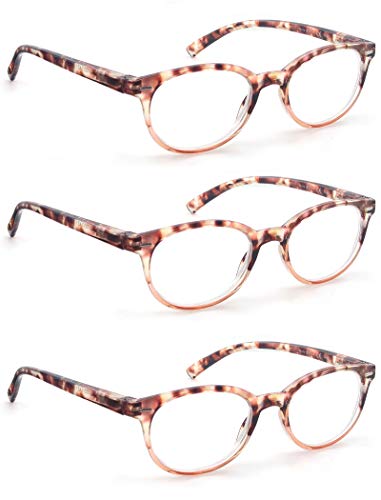
OLOMEE Small Round Readers, +2.00 is the straightforward choice for shoppers who want small round readers at +2.00 rather than the +1.25, +1.50, or +2.25 options among these picks. The three-pack uses tortoiseshell frames and spring hinges; the brand describes the frames as lightweight and intended for small heads or medium faces. It is a fit for someone who prefers one color and needs +2.00 magnification. No frame width is given, so shoppers who need a precise narrow fit should compare it with a pair that already fits well.
Bottom line: Choose this pack for +2.00 magnification, round frames, and spring hinges.
OLOMEE Blue-Light Round Readers, +1.50

OLOMEE Blue-Light Round Readers, +1.50 combines +1.50 magnification with a four-pair set in black, brown tortoiseshell, blue demi, and clear. Its small round style is aimed at petite or narrow faces, and the brand says its lenses have UV400 protection and block blue light. This makes it the pick for someone who wants color choices at +1.50. The blue-light and UV claims are the brand’s, not a reason to treat these readers as sun protection; use proper sunglasses outdoors.
Bottom line: Pick this set if +1.50 and a choice of four frame colors suit you.
OLOMEE Round Readers, +2.25

OLOMEE Round Readers, +2.25 supplies five pairs of round readers in multiple colors, with +2.25 magnification and spring hinges. The brand describes the frames as suitable for small heads or medium faces, so this is a stronger-power alternative to the +1.50 and +2.00 round options. Choose it if +2.25 is the strength you need and you want pairs in several places.
Bottom line: Choose this pack if +2.25 is the right strength and you want five round pairs.
How to Choose Reading Glasses for Small Faces
Start with the magnification you need, then compare frame width and how the glasses sit. Over-the-counter readers commonly come in quarter-diopter steps, such as +1.25, +1.50, and +1.75; the four picks here span +1.25 to +2.25. A stronger number is not automatically better: choose a strength that lets you read at your usual working distance without leaning in or holding text unusually far away. For fit, compare the total front width with a pair that already fits; a difference of a few millimeters can change whether the temples press or the frame slides. If a frame pinches at the temples or moves when you look down, try a different width or shape.
What Small-Face Frame Measurements Matter
Frame width is the most useful single number for comparing petite readers; JOLISU Small-Face Readers, +1.25 is 5.1 inches wide, while the other options do not supply a width. A frame should sit centered, cover the eyes comfortably, and leave the temples level rather than spreading outward. Lens width, bridge width, and temple length also affect fit, so compare those measurements when available instead of relying on labels such as “small.” A practical rule: if your current frames are comfortable, choose a new pair within about 2 to 3 mm of their overall width when possible. Spring hinges can open outward to accommodate wider temples, but they do not make an oversized front fit a narrow face.
Ready-Made Readers Versus Prescription Glasses
Ready-made readers provide the same magnification in both lenses, so they suit people whose near-vision needs are similar in each eye. Prescription glasses can correct different strengths between eyes and astigmatism, which standard readers do not address. A quick decision rule is to choose prescription eyewear rather than OTC readers if one eye remains blurry with the other covered, or if you need correction for distance as well as close work. Readers are for near tasks, not driving or walking around where clear distance vision matters. If you have sudden vision changes, eye pain, or persistent headaches while reading, seek an eye-care assessment instead of trying progressively stronger readers.
How to Use and Care for Reading Glasses
Keep readers for close work and remove them for distance tasks; magnifying lenses can make faraway objects look blurred. Clean lenses with a microfiber cloth and lens-safe cleaner rather than a shirt or paper towel, which can scratch coatings. Store spare pairs in a case when they are not being worn, especially in a bag or car where lenses can rub against keys and other objects. For computer work, place the screen about an arm’s length away and adjust text size before increasing magnification; a close reading strength may be uncomfortable at that distance. Blue-light claims do not replace breaks, sensible screen brightness, or a prescription suited to the actual viewing distance.
Frequently Asked Questions
How do I know what reading-glass strength I need?
Choose a strength that keeps text clear at your normal reading distance without forcing you to lean in or hold the page unusually far away. Ready-made strengths commonly change in +0.25 steps, so compare nearby powers if one is too weak and the next feels too strong.
Are reading glasses for small faces one size fits all?
No; face width, bridge shape, and temple length all affect fit. Compare the new frame’s overall width with a comfortable pair you already own, and avoid a frame that pinches or slides when you look down.
Can I wear reading glasses while using a computer?
You can use readers at a computer if the strength keeps the screen clear at your actual viewing distance. A screen around arm’s length may need a different power from a book held closer, so adjust text size and test comfort at the desk.
Can ready-made readers correct astigmatism?
No; ready-made readers magnify equally in both eyes and do not correct astigmatism. If text stays blurred or distorted with OTC readers, prescription lenses can address individual-eye needs.
Can I use reading glasses for driving?
No; reading glasses are intended for near tasks and can blur distant objects. Remove them before driving or other activities that require clear distance vision.