
Best Roll Up Door Brush Seal 10×10: 3 Kits Compared

For most 10×10 roll up doors, AQOVOR 10×10 Brush Seal Kit is the clearest match because its kit is sized 10×10 and lists 3-inch nylon brushes with aluminum tracks.
Brush seals use flexible bristles mounted in a track to close irregular gaps at door edges; they are not a replacement for a bottom seal. Measure the top and sides before choosing, since a 10×10 door’s nominal dimensions alone do not establish the track lengths required.
We earn a commission if you buy through links on this page. As an Amazon Associate I earn from qualifying purchases. Products are compared on manufacturer specifications, not hands-on testing.
- Best overall: AQOVOR 10×10 Brush Seal Kit – Sized for a 10×10 door with 3-inch nylon brushes and aluminum tracks.
- Best for pre-cut strips: DoubleFill 10×10 Brush Seal Kit – Includes six 5-foot brush seal strips for a 10×10 door.
- Best for mounting hardware: POOAMY 10×10 Brush Seal Kit – Includes 30 stainless steel mounting screws and a 10×10 kit.
| Product | Best for | Door size | Track material | Shop |
|---|---|---|---|---|
| AQOVOR 10×10 Brush Seal Kit | 10×10 all-around fit | 10 x 10 ft | Aluminum | Check Price on Amazon |
| DoubleFill 10×10 Brush Seal Kit | Five-foot sections | Up to 10 x 10 ft | Aluminum | Check Price on Amazon |
| POOAMY 10×10 Brush Seal Kit | Included screws | 10 x 10 ft | Aluminum alloy | Check Price on Amazon |
10×10 Roll Up Door Brush Seals
Compare the door-size match, brush reach and included construction before selecting a perimeter seal kit.
AQOVOR 10×10 Brush Seal Kit

AQOVOR 10×10 Brush Seal Kit is explicitly sized for 10×10 doors and pairs 3-inch nylon bristles with pre-drilled aluminum tracks. Its product features say the bristles flex around corrugated and irregular door contours, making the kit a relevant option where a flat strip may leave gaps along ribs. The maker also says the seal helps reduce drafts, dust, light and pests. This kit suits buyers who want an all-perimeter brush system for a roll-up opening. The measurements do not establish the exact track coverage, so measure the top and both sides before ordering.
Bottom line: Choose it when a 10×10 door and 3-inch brushes are the main fit requirements.
DoubleFill 10×10 Brush Seal Kit
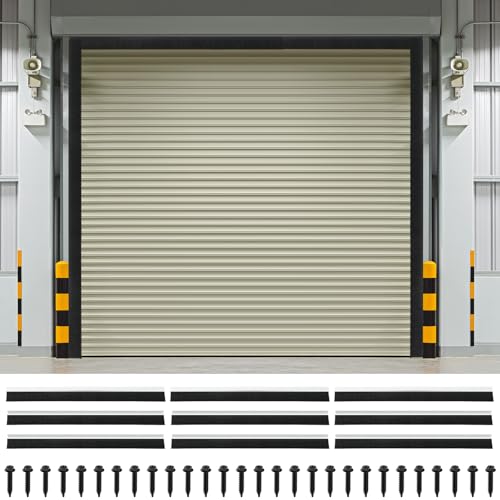
DoubleFill 10×10 Brush Seal Kit stands out for its six separate 5-foot strips, which can be spliced around a door instead of relying on one long run. The kit is specified for doors up to 10 by 10 feet and uses 3-inch nylon brushes with anti-oxidation aluminum tracks. Its maker says the dense brush helps limit drafts, dust, snow, rain and light at the edges. The sectioned format suits buyers who need to position or join shorter runs. It is not sized beyond 10×10, so a larger opening requires a different coverage plan.
Bottom line: Pick it for a 10×10 door when six manageable 5-foot strips suit the installation.
POOAMY 10×10 Brush Seal Kit

POOAMY 10×10 Brush Seal Kit provides the most explicit component breakdown: the top and side tracks are divided into 4-foot and 2-foot pieces, and the kit includes 30 stainless steel mounting screws. Its 3-inch nylon bristles are listed as 0.5 inch thick, with an aluminum alloy base. The maker says the materials resist rust and help block wind, dust and pests. This package suits buyers who want screw hardware and pre-divided sections in the box. The track segments require assembly, so check the measured perimeter against the segment lengths before installation.
Bottom line: Choose it if included stainless steel screws and specified track segments matter.
How to choose brush seal coverage
A perimeter brush seal needs enough track to cover the header and both jambs, not just a matching door width. For a rectangular opening, add the top width to twice the height: a 10×10 opening has a 30-foot top-and-side perimeter, while a 10×8 opening needs 26 feet. Actual track layout can change if the mounting surface does not reach the opening edge. Measure the door opening and the available flat mounting surface separately, then compare the sum with the kit’s pieces. Leave out the floor unless the package explicitly includes a bottom brush; a perimeter kit alone does not seal beneath the door.
| Opening | Top and sides | Fit cue |
|---|---|---|
| 10 x 10 ft | 30 ft | Use a kit intended for 10×10 |
| 10 x 8 ft | 26 ft | Use a 10×8 kit |
Brush length and door profile
Brush length determines how far the bristles can reach across a gap, but a longer brush does not compensate for a poorly positioned track. Three-inch bristles are commonly used on larger commercial-style openings because they can flex against corrugations and uneven edges; the actual seal depends on the gap depth and mounting angle. Hold a straightedge across the door edge and frame at several points to locate the widest gap before selecting a reach. For deeply ribbed roll-up panels, mount the track so the bristle tips touch the panel without folding sharply. Excessive compression can bend bristles and make the door harder to move.
Mounting a roll up door brush seal
Mount the tracks on a sound, flat surface alongside the jambs and above the header, keeping the brush tips aligned with the door face. Aluminum track is useful around exposed openings because aluminum does not rust like untreated steel, while stainless steel screws resist corrosion better than ordinary steel fasteners. Check the door’s travel path before drilling: the brush and track must not snag the curtain, guides or hardware as the roll-up door moves. Dry-fit the sections first, mark fastener positions, and test movement after fastening. A brush seal limits edge drafts and debris; it is not a load-bearing part or a substitute for the door’s guides and safety components.
Brush seal maintenance and common mistakes
Inspect brush seals at least twice a year and after a season of heavy wind or dust. Look for bent or missing bristles, loose fasteners and track movement; replace damaged sections before a gap develops. Nylon brushes can collect grit, so clear debris with a soft brush or vacuum rather than forcing the door across packed dirt. A frequent mistake is measuring only the door width, which leaves the two vertical sides unaccounted for; another is mounting bristles so tightly that they drag hard on the panel. Keep the door’s balance and safety equipment unchanged, and stop using the door if new seal contact causes binding.
Frequently Asked Questions
How much brush seal does a 10×10 door need?
A 10×10-foot opening has 30 feet of top-and-side perimeter before allowance for joints or cuts. Measure the actual header and jamb mounting runs because frame geometry can change the usable track length.
Can a 3-inch brush seal close a 1-inch gap?
A 3-inch brush can reach across a 1-inch gap in principle, but track placement and bristle stiffness determine contact. Position it so the tips meet the door without being folded sharply or dragged hard.
Should a brush seal go on the bottom of a roll-up door?
A perimeter brush kit covers the top and sides unless a bottom strip is specifically included. For a floor gap, measure the clearance at several points and select a separate bottom seal designed for that door.
How often should garage door brush seals be checked?
Check brush seals twice a year and after unusually dusty or windy conditions. Replace or reposition a section if bristles are missing, fasteners loosen, or door travel starts to bind.
Can a 10×8 brush kit fit a 10×10 door?
A kit sized for 10×8 is not a direct fit for a 10×10 opening, which needs 30 feet across the top and sides rather than 26 feet. Choose a kit intended for 10×10 or verify the actual supplied track lengths and add compatible material.