
Best Rope for Clothesline: 5 Options Compared

SMART&CASUAL Polyester Rope, 100 ft suits most people because its 1/4-inch polyester construction is intended to resist sun and moisture, and its 100-foot length fits many home lines. Choose a different option if you need a longer run, prefer a cotton exterior, or want a 50-foot cord.
Clothesline rope is cord stretched between supports to hang laundry; the right choice depends on the span, attachment points and outdoor exposure.
We earn a commission if you buy through links on this page. As an Amazon Associate I earn from qualifying purchases. Products are compared on manufacturer specifications, not hands-on testing.
- Best overall: SMART&CASUAL Polyester Rope, 100 ft – Its 1/4-inch polyester construction is intended for sun and moisture exposure, and the cord is 100 feet long.
- Best for long runs: TECEUM Cotton Rope, 300 ft – The 300-foot cotton rope provides the longest continuous length among these options.
- Best for short lines: Amazon Basics Cotton Braided Rope, 50 ft – Its 50-foot, 3/16-inch cotton rope suits a shorter setup.
| Product | Best for | Length | Diameter | Material | Shop |
|---|---|---|---|---|---|
| SMART&CASUAL Polyester Rope, 100 ft | Outdoor exposure | 100 ft | 1/4 in | Polyester | Check Price on Amazon |
| Amazon Basics Cotton Braided Rope, 50 ft | Short home lines | 50 ft | 3/16 in | Cotton | Check Price on Amazon |
| TECEUM Cotton Rope, 300 ft | Long continuous runs | 300 ft | 3/16 in | Cotton with synthetic core | Check Price on Amazon |
| White Cotton Clothesline Rope, 100 ft | Cotton exterior | 100 ft | 3/16 in | Cotton with synthetic core | Check Price on Amazon |
| TECEUM Polypropylene Utility Rope, 90 ft | Lightweight utility | 90 ft | 1/4 in | Polypropylene | Check Price on Amazon |
Best Rope for Clothesline
Compare the cords by length, diameter and fiber before choosing one for your supports and drying space.
SMART&CASUAL Polyester Rope, 100 ft

SMART&CASUAL Polyester Rope, 100 ft is the thicker polyester option in this group, at 1/4 inch across and 100 feet long. The maker says its dual-layer construction resists sun and moisture, which may suit a line that stays outdoors. Its diamond braid is also designed for knotting and handling, and the white color keeps the line visually neutral. This cord is a practical fit when you need more diameter than the 3/16-inch choices. The tradeoff is that 100 feet is shorter than the 300-foot cotton option, so measure a long span before choosing it.
Bottom line: Choose this if your line will be outdoors and 100 feet covers the run.
Amazon Basics Cotton Braided Rope, 50 ft
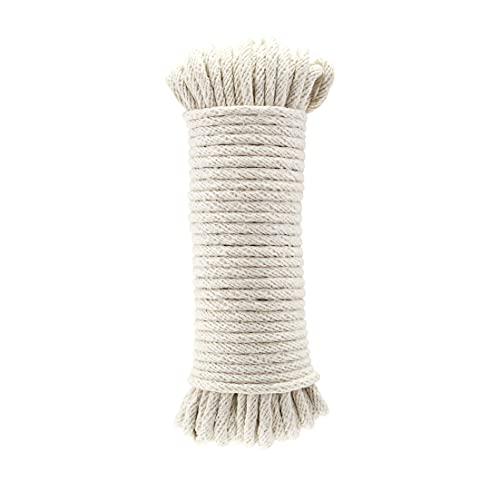
Amazon Basics Cotton Braided Rope, 50 ft is the shortest cord here: 50 feet of 3/16-inch cotton rope in an off-white shade. The maker identifies it for clothesline use and says it resists abrasion and UV light, while its cotton color can be dyed. That makes it a sensible option for a compact indoor or outdoor line where a natural-looking cord is preferred. The short length is also its main constraint; a longer run or multiple supports may require a different length. Check that the 3/16-inch diameter works with your line holders and knots.
Bottom line: Pick this for a short line where off-white cotton is a good fit.
TECEUM Cotton Rope, 300 ft

TECEUM Cotton Rope, 300 ft stands out for length, with 300 feet of 3/16-inch natural cotton rope and a synthetic core. The maker says the rope is quick-drying, UV- and fade-resistant, and capable of withstanding 220 pounds; that figure should not be treated as a clothesline working-load rating. Its soft feel and long supply can suit a large yard or several craft and household uses. A 300-foot coil can leave substantial excess for a single short span, so plan the route and storage before buying. The maker specifically says not to use it for wicks.
Bottom line: Choose this when you need one long coil for an extended route or several lines.
White Cotton Clothesline Rope, 100 ft

White Cotton Clothesline Rope, 100 ft combines a cotton exterior with a synthetic core in a 100-foot, 3/16-inch white cord. The maker positions it for outdoor laundry as well as crafts and says the core resists abrasion and UV wear. Its white finish and cotton surface distinguish it from the all-polyester cord, while its length is more than the 50-foot cotton choice but much less than the 300-foot coil. The thinner diameter may be less comfortable to grip than a thicker cord, so consider how you will tie and tension it at each support.
Bottom line: Pick this for a medium-length line when a cotton exterior is your preference.
TECEUM Polypropylene Utility Rope, 90 ft
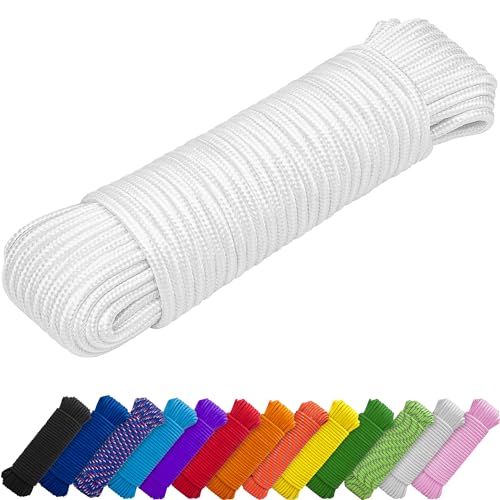
TECEUM Polypropylene Utility Rope, 90 ft is a 1/4-inch, 90-foot polypropylene diamond-braided cord, providing a thicker synthetic option with a little less length than SMART&CASUAL Polyester Rope, 100 ft. The maker says it is lightweight, waterproof, and resistant to weather-related damage, including sun, rain and snow. That combination may suit a line exposed to damp conditions, as well as other household uses. The important distinction is fiber: this is polypropylene, not polyester or cotton. If you need the extra 10 feet offered by the other 1/4-inch option, measure the route before settling on this length.
Bottom line: Choose this if you want a 1/4-inch polypropylene cord and 90 feet covers the span.
How to choose clothesline rope
Start with the full route length and the supports, then choose the rope material and diameter. A single straight span needs the distance between anchors plus extra length for tying and tensioning; add each section separately for multi-span layouts. Rope sold as clothesline cord commonly falls around 3/16 to 1/4 inch in diameter, but holders and pulleys can limit what fits. Thicker line is easier to handle, while a thinner line can fit smaller openings. For a span over 100 feet, a 300-foot coil avoids joining shorter lengths; for a run under 50 feet, a 50-foot cord may reduce leftover rope. Confirm anchor spacing and holder opening before cutting.
| Need | Practical direction |
|---|---|
| Short span under 50 ft | Measure tie-off allowance; a 50-foot cord may suit |
| Route over 100 ft | Consider a 300-foot coil or multiple spans |
| Small holder openings | Check whether 3/16-inch rope fits |
| Outdoor exposure | Compare the maker’s UV and moisture claims by fiber |
Rope materials for outdoor clotheslines
Polyester, polypropylene and cotton each have different handling and exposure considerations. Polyester is commonly selected for outdoor cord because it generally absorbs little water and resists UV degradation better than polypropylene; polypropylene is lightweight and floats, but sunlight can weaken it over time. Cotton is soft and easy to handle, but natural fibers can hold water and may weather faster outdoors unless blended or protected. These are material-level tendencies, not guarantees for every braid or coating. For a line that remains outside, compare the specific maker’s sun and moisture claims, and inspect the cord regularly for fraying, stiffness or color damage before hanging laundry.
Clothesline length, sag and tension
Clothesline sag grows as the span gets longer and as wet laundry adds load, so a long line needs more support than a short one. Keep spans modest or add an intermediate post if the line bows substantially under a normal laundry load; avoid compensating by pulling so tightly that anchors or posts bend. Measure the distance between supports with the line path in mind, including turns around pulleys, then reserve enough tail for secure knots. A simple rule: if a single run exceeds 100 feet, plan an intermediate support or split it into separate spans. Never rely on a cord’s breaking-strength claim as the safe working load for suspended laundry.
Installing and caring for a clothesline rope
Use smooth, secure anchor points and keep the cord clear of sharp edges that can cut or abrade its braid. Tie knots that hold under changing tension, and leave a little adjustment at one end because fibers can settle after installation. Outdoor rope lasts longer when it can dry between wet weather and when it is kept away from constant rubbing on masonry or metal. Check the line before each season and after severe weather; replace it if strands are broken, the core shows, or knots no longer stay secure. Keep the line high enough that wet clothing does not drag on the ground, but within safe reach for loading without climbing or overreaching.
Frequently Asked Questions
How thick should clothesline rope be?
A diameter around 3/16 to 1/4 inch is common for household clotheslines. Choose the thickest cord that fits the pulleys, hooks or holders on your setup.
How much rope do I need for a clothesline?
Measure the complete route between anchors and add extra length for turns, knots and adjustment. For a route longer than 100 feet, consider adding a support or dividing the line into separate spans.
Is polyester or cotton better for an outdoor clothesline?
Polyester generally handles UV exposure and moisture better than cotton, while cotton offers a softer feel. For permanent outdoor use, compare the rope maker’s exposure claims and check the cord for wear regularly.
Can clothesline rope be left outside all year?
Some synthetic cords are made to resist sun and moisture, but outdoor exposure still wears rope over time. Inspect it at least seasonally and replace it when the braid frays, strands break or the core becomes visible.
How do I stop a clothesline from sagging?
Add an intermediate support when a single span exceeds about 100 feet or bows noticeably under wet laundry. Do not overtighten the line to eliminate all sag, because excessive tension can strain the posts and anchors.