
Best RV Cleaning Products: 5 Picks by Cleaning Job

The best RV cleaning products for most owners are 303 RV Wash & Seal, 1 Gallon because its pH-neutral wash adds shine without stripping existing wax or coatings.
We earn a commission if you buy through links on this page. As an Amazon Associate I earn from qualifying purchases. Products are compared on manufacturer specifications, not hands-on testing.
- Best overall: 303 RV Wash & Seal, 1 Gallon – A pH-neutral exterior wash that cleans and adds a layer of protection.
- Best for one-step wash and wax: STAR BRITE RV Wash & Wax, 16 fl oz – Combines exterior cleaning with polymers for shine and UV protection.
- Best for high-reach washing: Extend-A-Reach RV Wash Brush Kit – Includes an extendable pole and several tools for reaching vehicle surfaces.
| Product | Best for | Cleaning job | Format | Size or reach | Shop |
|---|---|---|---|---|---|
| 303 RV Wash & Seal, 1 Gallon | Wax-safe exterior wash | Exterior wash and seal | Concentrated liquid | 128 fl oz | Check Price on Amazon |
| STAR BRITE RV Wash & Wax, 16 fl oz | Wash and wax | Exterior wash and wax | Concentrated liquid | 16 fl oz | Check Price on Amazon |
| Extend-A-Reach RV Wash Brush Kit | Long-reach washing | Exterior washing tools | Brush, mop, squeegee, mitt | Pole extends to 144 in | Check Price on Amazon |
RV Cleaning Products Compared
Match the product to the surface and soil: exterior wash, shower spray, tank treatment or washing tools.
303 RV Wash & Seal, 1 Gallon
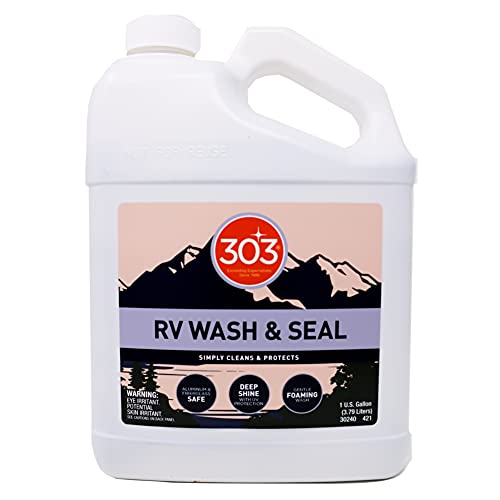
303 RV Wash & Seal, 1 Gallon stands out for combining an exterior wash with a pH-neutral formula that the maker says will not strip existing wax or coatings. The gallon-size concentrate is intended for RVs, campers, pop-ups and motorhomes, and its high-foaming formula is designed to leave a streak-free finish. The maker also says it provides UV protection. This is the clearest fit for routine exterior washing when preserving an existing finish matters. Its job is exterior cleaning, so choose a shower spray or tank treatment for bathroom or holding-tank buildup.
Bottom line: Pick this for a pH-neutral exterior wash that is intended to preserve existing coatings.
STAR BRITE RV Wash & Wax, 16 fl oz

STAR BRITE RV Wash & Wax, 16 fl oz combines cleaning and waxing in one exterior formula, unlike a wash focused on preserving an existing coating. The maker says polymers add shine and UV protection and help repel stains; the formula is intended for fiberglass, glass, trim and decals. It is concentrated, with the maker describing a few capfuls as enough for a full-size RV. This suits owners seeking a combined wash-and-wax step across exterior surfaces. The bottle is 16 fl oz, so it is a smaller package than a gallon concentrate; follow its label for dilution and use.
Bottom line: Choose this when a combined exterior wash and wax is the priority.
Extend-A-Reach RV Wash Brush Kit

Extend-A-Reach RV Wash Brush Kit is a tool kit rather than a cleaning liquid, with an extendable pole, brush, microfiber mop, squeegee, mitt and towels. The name gives a 48–144-inch range, while its features describe a 12-foot pole and up to 20-foot reach; because those reach figures do not align, confirm the actual pole length before ordering. Multiple attachments suit owners who need to wash tall or awkward exterior areas with different tools. This kit does not include a wash formula, so pair it with a surface-appropriate cleaner and avoid pressing a brush hard against delicate finishes.
Bottom line: Pick this for multiple washing tools and a pole for reaching higher surfaces.
How to Choose RV Cleaning Products
Choose an RV cleaner by surface and soil, not by the broad word “cleaner.” Exterior wash formulas handle road dirt, while shower sprays target soap scum and body oils; tank treatments work inside a black holding tank. A wash-and-wax formula combines exterior cleaning and finish care, while washing tools help reach the surface but do not replace the cleaner.
For a coated exterior, favor a pH-neutral wash if preserving wax is the priority. For a combined cleaning and shine step, use a wash-and-wax product on surfaces it is made for. A useful rule: use a dedicated shower product only on a surface its label permits, and reserve tank treatment for the holding tank rather than bathroom fixtures.
RV Exterior Wash Types and Uses
Exterior RV cleaners generally fall into wash-only, wash-and-seal, and wash-and-wax approaches. A pH-neutral wash is suited to cleaning without stripping existing coatings; a wash-and-wax adds a finish-care step, often using polymers. Concentrates require dilution, so follow the product’s mixing directions rather than applying the concentrate directly.
Fiberglass, glass, decals and trim may respond differently to abrasive brushes or strong chemicals. Use a soft wash tool and rinse grit off before scrubbing to reduce the chance of scratching. The table separates the job each cleaner type is designed to handle.
| Type | Best suited to | Key check |
|---|---|---|
| pH-neutral wash | Routine exterior cleaning with existing wax | Confirm dilution on the label |
| Wash and wax | Cleaning plus added shine | Check surface compatibility |
| Shower spray | Soap scum and body oils | Avoid surfaces excluded by its label |
| Tank treatment | Waste and odor in black tanks | Use only for the tank system |
How to Reach and Wash Tall RV Surfaces
Extension poles reduce the need to climb while washing tall RV walls, but pole length and effective reach are not the same: arm height, brush angle and the surface shape all affect access. Measure the height you need to reach and compare it with the pole’s actual extended length before choosing a kit. If two reach claims conflict, confirm the pole length before ordering.
Wash from the top down so dirty rinse water does not run over a clean area. Rinse grit away before brushing, use a soft attachment on decals and windows, and avoid leaning a ladder against an unsupported RV wall. A pole helps with reach but cannot make an unstable stance or slippery ground safe.
Using RV Shower and Tank Cleaners Safely
Shower sprays and black-tank treatments solve different problems and should not be substituted for one another. Apply shower cleaner only to compatible materials, allow the brief contact time directed, and rinse it away; natural stone and unsealed metal can be damaged by products that exclude those surfaces. A soft sponge is a safer starting point than an abrasive pad on plastic or acrylic surrounds.
Tank treatments belong in the holding tank and should be used according to their label, not poured onto surfaces to remove stains. Wear gloves when handling toilet or tank products, avoid splashes, and keep cleaners away from children and pets. Never mix cleaning chemicals; combinations can create dangerous fumes or reactions.
Frequently Asked Questions
How often should an RV exterior be washed?
Wash an RV when road film, pollen or grime accumulates; there is no single interval that fits every trip and storage environment. Rinse off loose grit before using a brush, since trapped particles can scratch the finish.
Can I use car wash soap on an RV?
Use a vehicle wash only if its label allows the RV’s surface and finish. Concentrates require the specified dilution, and a pH-neutral formula is a sensible choice when preserving existing wax is important.
What should I use on RV shower soap scum?
Use a shower cleaner compatible with the surround material, then wipe or scrub gently and rinse thoroughly. Avoid marble, natural stone and unfinished or unsealed metals when the product label excludes them.
How do RV black tank treatments work?
Enzyme-based tank treatments are designed to break down waste and toilet paper inside the holding tank. They do not replace proper tank emptying, and a persistent sensor fault may need separate troubleshooting.
Is a long pole safer than climbing to wash an RV?
A pole can help reach high areas while keeping both feet on the ground, but it does not remove all fall risks. Use stable footing, avoid overhead electrical lines, and do not use a ladder on soft or uneven ground.