
Best Seaweed for Fish Tank: 3 Foods Compared

The Coral Ranch Premium Nori suits most fish keepers seeking seaweed for a tank because its 50 thick, additive-free sheets can be clipped for grazing. Choose Two Little Fishies SeaVeggies Green for a smaller pack or Hikari Seaweed Extreme Pellets if you need floating pellets for smaller marine fish rather than sheets.
Seaweed sheets are dried algae fed as supplemental food, typically offered where grazing fish can reach them. The right format depends on whether your fish graze on a sheet or take pellets.
We earn a commission if you buy through links on this page. As an Amazon Associate I earn from qualifying purchases. Products are compared on manufacturer specifications, not hands-on testing.
- Best overall: The Coral Ranch Premium Nori – Its 50 thick, additive-free sheets are made for grazing by several marine herbivores.
- Best for smaller packs: Two Little Fishies SeaVeggies Green – The 1-ounce pack is pure green seaweed that can be clipped whole or broken into flakes.
- Best for smaller marine fish: Hikari Seaweed Extreme Pellets – Floating seaweed-rich pellets are made for smaller marine herbivores, including damsels and clownfish.
| Product | Best for | Form | Pack size | Feeding format | Shop |
|---|---|---|---|---|---|
| The Coral Ranch Premium Nori | Grazing marine fish | Nori sheets | 50 sheets; 2.64 oz | Clip as whole sheet | Check Price on Amazon |
| Two Little Fishies SeaVeggies Green | Small sheet packs | Green seaweed sheets | 1 oz | Clip whole or break into flakes | Check Price on Amazon |
| Hikari Seaweed Extreme Pellets | Smaller marine fish | Floating pellets | 1.58 oz (45 g) | Feed as pellets | Check Price on Amazon |
Seaweed for Fish Tanks
Compare sheet and pellet formats, then match the feeding style to the fish in your tank.
The Coral Ranch Premium Nori
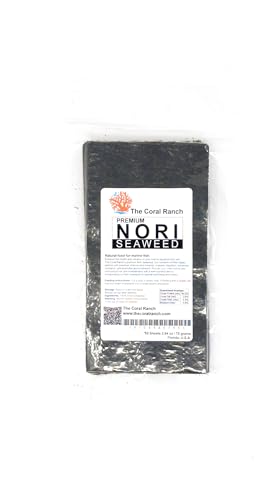
The Coral Ranch Premium Nori stands out for its 50 thick sheets, a larger sheet pack than the 1-ounce option. The product is pure seaweed with no salt, oil, preservatives, or flavorings, and it is intended for tangs, rabbitfish, foxface, angelfish, and lawnmower blennies. A thick sheet is suited to fish that graze by tearing at food, rather than small fish that prefer bite-size pellets. The pack contains 75 grams. Its format is less convenient for smaller feeders or keepers who would rather portion food as flakes; choose pellets if that better matches how your fish eat.
Bottom line: Choose this if your fish graze on whole seaweed sheets and you want a 50-sheet pack.
Two Little Fishies SeaVeggies Green

Two Little Fishies SeaVeggies Green is the compact sheet option, with a 1-ounce pack of dried green seaweed. The maker says it contains no fillers or additives and identifies marine fish such as tangs, surgeonfish, parrotfish, angelfish, and butterflyfish, as well as freshwater herbivores including cichlids and goldfish. Whole sheets can be clipped in the tank, or broken into flakes for smaller species. That flexibility may help when one tank has fish of different sizes. The tradeoff is pack quantity: it has substantially less seaweed than the 50-sheet pack, so it is a less suitable choice when you specifically want a larger supply.
Bottom line: Pick this for a small pack of green sheets that can be clipped whole or crumbled.
Hikari Seaweed Extreme Pellets

Hikari Seaweed Extreme Pellets differs from the sheet foods: it is a seaweed-rich floating pellet for smaller marine herbivores. The maker identifies damsels, clownfish, and butterflyfish as suitable fish. Floating pellets can be a more manageable format for small feeders than a whole sheet, but this is not plain seaweed nori; choose a sheet product if you want fish to graze directly on algae. The pack is 1.58 ounces (45 grams). Its audience is smaller marine fish, so it is a narrower match than the sheet options, which name a broader mix of marine and freshwater herbivores.
Bottom line: Choose this when smaller marine fish take floating pellets more readily than sheets.
How to choose seaweed for a fish tank
Choose sheets for fish that graze by tearing, and pellets for smaller fish that take bite-size food. Dried nori is commonly offered with an aquarium vegetable clip or secured to a clean rock so it stays accessible; remove the uneaten portion rather than letting it break down in the tank. Feed seaweed as part of a varied diet, not as the only food unless a species-specific feeding plan calls for it. For a mixed tank, start with a small amount and observe which fish eat it. If you have small feeders, break a sheet into flakes or use a pellet format instead of leaving a large sheet in reach.
Seaweed sheets versus pellets
Sheets and pellets deliver algae in different ways: sheets let grazing fish tear at food, while pellets suit fish that accept small pieces. This comparison can help you match the format to feeding behavior.
| Format | Typical use | Best match |
|---|---|---|
| Sheet | Clip whole or break into pieces | Fish that graze or tear food |
| Floating pellet | Offer bite-size pieces | Smaller fish that take pellets |
Freshwater and marine fish may both eat seaweed, but species and individual feeding habits differ. A sheet labeled for herbivores is not automatically suitable as the sole diet for every fish. Match the food to the species and feeding routine you already use.
How much seaweed to offer
Start with a portion your fish can finish during a feeding, rather than placing a full sheet in the tank by default. A large sheet can be excessive for a tank with only a few small fish, while several active grazers may consume more. Watch the food over the feeding period and remove leftovers before they become waste; decaying food can degrade aquarium water. Break sheets into smaller pieces when fish cannot manage a full sheet, and offer pellets in small amounts so uneaten pieces do not accumulate. Increase the portion only when fish consistently finish it and water quality remains stable.
Frequently Asked Questions
Can freshwater fish eat seaweed sheets?
Some freshwater herbivores, including cichlids and goldfish, are named for the green-sheet option. Offer a small piece first and remove leftovers so food does not decompose in the aquarium.
How do I keep seaweed from floating away?
Use an aquarium vegetable clip or secure the sheet to a clean rock so grazing fish can reach it. Position it where the fish can feed without blocking filter intakes or water flow.
Should I leave seaweed in the tank overnight?
Remove uneaten seaweed rather than leaving it to break down. Decaying food can add waste to the water, so check the feeding area after the fish have had time to eat.
Can seaweed be the only food for fish?
Do not assume seaweed alone meets every fish’s needs; species have different diets. Treat it as one part of a varied feeding plan unless you have a species-specific reason to do otherwise.
Are seaweed sheets or pellets better for small fish?
Pellets or finely broken sheet pieces are easier to portion for small fish than a full sheet. Offer a small amount and observe whether the fish can eat it before adding more.