
Best Security Door Strike Plate: 5 Options Compared

Prime-Line Combo Strike Plate is the best security door strike plate for most entry doors because its one-piece design fits latch and deadbolt spacing from 5.5 to 6 inches and includes six 3-inch screws. Choose a different style if you need an oversized plate to cover a damaged jamb or a screw kit for multiple door weak points.
A strike plate is the metal fitting on the door frame that receives the latch or deadbolt; longer screws can anchor it farther into the framing when the frame construction allows.
We earn a commission if you buy through links on this page. As an Amazon Associate I earn from qualifying purchases. Products are compared on manufacturer specifications, not hands-on testing.
- Best overall: Prime-Line Combo Strike Plate – The combo plate fits 5.5- to 6-inch latch and deadbolt spacing and includes six 3-inch screws.
- Best for reinforced screws: MOSECYOU Double-Hole Combo Plate – The combo plate includes reinforced Torx screws, a bit, and a 1-inch screw.
- Best for jamb repair: MOSECYOU 7-Inch Oversized Plate, Satin Nickel – Its 7-inch plate covers damaged areas and its relocated screw holes avoid old holes.
- Best for multiple doors: Reinforced Door Screw Kit – The kit includes 16 3-inch screws intended for two doors.
| Product | Best for | Plate length | Latch/deadbolt fit | Included screws | Shop |
|---|---|---|---|---|---|
| Prime-Line Combo Strike Plate | Most entry doors | 11 in. | 5.5–6 in. centers | Six 3-in. screws | Check Price on Amazon |
| MOSECYOU Double-Hole Combo Plate | Torx screw preference | — | 5.5–6 in. centers | 3-in. Torx, 1-in. screw | Check Price on Amazon |
| MOSECYOU 7-Inch Oversized Plate, Satin Nickel | Damaged jamb coverage | 7 in. | Standard lip | — | Check Price on Amazon |
| MOSECYOU 7-Inch Oversized Plate, Matte Black | Matte black repair | 7 in. | Standard lip | — | Check Price on Amazon |
| Reinforced Door Screw Kit | Two-door screw upgrade | — | Strike, deadbolt, hinges | 16 screws, 3 in. | Check Price on Amazon |
Security Door Strike Plates
Match the plate to your latch spacing and whether your priority is reinforcement, worn-jamb coverage, or screw replacement.
Prime-Line Combo Strike Plate

For a standard entry-door upgrade, this one-piece combo plate replaces separate latch and deadbolt strike plates when their centers are 5.5 to 6 inches apart. The stamped-steel plate has a satin nickel finish and comes with six 3-inch security screws. Its combined layout is the main distinction from longer repair plates, which are designed to cover more jamb area.
Choose it when the existing openings and spacing align with the plate. The limitation is fit: it is not the right match if the latch and deadbolt centers fall outside that range or the jamb needs a broad repair cover.
Bottom line: Pick this when your entry-door latch and deadbolt centers fall within its 5.5- to 6-inch fit range.
MOSECYOU Double-Hole Combo Plate

For buyers prioritizing the fasteners, this combo plate pairs a 5.5- to 6-inch latch/deadbolt layout with reinforced Torx screws and a driver bit. The maker says the 3-inch screw uses a double-cut Type 17 design intended to drive smoothly and reduce wood splitting. A 1-inch screw is also included.
Its one-piece format can replace separate strike plates and cover some jamb flaws, but it is less clearly suited to broad, worn-frame coverage than the 7-inch plates. Confirm the door’s center-to-center spacing before choosing it; matching the finish alone does not ensure the holes align.
Bottom line: Choose this if your combo spacing matches and you want the included Torx fasteners and bit.
MOSECYOU 7-Inch Oversized Plate, Satin Nickel

When the jamb is damaged or an old screw hole is unusable, this 7-inch plate offers more coverage than a compact combo strike plate. Its standard lip is designed for a standard slot, while relocated screw holes avoid the positions used by standard plates. The enlarged opening is intended to help with latch sticking caused by misalignment.
This is a repair-oriented plate rather than a direct substitute for every combined latch-and-deadbolt layout. Before installing, compare its lip and opening with the existing mortise and latch position; an oversized plate cannot correct a door that is severely out of alignment.
Bottom line: Pick this to cover a worn jamb or bypass damaged screw-hole locations with a long plate.
MOSECYOU 7-Inch Oversized Plate, Matte Black

This matte black 7-inch repair plate is the color alternative to the satin nickel oversized option, with the same long format, standard lip, relocated screw holes, and enlarged opening. That combination targets a worn or damaged jamb and can accommodate a sticking latch when the opening needs more room.
It is not a combo plate specified for a particular deadbolt-to-latch center spacing, so treat it as a jamb repair choice rather than assume it will replace two separate strikes. Check that the standard lip matches the existing slot and that the enlarged opening still lets the latch engage securely.
Bottom line: Choose this for an oversized repair plate when matte black suits the door hardware.
Reinforced Door Screw Kit
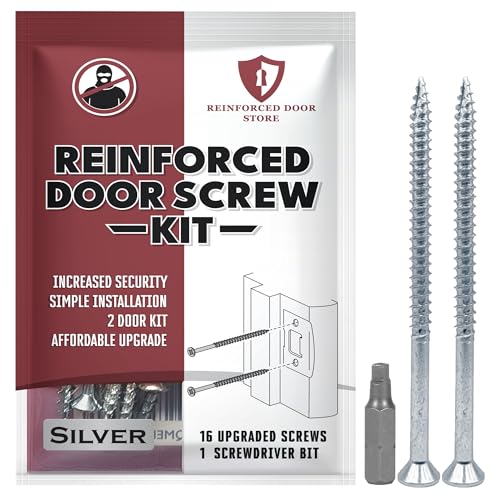
This is a screw kit, not a replacement strike plate: it is intended to reinforce strike plates, deadbolt plates, and hinges across two doors. The package contains 16 three-inch hardened-steel screws and a square driver bit, with Phillips/square combo heads. Its broader scope separates it from the plate options, which each address the frame strike area directly.
Choose it when the existing hardware is sound and longer fasteners are the planned upgrade. The kit does not supply a strike plate, so it will not replace a bent, misaligned, or badly damaged plate; screw length also has to suit the door and framing without striking wiring or other concealed materials.
Bottom line: Pick this when you need longer screws for existing hardware on two doors, not a new plate.
How to Choose a Security Door Strike Plate
Start with the door’s existing strike layout: a combined plate needs its latch and deadbolt centers to match the plate’s spacing, while a long repair plate is selected by its lip and jamb coverage. Combo plates here fit 5.5 to 6 inches on center; measure from the center of one opening to the center of the other before buying.
Next, assess the frame. For intact wood and aligned openings, a correctly fitted combo plate is the direct choice; for stripped holes or a damaged area, a 7-inch plate with relocated holes may cover more of the jamb. Longer screws only help when they pass through the jamb and engage sound framing; they cannot compensate for rotten or split wood.
Use a tape measure and check the existing mortise before choosing based on finish or screw style.
Combo Plates and Oversized Repair Plates
Combo plates join the latch and deadbolt strike areas into one piece, while oversized plates prioritize coverage of worn wood and alternate screw locations. A combo model is the closer match when both lock openings align with its center spacing; a repair plate is more relevant when the jamb around the strike is damaged.
The table separates these styles by the decision that matters most at the door. Neither format is a universal fit: lip shape, opening position, and the door’s existing cutout affect installation.
| Need | Plate type | Measure or inspect |
|---|---|---|
| Replace separate latch and deadbolt strikes | Combo plate | 5.5–6 in. centers for these options |
| Cover a worn or damaged jamb | 7-inch oversized plate | Existing lip, slot, and latch position |
| Upgrade screws in existing hardware | Screw kit | Existing hardware condition and framing |
Do not assume an enlarged opening fixes a badly sagging door; correct hinge or alignment problems first so the latch engages as intended.
How Long Strike-Plate Screws Should Engage
Three-inch screws are commonly used for residential strike-plate reinforcement because they can extend through a typical jamb and into the framing, rather than relying only on short screws in the trim-side wood. Actual engagement depends on jamb thickness, gaps, and framing position, so screw length alone does not establish strength.
Install screws straight and snug, without overdriving them and splitting the jamb. Before driving a long fastener, consider concealed wiring and the wall construction around the door; do not force a screw if it meets an obstruction. If the frame is cracked or soft, repair the wood before relying on a longer screw or replacement plate.
A plate should sit flush and the latch or deadbolt should enter cleanly. If the door must be lifted or pushed hard to latch, alignment needs attention rather than a larger opening alone.
Measuring and Installing a Replacement Strike
Measure lock spacing center to center, then compare the lip and plate outline with the existing mortise. A mismatch of even a small amount can leave the latch rubbing or prevent the bolt from seating fully. Mark screw locations only after the latch and deadbolt line up with the openings.
For an oversized repair plate, verify that its relocated holes land in sound wood and that its longer body covers the damaged area without interfering with the door stop. For a combo plate, test both latch and deadbolt operation with the door open before closing it; this avoids being locked out by a misaligned bolt.
Keep the deadbolt throw clear and confirm that the door closes without force. If the plate cannot sit flush or the frame moves under pressure, have the jamb repaired rather than treating hardware replacement as a structural fix.
Frequently Asked Questions
How do I measure latch and deadbolt spacing?
Measure center to center from the latch opening to the deadbolt opening, not from their edges. Combo options here are intended for 5.5- to 6-inch spacing, so a measurement outside that range calls for a different layout.
Do three-inch strike plate screws reach the wall studs?
A 3-inch screw can pass through a typical jamb into the framing, but actual reach depends on jamb thickness and any gap behind it. Use a straight, sound screw path and do not force a fastener that meets an obstruction.
Can an oversized strike plate fix a sticking door latch?
An enlarged strike opening may help when the latch is only slightly misaligned, but it does not correct a sagging door or loose hinges. If the door must be lifted or pushed to latch, correct alignment before enlarging the opening.
When should I replace a door strike plate?
Replace a bent, loose, or poorly aligned strike plate, and address cracked or soft jamb wood before relying on new hardware. A 7-inch repair plate can cover a broader worn area, while combo plates require matching latch and deadbolt centers.
Is a strike plate enough to secure an entry door?
A strike plate reinforces only the point where the latch or deadbolt enters the frame; hinges, the door, and the surrounding framing also affect resistance. Inspect the full frame and avoid relying on a plate where wood is split or decayed.