
Best Shoes for Coaching Football: 5 Picks by Field Type

Under Armour Spotlight Hammer Football Cleat is the best all-around choice here because it is a football cleat with a molded outsole intended for traction on all field surfaces. Coaches on artificial turf should consider a turf shoe instead, while anyone who mainly stands or walks on hard ground should look for a shoe designed for that surface.
We earn a commission if you buy through links on this page. As an Amazon Associate I earn from qualifying purchases. Products are compared on manufacturer specifications, not hands-on testing.
- Best overall: Under Armour Spotlight Hammer Football Cleat – A football cleat with a molded rubber outsole intended for all field surfaces.
- Best for artificial turf: New Balance 442 Pro TF V3 Turf Shoe – A turf soccer shoe with a stable heel design and responsive EVA midsole.
- Best for cushioned turf: New Balance 3000v8 Baseball Turf Shoe – A baseball turf shoe with Fresh Foam X cushioning.
| Product | Best for | Shoe type | Outsole or field use | Fit or sizing | Shop |
|---|---|---|---|---|---|
| Under Armour Spotlight Hammer Football Cleat | Mixed field surfaces | Football cleat | Molded rubber; all field surfaces | Wide E; men’s 11 | Check Price on Amazon |
| New Balance 442 Pro TF V3 Turf Shoe | Turf-field coaching | Soccer turf shoe | Artificial surfaces | Men’s 10.5; women’s 12 | Check Price on Amazon |
| Adidas Goletto IX Turf | Lightweight turf wear | Soccer turf shoe | Artificial turf | Men’s 9; runs small | Check Price on Amazon |
| New Balance 3000v8 Baseball Turf Shoe | Cushioned turf comfort | Baseball turf shoe | Artificial fields | Men’s 11.5 | Check Price on Amazon |
| LSIDORYC High-Top Soccer Cleats | High-top soccer fit | Soccer cleats | Various surfaces | Men’s and women’s sizes | Check Price on Amazon |
Shoes for Coaching Football
Choose by the surface you coach on and how much time you spend walking or standing.
Under Armour Spotlight Hammer Football Cleat

Under Armour Spotlight Hammer Football Cleat is the only football-specific cleat in this group, and its wide E build is a distinguishing fit option. The synthetic upper contains at least 25% recycled content, while a full-length EVA midsole adds underfoot cushioning. Under Armour says the molded rubber outsole provides traction on all field surfaces. This is the most direct match for a coach who wants football footwear and needs a wide fit. A cleat is less suited to coaches who spend most of their time on hard pavement, where a walking or training shoe is a better match.
Bottom line: Choose it if you want football-specific footwear, need a wide fit, and move across field surfaces.
New Balance 442 Pro TF V3 Turf Shoe

New Balance 442 Pro TF V3 Turf Shoe is a soccer turf shoe rather than a football cleat, making it a surface-specific alternative for artificial fields. Its one-piece microfiber upper has twin-needle stitch quilting, and the responsive EVA midsole is intended to provide a propulsive feel. New Balance says the three-piece heel construction adds stability, while the performance sockliner supports underfoot comfort. Consider it when your coaching work stays on turf and a soccer-style shoe suits your movement. Its turf-specific design is the limitation: coaches who rotate onto natural grass may prefer a cleat intended for broader field use.
Bottom line: Pick it for coaching primarily on artificial surfaces when you prefer a turf shoe.
Adidas Goletto IX Turf

Adidas Goletto IX Turf stands out for its lightweight synthetic upper and simple turf-specific build. Adidas describes the lugged rubber outsole as designed for artificial turf, and the textile lining is intended to give a soft feel. This option suits coaches working on artificial turf who want a light soccer shoe. It is not football-specific, and the sizing guidance makes fit worth checking before choosing it.
Bottom line: Choose it for artificial turf if a lightweight soccer shoe and its sizing guidance fit your needs.
New Balance 3000v8 Baseball Turf Shoe
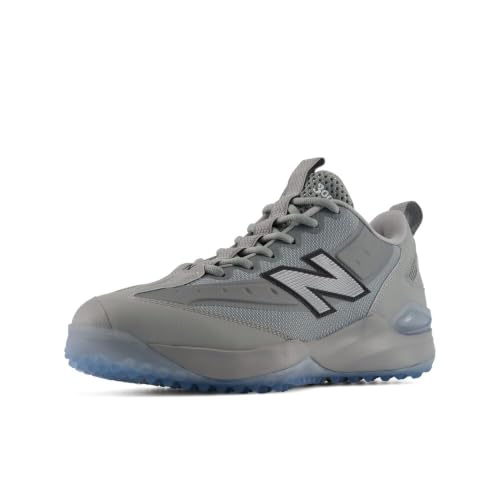
New Balance 3000v8 Baseball Turf Shoe differs from the soccer options because it is a baseball turf shoe with a Fresh Foam X midsole and molded EVA insert. New Balance says its aggressive turf outsole delivers traction on artificial fields, and the Fresh Foam X midsole is designed for cushioning. That combination may suit a coach who wants a baseball-style turf shoe for artificial-field duties. It is not a football shoe, so the baseball-specific shape and use should be considered before choosing it for football coaching. The feature guidance about toe protection applies to pitchers with excessive toe drag, not routine sideline coaching.
Bottom line: Consider it for artificial-field coaching if you want a cushioned baseball turf shoe.
LSIDORYC High-Top Soccer Cleats
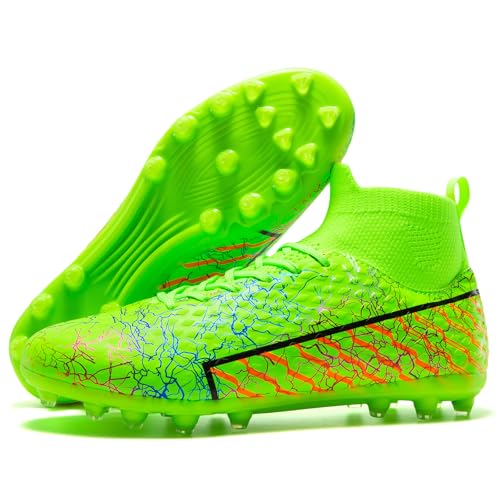
LSIDORYC High-Top Soccer Cleats is a high-top soccer cleat with an elastic ankle collar and no-tie lacing, setting it apart from the lower-cut turf shoes. Its mesh upper and fabric lining are intended to support breathability, while the soft synthetic leather upper is designed for flexible ball contact. The maker says it offers traction on various surfaces. The high-top style may appeal to a coach who prefers added ankle coverage, but an ankle collar should not be treated as injury prevention. This is soccer footwear rather than a football-specific shoe, so surface compatibility matters.
Bottom line: Choose it only if you prefer a high-top soccer cleat and its multi-surface use suits your field.
How to choose shoes for coaching football
Start with the surface you cover most, because outsole pattern determines how a shoe contacts the ground. Turf shoes use many short rubber lugs for artificial turf; molded football cleats use larger studs and are commonly selected for natural grass. For coaches who walk the full length of a practice field, cushioning and secure fit also matter. Choose a turf outsole when you work only on artificial turf, and choose a molded cleat when your sessions regularly move across grass and field surfaces. If you spend more time on concrete than on the field, a cleat is the wrong tool for that walking; choose footwear intended for hard ground instead.
| Coaching surface | Outsole to consider | Reason |
|---|---|---|
| Artificial turf | Short rubber turf lugs | Designed for turf contact |
| Natural grass | Molded cleat studs | Designed to engage field ground |
| Mostly pavement | Walking or training outsole | Better aligned with hard-ground walking |
Football cleats and turf shoes compared
Football cleats and turf shoes solve different traction needs, so the surface is a better deciding factor than the shoe label alone. Turf shoes have many small rubber lugs that spread contact over artificial turf; molded cleats have more prominent studs suited to grass. Coaching includes more standing and walking than playing, so cushioning and a stable fit can matter as much as traction. A measurable decision rule is to choose a turf outsole if all of your practices are on artificial turf; if your work routinely moves onto grass, look for a molded cleat. Avoid assuming that a shoe’s multi-surface claim means every facility permits it; ask the field operator about footwear rules.
How to get the right coaching shoe fit
A coaching shoe should hold the heel in place and leave room for toes to spread without pressing against the front. Check fit while wearing the socks you use at practice, and try the shoe later in the day, when feet may be slightly larger. Follow product-specific sizing guidance rather than converting between men’s and women’s sizes by guesswork; unisex models can use men’s sizing, and the Goletto IX guidance recommends going up half a size because it runs small. Wide feet need a shoe built in a wide width rather than simply a longer size. For cleated shoes, confirm your facility’s outsole rules before choosing studs.
Frequently Asked Questions
Are turf shoes better than cleats for coaching football?
Turf shoes are the more targeted choice when all your work is on artificial turf, while molded cleats are commonly used on grass. The outsole should match the field, and facility rules can further limit what coaches may wear.
Can I wear football cleats on artificial turf?
Some facilities restrict cleat types, so confirm the field’s footwear policy before wearing football cleats. Turf shoes have short rubber lugs designed for artificial turf, while molded cleats use larger studs.
How should coaching shoes fit during practice?
A coaching shoe should hold the heel securely without pressing the toes against the front. Try it with practice socks, and choose a wide-width model if your foot needs more width rather than sizing up for length.
Do high-top cleats prevent ankle sprains?
No shoe collar should be treated as injury prevention. A high-top collar provides ankle coverage, but the product’s feature is not proof that it prevents sprains.
Should coaches wear cleats while standing on concrete?
Cleats are designed for field traction, not extended walking on hard pavement. If most of your coaching time is on concrete, a walking or training outsole is a better match.