
Best Shoulder Brace for Rotator Cuff Support Compared

Sparthos Universal Shoulder Brace is the best shoulder brace for most people seeking rotator cuff support because its universal sizing and adjustable chest and arm straps allow fit adjustments. Choose another option if you need a defined bicep-size range or specifically want neoprene construction.
A shoulder brace uses compression and straps to support the shoulder while allowing varying amounts of movement; it does not repair a rotator cuff tear.
We earn a commission if you buy through links on this page. As an Amazon Associate I earn from qualifying purchases. Products are compared on manufacturer specifications, not hands-on testing.
- Best overall: Sparthos Universal Shoulder Brace – Universal sizing and adjustable chest and arm straps provide flexible fit.
- Best for defined sizing: FIGHTECH Large/X-Large Shoulder Brace – The large option specifies a 12–17-inch bicep circumference.
- Best for neoprene: Komoko Neoprene Shoulder Brace – Its construction is specified as neoprene rubber.
| Product | Best for | Sizing | Support level | Shop |
|---|---|---|---|---|
| Sparthos Universal Shoulder Brace | Adjustable universal fit | Universal | Moderate stabilization | Check Price on Amazon |
| FIGHTECH Large/X-Large Shoulder Brace | Defined bicep sizing | Large/X-Large; bicep 12–17 in | Medium to strong support | Check Price on Amazon |
| Komoko Neoprene Shoulder Brace | Neoprene construction | Adjustable; either arm | Compression and stability | Check Price on Amazon |
Shoulder Braces for Rotator Cuff Support
Compare the fit and construction details that distinguish these three shoulder braces.
Sparthos Universal Shoulder Brace

Universal sizing and adjustable chest and arm straps distinguish this brace from the size-specific option. The hook-and-loop system is designed to let the wearer adjust the fit, and the brace fits either the left or right arm. Sparthos says it provides gentle compression and moderate stabilization for mild to moderate shoulder discomfort while allowing movement. That makes it a possible choice when flexible fit matters more than a size chart. The maker says it is not intended for severe immobilization, so someone who needs rigid restriction should seek clinical guidance instead.
Bottom line: Choose this if you want universal sizing with adjustable chest and arm straps.
FIGHTECH Large/X-Large Shoulder Brace

A defined bicep range sets this option apart: the large size is specified for a 12–17-inch circumference. The brace is adjustable, and FIGHTECH says it provides medium-to-strong support with pressure intended to discourage overextension. The named size range gives buyers a concrete starting point when universal sizing feels too uncertain. Its fit range is not universal, however, so measure the bicep and confirm the correct size before choosing; a circumference outside that range may make this size unsuitable.
Bottom line: Choose this if your bicep measures within the specified 12–17-inch range.
Komoko Neoprene Shoulder Brace
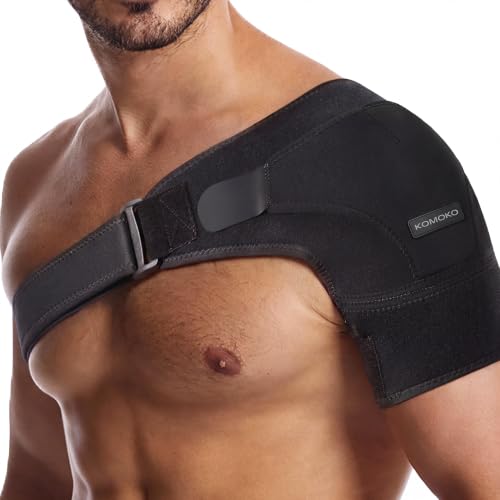
Neoprene rubber construction distinguishes this brace from the other two options, whose materials are not identified here. The adjustable design fits either arm, and the maker describes it as a shoulder support with compression and stability while preserving mobility. It may suit someone who specifically wants neoprene and a left-or-right-arm fit.
Bottom line: Choose this if neoprene construction and either-arm adjustability are priorities.
How to Choose a Rotator Cuff Shoulder Brace
Choose a brace by the support level and fit you need, not by the injury name on the package. Compression sleeves and strap-style braces generally provide contact and positioning cues while permitting more movement than rigid immobilizers. A brace described as moderate support is not interchangeable with a device intended to immobilize the shoulder. Match the product’s fit method to your body: a universal adjustable design offers strap adjustment, while a size-specific design requires measurement. If you cannot move the arm after an injury, have a visible deformity, or develop numbness or a cold hand, seek urgent medical care rather than relying on a brace.
How Shoulder Brace Fit Affects Support
A shoulder brace should feel secure without causing tingling, numbness, increased pain, or a change in hand color. For a brace with a bicep circumference range, measure around the upper arm where the maker specifies; the FIGHTECH large size is given as 12–17 inches. Adjust straps gradually and check circulation in the hand after fitting. A universal size does not guarantee a comfortable fit on every body, so strap placement and range of adjustment matter. If a brace rides up, slips, or forces the shoulder into a painful position, stop using it and ask a clinician about fit.
Brace Support Versus Rotator Cuff Treatment
A shoulder brace can provide external support, but it cannot heal a tendon tear or replace an examination. Rotator cuff problems can arise from different causes, and pain with weakness or limited motion may need clinical assessment to identify the right care. Braces that allow movement differ from rigid slings or immobilizers, which restrict motion and should be used with professional direction. Avoid using a brace to push through worsening pain or to return to overhead activity before you can move comfortably. New weakness after a fall, inability to raise the arm, or symptoms that persist are reasons to contact a healthcare professional.
When to Stop Wearing a Shoulder Brace
Remove a brace and reassess the fit if the hand becomes numb, tingly, unusually cold, or discolored; these can signal excessive pressure or impaired circulation. Check the skin under straps regularly, especially if the brace is worn for an extended period, and keep the material clean according to its care guidance. Do not sleep in a brace unless a healthcare professional recommends it, since straps can shift and increase pressure during sleep. A brace should not substitute for evaluation when pain is severe, follows a significant injury, or comes with sudden loss of strength. Seek professional advice before using support as a way to resume strenuous lifting.
Frequently Asked Questions
Can a shoulder brace heal a rotator cuff tear?
No; a brace can provide external support, but it cannot repair a torn tendon. A clinician can assess persistent pain, weakness, or reduced shoulder motion and advise on treatment.
How tight should a rotator cuff brace feel?
A brace should feel secure without causing tingling, numbness, increased pain, or color changes in the hand. Loosen or remove it if those symptoms appear, and seek medical advice if they continue.
Can I sleep while wearing a shoulder brace?
Do not sleep in a shoulder brace unless a healthcare professional recommends it. Straps can shift during sleep, so check fit and ask for guidance if nighttime support is needed.
When should shoulder pain get medical attention?
Get urgent care for a visible shoulder deformity, a cold or numb hand, or inability to move the arm after an injury. Arrange clinical assessment for persistent pain or new weakness, since a brace cannot diagnose the cause.