
Best Shoulder Compression Sleeve: 4 Braces Compared

For most people, the Sparthos shoulder brace is the best shoulder compression sleeve because its adjustable chest and arm straps accommodate different body shapes. Choose another option if you need a specific bicep size, a removable gel pad, or a neoprene construction; a shoulder brace is a wrap or sleeve that adds compression and support.
We earn a commission if you buy through links on this page. As an Amazon Associate I earn from qualifying purchases. Products are compared on manufacturer specifications, not hands-on testing.
- Best overall: Sparthos Rotator Cuff Shoulder Brace – Adjustable chest and arm straps let you tailor the fit, and the brace fits either arm.
- Best for a defined bicep fit: FIGHTECH Shoulder Brace, Large/X-Large – The Large/X-Large size is specified for a 12–17-inch bicep.
- Best for removable padding: Bula Bear Shoulder Brace, Medium – The included gel pad can be removed or attached as needed.
| Product | Best for | Fit or size | Material or padding | Adjustability | Shop |
|---|---|---|---|---|---|
| Sparthos Rotator Cuff Shoulder Brace | Adjustable fit | Universal | — | Adjustable chest and arm straps | Check Price on Amazon |
| FIGHTECH Shoulder Brace, Large/X-Large | Measured bicep fit | Large/X-Large; bicep 12–17 in | — | Adjustable wrap | Check Price on Amazon |
| Bula Bear Shoulder Brace, Medium | Removable gel pad | Medium | Gel pad included | Removable gel pad | Check Price on Amazon |
| Komoko Neoprene Shoulder Brace | Neoprene construction | — | Neoprene rubber | — | Check Price on Amazon |
Best shoulder compression sleeves
Compare each shoulder brace by its fit, construction, and the kind of support features it offers.
Sparthos Rotator Cuff Shoulder Brace

Adjustable chest and arm straps distinguish this universal shoulder brace, which is designed for either arm. Sparthos says it provides gentle compression and moderate stabilization for mild to moderate discomfort while allowing movement; the maker cautions that it is not intended for severe immobilization. The hook-and-loop system lets wearers change the fit without relying on a fixed bicep measurement. This is a practical choice when adjustability matters more than a specific size or material. Its limitation is the universal sizing: people who need a brace selected by a measured bicep range may prefer a size-specific option.
Bottom line: Choose this if adjustable straps and a universal fit matter most.
FIGHTECH Shoulder Brace, Large/X-Large

A bicep range of 12–17 inches makes this FIGHTECH brace the clearest choice for shoppers who want a size tied to a body measurement. The maker describes its support as medium to strong and says the wrap is designed to limit overextension while allowing shoulder stabilization. The size is Large/X-Large, so compare your bicep measurement with that range before choosing it. This option is less suitable when your measurement falls outside the range or when you want a specified cushioning insert; neither is part of the fit details.
Bottom line: Choose this when your bicep measures 12–17 inches.
Bula Bear Shoulder Brace, Medium

The removable gel pad sets this medium Bula Bear brace apart from the other options. Its knit fabric incorporates copper fiber, and the maker says the fabric is breathable and moisture-wicking; those are maker claims rather than a substitute for checking how the garment feels during wear. The pad can be attached or removed, giving the wearer a choice about added cushioning. This brace suits someone who specifically wants that option, but the medium size may not fit every shoulder. Confirm the manufacturer’s sizing guidance and fit before ordering.
Bottom line: Choose this if you want a removable cushioning pad.
Komoko Neoprene Shoulder Brace
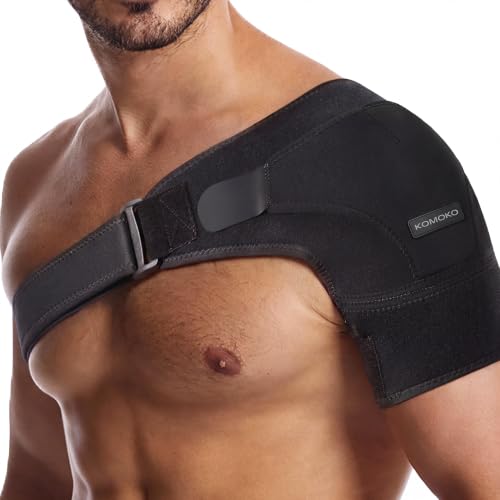
Neoprene rubber distinguishes the Komoko brace, which is designed for either the left or right arm. The maker says the brace is intended to provide support and stability while preserving mobility, and describes the material and stitching as durable and washable. Its dimensions are 6.7 inches high, 9.8 inches long, and 1.9 inches wide. Check the fit guidance before choosing it if sizing is a concern.
Bottom line: Choose this if neoprene construction is your priority.
How to choose a shoulder compression sleeve
Choose a shoulder brace by fit first, then by the support features you will actually use. A sleeve that is too tight can cause numbness, tingling, skin color changes, or increased discomfort; loosen or remove it if these occur. For a wrap with a bicep range, measure around the upper arm at the point specified by its sizing guide rather than guessing from shirt size. Adjustable straps can accommodate more variation, while a removable pad adds a separate cushioning choice. No brace here provides a compression pressure in mmHg, so do not compare them by a therapeutic compression rating.
For new, severe, or worsening shoulder pain, consult a clinician instead of relying on a brace to diagnose or treat the cause. A shoulder support should not restrict breathing or circulation.
Shoulder brace fit and sizing
A shoulder brace should sit securely without causing numbness, tingling, swelling, or a change in hand color. Measure the body area named by the maker’s sizing guide; an upper-arm measurement is not interchangeable with chest circumference. Among these choices, the FIGHTECH size gives a concrete bicep range of 12–17 inches, while the other products use a universal designation, a medium size, or no stated range. Use a mirror or ask someone to check that straps lie flat and do not twist. If the brace shifts during gentle arm movement, readjust it rather than tightening until it pinches.
For a new brace, start with a short wear period and inspect the skin afterward. Stop wearing it and seek medical advice if discomfort increases or circulation symptoms appear.
Compression sleeves versus shoulder braces
A compression sleeve generally relies on stretch fabric, while a shoulder brace may add straps or wraps to hold the garment in position. Strap adjustment is useful when a single elastic fit is not comfortable, but additional restraint is not automatically better: movement restriction can make dressing and reaching harder. The options here vary by strap design, material, and padding. Compare those features against what you need for routine wear, and avoid treating a maker’s support claim as a medical outcome.
This table separates the main design choice from the likely buyer need.
| Design feature | May suit | Check before choosing |
|---|---|---|
| Adjustable chest and arm straps | Someone needing a tunable fit | Whether the straps stay comfortable |
| Measured bicep range | Someone whose measurement falls in range | Measure at the maker’s specified point |
| Removable pad | Someone wanting optional cushioning | Whether the pad position feels right |
| Neoprene construction | Someone prioritizing that material | Comfort and fit for intended wear |
Wearing and caring for a shoulder brace
Follow the garment’s care directions because washing methods differ by fabric, closures, and removable components. The Komoko maker says its neoprene brace can withstand repeated washing, but that claim does not establish a temperature or drying method; check the care guidance before laundering it. Remove detachable padding before washing only when the care directions allow it, and fasten hook-and-loop straps to avoid snagging fabric. Let a damp brace dry fully before storing it, and inspect seams, straps, and closures for damage before each use. Do not wear a brace over broken skin or use it to push through pain that is getting worse.
Frequently Asked Questions
How tight should a shoulder compression sleeve feel?
A shoulder compression sleeve should feel secure without pinching or causing numbness, tingling, swelling, or hand color changes. Loosen or remove it if any of those symptoms appear.
How do I measure for a shoulder brace?
Measure the body area specified by the brace’s sizing guide, since bicep and chest measurements are not interchangeable. The FIGHTECH Large/X-Large option gives a bicep range of 12–17 inches.
Can I wear a shoulder brace while sleeping?
Whether overnight wear is appropriate depends on the reason for using the brace and any clinician’s directions. Remove it if it causes numbness, tingling, or increased discomfort, and ask a clinician before sleeping in a brace after an injury or procedure.
How often should I wash a shoulder sleeve?
Wash a shoulder sleeve according to its care directions, since neoprene, knit fabric, straps, and removable pads may need different handling. Allow the garment to dry fully before wearing or storing it.
When should I stop wearing a shoulder brace?
Stop wearing a shoulder brace if it causes numbness, tingling, swelling, skin color changes, or worsening discomfort. New severe pain or symptoms that persist merit advice from a clinician rather than tighter compression.