
Best Shoulder Support Brace for Rotator Cuff: 4 Compared

For most people, Sparthos Rotator Cuff Shoulder Brace is the best shoulder support brace for rotator cuff discomfort because its adjustable straps provide gentle compression and moderate stabilization while allowing movement. Choose FIGHTECH Rotator Cuff Shoulder Brace instead if you want stronger support and a size based on bicep measurement; none of these braces is intended for severe immobilization.
We earn a commission if you buy through links on this page. As an Amazon Associate I earn from qualifying purchases. Products are compared on manufacturer specifications, not hands-on testing.
- Best overall: Sparthos Rotator Cuff Shoulder Brace – Adjustable chest and arm straps offer a customizable fit with gentle compression and moderate stabilization.
- Best for stronger support: FIGHTECH Rotator Cuff Shoulder Brace – Provides medium-to-strong support and lists a bicep measurement range for sizing.
- Best for hot or cold packs: AidPRO Rotator Cuff Shoulder Brace – An internal pocket holds a hot or cold pack, which is not included.
| Product | Best for | Fit | Material | Support / feature | Shop |
|---|---|---|---|---|---|
| Sparthos Rotator Cuff Shoulder Brace | Everyday movement | Universal | — | Gentle compression; moderate stabilization | Check Price on Amazon |
| Komoko Shoulder Brace | Durable neoprene | Adjustable; left or right | Neoprene rubber | Compression; overextension prevention | Check Price on Amazon |
| FIGHTECH Rotator Cuff Shoulder Brace | Stronger stabilization | Large/X-Large; bicep 12–17 in | — | Medium to strong support | Check Price on Amazon |
| AidPRO Rotator Cuff Shoulder Brace | Pack-pocket support | Universal; adjustable | Neoprene | Compression; hot/cold pack pocket | Check Price on Amazon |
Shoulder Support Braces for Rotator Cuff
Compare these options by the support level, adjustability and features that matter for your shoulder and intended use.
Sparthos Rotator Cuff Shoulder Brace

Adjustable chest and arm straps distinguish this brace, letting the wearer customize the fit while maintaining freedom of movement. The universal-size sleeve fits either the left or right arm and is designed for mild to moderate shoulder discomfort, including rotator cuff and AC joint concerns. Its moderate stabilization is a better match for daily movement than for a shoulder that needs to be held still. The maker says the brace is not intended for severe immobilization, so choose a different care plan if a clinician has prescribed restricted movement.
Bottom line: Choose this for adjustable, moderate support that still allows movement.
Komoko Shoulder Brace
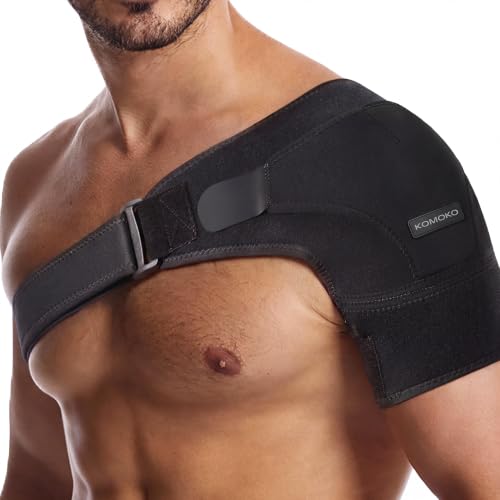
Neoprene rubber construction and precision stitching set this adjustable brace apart from the other options. The maker says its design supports the shoulder and helps prevent overextension while preserving mobility for sports and other activity. It fits either arm and is intended for rotator cuff and AC joint support. The specifications do not give a body measurement range, so verify the fit before ordering if sizing is a concern. Its recovery and prevention benefits are maker claims, not a substitute for a clinician’s guidance on an injury.
Bottom line: Pick this if neoprene construction and activity-focused flexibility are priorities.
FIGHTECH Rotator Cuff Shoulder Brace

A bicep range and medium-to-strong support distinguish this wrap from universal-size options. The Large/X-Large size fits a 12- to 17-inch bicep, and the maker says constant pressure is intended to discourage overextension. This may suit someone who wants a more substantial reminder to limit shoulder movement during recovery. A firmer brace can feel restrictive during tasks that require a broad reach, so it may not suit someone prioritizing unrestricted motion. Match the bicep measurement to the range before choosing this size.
Bottom line: Choose this when the 12- to 17-inch bicep range fits and stronger support is preferred.
AidPRO Rotator Cuff Shoulder Brace

The internal hot-or-cold-pack pocket is the feature that separates this adjustable neoprene wrap from the other braces. It is designed to support the rotator cuff and AC joint while allowing range of motion, and it fits either shoulder. The pocket can hold a pack against the shoulder during rest or recovery, but the pack is not included. This brace provides support rather than full immobilization, so it is not the right match when a shoulder must be kept still. The maker describes its compression and stability as adjustable.
Bottom line: Pick this if you want an adjustable wrap with a pocket for a separate pack.
How to choose a rotator cuff shoulder brace
Choose support by matching the brace’s restraint to the movement you need. A sleeve or wrap with adjustable straps can compress and cue the shoulder while leaving it mobile; a sling holds the arm closer to the body and limits use more. For everyday tasks that require reaching, prioritize adjustable support that does not fully restrict range of motion. If your care plan requires immobilization, do not substitute a flexible shoulder brace without clinician advice.
Fit matters as much as support level: straps should feel secure without causing numbness, tingling, color change or increased pain. Measure the body area specified by the manufacturer, and reassess the fit over clothing if you plan to wear the brace that way. Stop using a brace that causes new symptoms and contact a healthcare professional.
Shoulder brace fit and sizing
Measure the body part named for sizing, since a bicep measurement cannot be substituted for chest or shoulder circumference. A 12- to 17-inch bicep range is the specified fit for the Large/X-Large FIGHTECH option; the other braces here describe universal or adjustable fits rather than a numeric body range. Keep the measuring tape level and snug, not tight, and compare the measurement with the chosen brace’s range.
Use this decision rule: if your bicep is outside 12 to 17 inches, do not assume that FIGHTECH size will fit; choose a product with a suitable range. A universal label does not guarantee a comfortable fit on every body. Check that the arm and chest straps stay in place through ordinary movement without pulling the shoulder into an uncomfortable position.
Compression brace or sling for shoulder support
Compression wraps and slings serve different movement goals. A wrap generally presses around the shoulder and may permit more arm use, while a sling supports the forearm and limits shoulder activity. These products focus on adjustable compression or support; the Komoko name includes “arm sling,” but its design emphasizes mobility and overextension prevention. Do not infer immobilization from a product name alone.
Use the table to match the support style to the need:
| Need | Support approach |
|---|---|
| Movement with adjustable support | Compression wrap or sleeve |
| Arm held close to limit movement | Sling, when advised for the injury |
| Severe immobilization | Clinician-directed immobilizer, not a flexible brace |
Shoulder immobilization can affect comfort and daily function, so use a sling or immobilizer according to a clinician’s plan rather than escalating support on your own.
Safe use of a shoulder support brace
A shoulder brace should not cause numbness, tingling, a cold hand or a change in skin color; loosen or remove it if those symptoms appear. Compression can feel snug, but excessive pressure may interfere with circulation or irritate skin. Check the skin beneath the brace after removing it, especially during the first uses or when wearing it for longer periods.
Rotator cuff pain has several possible causes, and a brace cannot establish a diagnosis or determine the right recovery plan. Seek medical advice for significant weakness, a sudden injury, worsening pain or symptoms that do not improve. Avoid wearing a flexible brace as a replacement for a prescribed sling or immobilizer, and follow the clinician’s timing guidance for return to activity.
Frequently Asked Questions
Can I sleep in a rotator cuff shoulder brace?
Only wear a shoulder brace overnight if its fit and use are appropriate for your care plan. A strap that shifts or compresses the arm during sleep can cause discomfort, so check the skin and hand for numbness or color change after waking.
How tight should a shoulder support brace feel?
A brace should feel secure without causing numbness, tingling, a cold hand or color change. Loosen or remove it if any of those symptoms occur, since compression should not compromise circulation.
Can I exercise while wearing a shoulder brace?
Light activity may be possible with a flexible brace, but the right movement depends on the injury and care plan. Avoid lifting or overhead work that increases pain, and do not treat the brace as permission to resume sport.
How do I measure for a shoulder brace?
Measure the body area the brace’s sizing range specifies, such as the bicep, rather than estimating by clothing size. For the FIGHTECH Large/X-Large option, the bicep range is 12 to 17 inches.
When should shoulder pain be checked by a clinician?
Get medical advice for sudden injury, marked weakness, worsening pain or symptoms that persist despite rest. A brace cannot diagnose a rotator cuff injury, and some shoulder problems need a specific treatment plan.