
Best Slippers to Wear on Hardwood Floors Compared

For people who want to pick up dust while walking, the Jecery four-pair chenille mop slippers suit most households because they provide four reusable pairs for rotation. These are cleaning slippers, not conventional cushioned house slippers; choose another style if you want warmth or a supportive footbed.
Hardwood floors are best kept free of grit and standing moisture, so use a clean, dry sole for everyday wear and reserve mop slippers for light floor cleaning.
We earn a commission if you buy through links on this page. As an Amazon Associate I earn from qualifying purchases. Products are compared on manufacturer specifications, not hands-on testing.
- Best overall: Jecery Four-Pair Chenille Mop Slippers – Four pairs make it easier to rotate chenille mop slippers between cleaning sessions.
- Best for a two-pair set: Jecery Two-Pair Chenille Mop Slippers – The set includes two pairs in different colors and is sized about 10.5 by 3 inches.
- Best for a single pair: Selric Bear Chenille Mop Slippers – The bear-design pair has a detachable sole and is described as washable.
| Product | Best for | Pairs included | Size | Cleaning cover | Shop |
|---|---|---|---|---|---|
| Selric Bear Chenille Mop Slippers | Single-pair set | 1 pair | Women’s 5.5–8.5 | Detachable chenille sole | Check Price on Amazon |
| Jecery Two-Pair Chenille Mop Slippers | Two-pair rotation | 2 pairs | Medium; about 10.5 × 3 in. | Chenille covers | Check Price on Amazon |
| Jecery Four-Pair Chenille Mop Slippers | Multi-pair rotation | 4 pairs | Medium | Chenille covers | Check Price on Amazon |
Slippers to Wear on Hardwood Floors
These options are chenille mop slippers, designed to gather dust and moisture as you walk rather than provide the cushioning of ordinary house slippers.
Selric Bear Chenille Mop Slippers
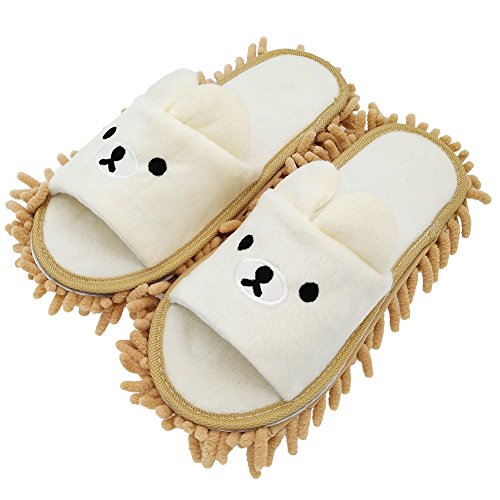
The Selric pair is the single-pair option, with a bear design and a detachable microfiber chenille sole. The maker says the sole is washable, absorbs water, and is quiet and soft; the slippers are intended for hardwood, laminate, and tile. The length is about 9.8 inches, and the size range is women’s 5.5–8.5. This pair suits someone who wants a playful cleaning slipper for quick dust or spill pickup. The size range is narrower than a general one-size design, so measure your foot and compare it with the maker’s size picture before ordering.
Bottom line: Choose this pair if you want one decorative mop slipper set and your foot fits the range.
Jecery Two-Pair Chenille Mop Slippers

The two-pair Jecery set comes in pink and beige, giving you a spare pair while the other is being cleaned or dried. Each slipper is about 10.5 by 3 inches and uses microfiber chenille fibers to collect hair, dirt, and water stains as you walk. The maker describes the material as soft and absorbent. This set suits a household that wants a small rotation rather than several colors or pairs to share.
Bottom line: Pick this set if two color-coded pairs are enough for your cleaning routine.
Jecery Four-Pair Chenille Mop Slippers

The four-pair Jecery set offers the most pairs in this group, with four colors for household sharing or keeping a clean pair ready. The microfiber chenille bottoms are intended to collect hair, dirt, and water stains during light floor cleaning; the maker also describes them as non-slip and quiet. These are best for a household that values multiple reusable cleaning pairs, not for someone seeking a structured slipper with a supportive footbed. Confirm the fit before buying.
Bottom line: Choose this set when having four cleaning pairs available matters more than a numeric size range.
How to choose slippers for hardwood floors
For everyday wear on hardwood, prioritize a secure fit, a clean sole, and a surface that will not trap grit. Grit underfoot can scratch a finish, while wet soles can leave moisture on wood; mop slippers are better suited to light dust or spill pickup than as all-day house shoes. Compare the purpose first: chenille mop slippers have fabric cleaning fibers, while ordinary house slippers typically focus on warmth or cushioning. A useful decision rule is to choose a cleaning style only if you plan to clean or launder its cover regularly; otherwise, use a dry, smooth indoor sole and sweep separately. Do not walk in wet mop slippers on stairs or slick floors, where damp fabric can reduce footing.
How mop slipper sizing and fit work
Mop slipper sizing is less standardized than ordinary shoe sizing because many sets use a broad label such as medium rather than a shoe-size range. Compare the foot range or dimensions with your own foot before ordering, and favor a snug fit that does not twist or slide. A loose slipper can bunch its fabric sole underfoot; a tight slipper can be uncomfortable during chores. One pair here gives a women’s size range, another gives approximate length and width, and the sets labeled medium do not provide numeric shoe sizing. If you are between sizes or have a wide foot, measure both feet and choose by the larger measurement where sizing guidance is available.
Chenille mop slippers versus regular house slippers
Chenille mop slippers use microfiber fibers on the underside to pick up loose dust, hair, and small amounts of moisture while walking; they are a cleaning aid, not a replacement for sweeping or mopping. Conventional house slippers instead prioritize a stable fit and comfort for standing or walking around the home. The right type depends on the task, as this table shows.
| Need | Better fit |
|---|---|
| Pick up loose dust while moving around | Chenille mop slippers |
| Warmth or cushioning for extended wear | Conventional house slippers |
| Remove grit before it scratches wood | Sweep or vacuum with a hardwood-safe setting |
For a clean hardwood finish, avoid dragging grit across the floor and do not leave standing water on wood. Use mop slippers for touch-ups, then clean or dry their covers before reuse.
How to care for hardwood floors and mop slippers
Dry dust and grit are common causes of surface scratching, so sweep or vacuum high-traffic areas regularly; use a vacuum setting or attachment intended for hard floors so a rotating brush does not scuff the finish. Clean spills promptly and avoid leaving water on hardwood, since moisture can damage wood or its finish. For chenille mop slippers, remove the cover when possible and wash it according to its care instructions, then let it dry fully before wearing it again. A damp cover can smear residue or make footing less reliable. Keep a separate dry pair for ordinary walking, and replace a worn, loose, or debris-filled cover rather than relying on it to protect the floor.
Frequently Asked Questions
Can chenille mop slippers replace sweeping hardwood floors?
No; mop slippers can collect loose dust and hair during light movement, but they do not reliably remove grit from corners or along edges. Sweep or vacuum regularly, especially where tracked-in debris is visible.
Are mop slippers safe to wear on stairs?
Use caution on stairs, particularly when the chenille sole is damp or loose. A secure-fitting shoe with a dry, stable sole is a safer choice for stair use.
How often should I wash microfiber mop slippers?
Wash the covers when they look dirty or stop picking up dust well, and dry them fully before wearing them again. Grit trapped in the fibers can scratch a floor, so shake out or clean the covers between uses.
Can I wear mop slippers on wet hardwood?
Avoid walking on wet hardwood in mop slippers; damp fabric can reduce traction, and standing moisture can harm wood flooring. Wipe up spills promptly and let the floor dry before walking across it.
Do chenille mop slippers fit standard shoe sizes?
Sizing varies by set: some use a numeric shoe range, while others use a general medium label or approximate dimensions. Measure your foot and compare it with the size guidance before choosing a pair.