
Best Snap-In Blinds for Windows: 5 Options Compared

For repairing a vertical blind, Clear Vertical Blind Repair Tabs, 60-Pack is the closest match because its clear adhesive tabs are made to hold damaged slats; confirm they suit your slat material and damage. For a complete window covering rather than a repair, choose among the cordless roller, cellular, or temporary shades according to light control and window measurements.
We earn a commission if you buy through links on this page. As an Amazon Associate I earn from qualifying purchases. Products are compared on manufacturer specifications, not hands-on testing.
- Best overall: Clear Vertical Blind Repair Tabs, 60-Pack – Clear 1.18-inch repair tabs are intended for vertical blind slat repairs.
- Best for cellular insulation: BlindsAvenue White Cellular Shade, 22 × 48 in – A cordless cellular shade fits a specific 22¼- to 22½-inch inside-mount opening.
- Best for temporary coverage: White Cut-to-Size Adhesive Pleated Shade, 35 × 71 in – The pleated shade is cut-to-size and uses adhesive tape instead of drilled hardware.
| Product | Best for | Type | Size | Light control | Shop |
|---|---|---|---|---|---|
| Clear Vertical Blind Repair Tabs, 60-Pack | Slat repairs | Repair tabs | 1.18 × 1.18 in | Clear | Check Price on Amazon |
| Oatmeal Blackout Cordless Roller Shade, 34 × 64 in | Room darkening | Cordless roller shade | 34 × 64 in | Blackout | Check Price on Amazon |
| White Cordless Light-Filtering Roller Shade, 24 × 72 in | Soft daylight | Cordless roller shade | 24 × 72 in | Light filtering | Check Price on Amazon |
| White Cut-to-Size Adhesive Pleated Shade, 35 × 71 in | No-drill coverage | Pleated paper shade | 35 × 71 in | Light filtering | Check Price on Amazon |
| BlindsAvenue White Cellular Shade, 22 × 48 in | Cellular insulation | Cordless cellular shade | 22 × 48 in | Light filtering | Check Price on Amazon |
Snap-In Blinds and Window Shade Options
Match a repair part or replacement shade to the job, then verify the opening and mounting method before choosing.
Clear Vertical Blind Repair Tabs, 60-Pack

For a damaged vertical blind slat, these clear adhesive tabs repair the slat rather than replace the whole blind. The 60-piece set includes tabs measuring 1.18 by 1.18 inches, made of PVC, with adhesive on the tabs. Their transparent finish can blend with different slat colors. This option suits a tear or break where a tab can bridge the damaged area; it will not restore a missing slat or fix a broken carrier or headrail. Check that the repair surface is clean and that the slat material can hold adhesive.
Bottom line: Choose this repair kit for small tears or breaks in otherwise usable vertical slats.
Oatmeal Blackout Cordless Roller Shade, 34 × 64 in
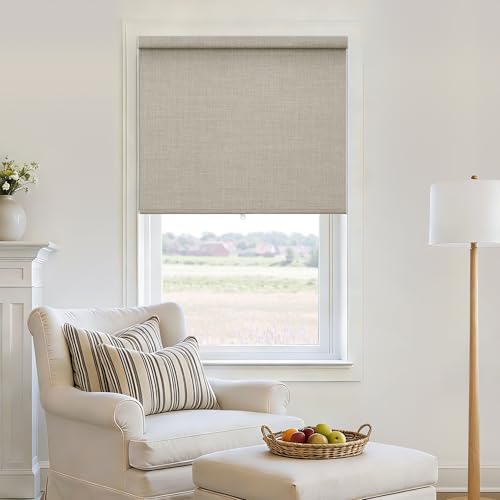
For stronger room-darkening than a light-filtering shade, this 34-by-64-inch cordless roller shade uses oatmeal-colored linen-style fabric and includes a matching fabric valance. The free-stop mechanism lets the shade pause at the height you choose, while its cordless design avoids loose lift cords. The product is a complete roller shade, not a snap-in replacement slat or repair part, so it suits someone replacing a window covering rather than fixing an existing vertical blind. Measure the mounting area carefully; the width is 34 inches.
Bottom line: Pick this for a cordless blackout roller shade in a 34-inch width.
White Cordless Light-Filtering Roller Shade, 24 × 72 in

For daylight without a fully open window, this white 24-by-72-inch roller shade uses polyester jacquard fabric with a linen-like texture and is designed to filter light. Its cordless free-stop lift allows height adjustment; the maker says the system was tested over 10,000 cycles. This is a full roller shade, not a snap-in vertical slat, so it is an alternative when you want a new window covering. Light-filtering fabric is not the same as blackout material, so choose another type if blocking most incoming light is the priority.
Bottom line: Choose this when you want a cordless roller shade that filters daylight.
White Cut-to-Size Adhesive Pleated Shade, 35 × 71 in

For a temporary covering without drilled mounting hardware, this 35-by-71-inch white pleated shade attaches with double-sided tape and can be trimmed to fit. The non-woven fabric is described as waterproof and dustproof, and white is among the light-filtering color options. It is neither a snap-in blind nor a repair piece; it suits renters or short-term setups where adhesive mounting is acceptable. Cutting and adhesive placement affect the final fit, and the tape-based installation may not suit every surface or a window that needs frequent shade adjustment.
Bottom line: Choose this for a simple no-drill, cut-to-size temporary covering.
BlindsAvenue White Cellular Shade, 22 × 48 in

For a narrowly sized inside-mount opening, this white cordless cellular shade is specified for windows 22¼ to 22½ inches wide and 48 inches high. Its honeycomb construction is designed for insulation and noise reduction, and the pull-down cordless control does not require an exact custom length for shorter windows. The precise width guidance makes measurement especially important: it is a cellular shade, not a snap-in replacement slat. Outside-mount buyers should size for the area they want covered rather than use the inside-mount opening range.
Bottom line: Choose this cellular shade only when its inside-mount width range matches your opening.
How to Choose Snap-In Blinds for Windows
Start by deciding whether you need a repair part or a complete shade: a repair tab cannot replace a missing slat, and a roller shade will not snap into a vertical-blind headrail. Vertical blind slats are commonly about 3.5 inches wide, but widths, lengths, and top connections vary by system. Match the slat width and length, then compare the top hole or clip and carrier shape before buying replacement slats. If only a small tear is present, a repair tab may be an option; if a carrier or headrail is broken, repair the hardware instead. Measure the window opening in at least three places because openings can be slightly uneven.
Snap-In Replacement Slats and Repair Tabs
Replacement slats need compatible top attachments; a similar-looking slat may not fit if its hole, hook, or clip differs from the carrier. Vertical blinds often use 3.5-inch slats, while narrower systems also exist, so measure one intact slat rather than assuming a standard. Repair tabs address a different problem: they bridge a small break in a slat but do not restore a broken carrier or missing panel. For adhesive repairs, clean and dry the surface first and press the repair over sound material on both sides of the damage. Use a replacement slat when the break reaches the attachment point or leaves too little material for a tab to hold.
Measuring for a Replacement Window Shade
Measure width and height in three places and use the smallest width for an inside mount; narrow openings and uneven frames can prevent a shade from operating freely. An inside-mount cellular shade typically needs a small clearance, and this shade’s specified 22¼- to 22½-inch opening range is a useful example of how specific fit can be. For an outside mount, size the shade to cover the desired area, including overlap at the edges. Before ordering, confirm whether the quoted width is the fabric width or the overall shade width, since brackets and valances can affect coverage. Do not treat a shade’s dimensions as proof that it snaps into existing hardware.
Choosing Light Control and Cordless Operation
Blackout fabric is intended to block most incoming light, while light-filtering fabric softens daylight without making a room fully dark. Cellular shades use folded air pockets that can reduce heat transfer through a window, but gaps around the edges still allow light and air movement. Cordless controls avoid dangling lift cords; keep operating mechanisms out of children’s reach and install shades according to their mounting instructions. For bedrooms where darkness is the priority, choose blackout material; for living areas where daytime light matters, choose light-filtering. Temporary adhesive shades are convenient for short-term coverage, but verify that the mounting surface is clean, dry, and suitable for adhesive.
Frequently Asked Questions
Can I snap a replacement slat into any vertical blind?
No, the top attachment must match the carrier or stem in the headrail. Measure the slat width and length, then compare its hole, hook, or clip shape with an intact slat before choosing a replacement.
How do I measure vertical blind slats?
Measure an intact slat from one side to the other for width and from its top attachment to the bottom for length. Many vertical slats are about 3.5 inches wide, but systems vary, so use the existing slat rather than that typical size alone.
Do repair tabs work on missing blind slats?
No, adhesive tabs can bridge a small tear or break but cannot replace a missing panel. Replace the slat itself when the panel is gone or its top attachment is damaged.
Are cordless window shades safer around children?
Cordless shades eliminate dangling lift cords that can pose an entanglement hazard. Keep the shade mechanism out of reach and secure mounting hardware as directed, especially in rooms used by young children.
What is the difference between blackout and light-filtering shades?
Blackout fabric is designed to block most incoming light, while light-filtering fabric lets softened daylight through. Neither fabric guarantees a fully dark room if light enters around the shade’s edges.