
Best Temporary Tooth Filling Options for Lost Fillings

For most people replacing a lost filling or stabilizing a loose crown, Dentemp Cap & Filling Repair Kit is the clearest choice because it is ready to use and requires no mixing. Choose DenTek Temparin One Step instead if you want a one step kit with a 48-hour window for seeing a dental professional.
Temporary filling cement covers or supports a damaged area until professional care; moldable tooth beads are cosmetic covers, not substitutes for filling material. Severe pain, swelling, fever, or trouble swallowing needs urgent dental or medical attention rather than a home repair.
We earn a commission if you buy through links on this page. As an Amazon Associate I earn from qualifying purchases. Products are compared on manufacturer specifications, not hands-on testing.
- Best overall: Dentemp Cap & Filling Repair Kit – Ready to use with no mixing, and intended for lost fillings and loose caps or crowns.
- Best for one-step application: DenTek Temparin One Step – The kit includes a dual-ended applicator and says to see a dental professional within 48 hours.
- Best for mixed cement: Zinc Oxide Eugenol Cement Kit – Includes zinc oxide eugenol powder and liquid with mixing accessories.
| Product | Best for | Material or format | Intended use | Pack size | Shop |
|---|---|---|---|---|---|
| Dentemp Cap & Filling Repair Kit | Quick filling repair | Ready-to-use dental cement | Lost fillings, loose caps or crowns | 2.64 g, 2-pack | Check Price on Amazon |
| DenTek Temparin One Step | One step repairs | One-step dental repair material | Lost fillings, caps, crowns or inlays | 2.64 g, 1 kit | Check Price on Amazon |
| Zinc Oxide Eugenol Cement Kit | Powder-liquid cement | Zinc oxide eugenol powder and liquid | Fillings, bridges and caps | 20 g powder, 10 mL liquid | Check Price on Amazon |
Temporary Tooth Filling Options
Match the material to the repair: filling cement is different from a cosmetic tooth cover.
Dentemp Cap & Filling Repair Kit

For a ready-to-use repair, this kit avoids the powder-and-liquid mixing required by cement kits. The maker says its material temporarily replaces lost fillings or secures loose caps and crowns, and that repaired teeth can be used for eating after two hours. The two-pack format suits someone who wants a spare application kit. The maker also claims immediate pain relief, but temporary cement cannot diagnose or fix the cause of tooth pain; arrange dental care, especially if pain persists or worsens.
Bottom line: Choose this for a no-mix temporary repair of a lost filling or loose crown.
DenTek Temparin One Step
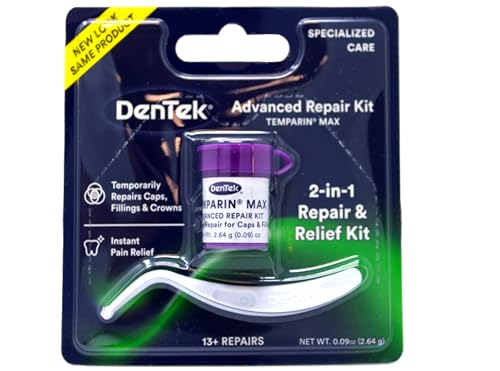
For a compact single-kit repair, this option specifies a one step formula and a dual-ended applicator, unlike the larger powder-and-liquid cement kit. The maker says each kit provides 10 or more applications and is intended for lost fillings, caps, crowns, or inlays. Its key limitation is the follow-up window: a dental professional should be seen within 48 hours, and the material should only be removed by a professional. It is therefore a short bridge to care, not a lasting restoration.
Bottom line: Choose this when the one step applicator and 48-hour follow-up guidance fit your situation.
Zinc Oxide Eugenol Cement Kit

Unlike the ready-to-use repair kits, this kit supplies zinc oxide eugenol as separate powder and liquid, plus a mixing pad and measuring spoon. Its uses include fillings, bridges, and caps, so it suits buyers specifically seeking a cement kit with mixing supplies. The added preparation is a limitation for anyone who needs a simple one step application. The maker calls it self-curing and self-adherent; follow the included instructions carefully and use it only as a temporary measure while arranging professional dental care.
Bottom line: Choose this if you specifically want zinc oxide eugenol cement with mixing accessories.
How to choose temporary filling material
Choose by the problem: dental cement is meant for a lost filling or loose crown, while moldable beads are cosmetic covers for visible gaps or chips. Lost fillings and crowns need professional attention because temporary materials do not restore the original fit or seal. If the tooth is sharp, painful, or sensitive, use a dental repair product only as directed and contact a dentist promptly. Do not use cosmetic beads as cavity filler. A practical rule is to choose a no-mix kit when you cannot reliably measure and blend powder and liquid; reserve mixed cement for people comfortable following the kit’s preparation steps.
Temporary fillings versus cosmetic tooth covers
Dental repair cement and thermoplastic beads serve different purposes. Cement is intended to temporarily replace filling material or hold a cap or crown; beads are softened and shaped to cover visible tooth areas. A cosmetic shell can conceal a chip but does not establish that the tooth underneath is sound. For a lost filling, select a product whose intended use names lost fillings rather than relying on tooth-colored appearance alone. The table separates the two categories so the intended repair is clear.
| Need | Material type | Purpose |
|---|---|---|
| Lost filling or loose crown | Temporary dental cement | Short-term coverage or retention until dental care |
| Visible chip or gap appearance | Moldable cosmetic beads | Temporary cosmetic coverage only |
Using temporary dental cement safely
Temporary cement is a short-term stopgap, not a permanent repair. Follow the kit’s own mixing and placement directions, keep the material away from areas where it could be swallowed or inhaled, and do not force a crown into place if it will not seat easily. Avoid chewing hard or sticky foods on a repaired tooth; pressure can dislodge temporary material. A loose crown or lost filling should be assessed by a dentist as soon as practical, and the DenTek kit specifically says to see a dental professional within 48 hours. Facial swelling, fever, difficulty swallowing, or severe pain calls for urgent care.
When a damaged tooth needs urgent care
Swelling, fever, spreading facial pain, or difficulty swallowing can signal a problem that home filling material cannot address; seek urgent dental or medical care. A cracked tooth also needs assessment even when a cosmetic cover makes the edge look smoother, because a surface patch cannot show how deep the crack extends. Until care is available, avoid chewing on the affected side and keep the area clean. Do not place aspirin or household glue on a tooth or gum, since these can irritate tissue and are not dental repair materials.
Frequently Asked Questions
How long can temporary tooth filling material stay in place?
Temporary dental cement is a bridge to professional care, not a long-term filling. DenTek says a dental professional should be seen within 48 hours after use, so arrange care promptly rather than waiting for the material to fail.
Can temporary filling cement secure a loose crown?
Some temporary dental repair kits are intended for loose caps or crowns as well as lost fillings. Do not force a crown into position if it does not seat easily, and arrange a dental appointment to restore a proper fit.
Are moldable tooth beads the same as filling material?
No, moldable beads are designed for temporary cosmetic coverage, while dental cement is intended for lost fillings or crown support. A bead cover does not fill a cavity or establish that a crack is harmless.
What should I avoid eating after a temporary filling?
Avoid hard, crunchy, or sticky foods on the repaired tooth because chewing pressure can loosen temporary material. The Dentemp maker says eating on repaired teeth is possible after two hours, but that does not make the repair permanent.
When does tooth pain need urgent attention?
Severe pain, facial swelling, fever, or trouble swallowing needs urgent dental or medical attention rather than a home repair. A temporary filling can cover an area, but it cannot treat the cause of those symptoms.