
Best Ultrasonic Fruit and Vegetable Cleaner Picks

KUNPHY 2.5L Ultrasonic Cleaner is the best fit for most people because it pairs a 2.5-liter basin with three timed cycles and a 40 kHz frequency. Choose another option if you need a cordless design or a larger basin rather than this countertop-style washer.
Ultrasonic produce cleaners use sound waves in water; the product claims below should not be treated as proof of pesticide removal or disinfection.
We earn a commission if you buy through links on this page. As an Amazon Associate I earn from qualifying purchases. Products are compared on manufacturer specifications, not hands-on testing.
- Best overall: KUNPHY 2.5L Ultrasonic Cleaner – Its 2.5-liter capacity, 40 kHz frequency, and three selectable timers give buyers clear cycle choices.
- Best for a larger basin: 360-Degree Ultrasonic Produce Washer – Its 9.1-inch length and width suggest a broader basin footprint than the compact capsule designs.
| Product | Best for | Cycle time | Shop |
|---|---|---|---|
| KUNPHY 2.5L Ultrasonic Cleaner | Timed countertop cleaning | 5, 10, or 15 min | Check Price on Amazon |
| Portable OH-Ion Ultrasonic Cleaner | Portable dual technology | 10 min | Check Price on Amazon |
| 360-Degree Ultrasonic Produce Washer | Wide-basin batches | — | Check Price on Amazon |
Ultrasonic Fruit and Vegetable Cleaners
Compare the basin style, operating details, and cycle choices that distinguish these produce washers.
KUNPHY 2.5L Ultrasonic Cleaner
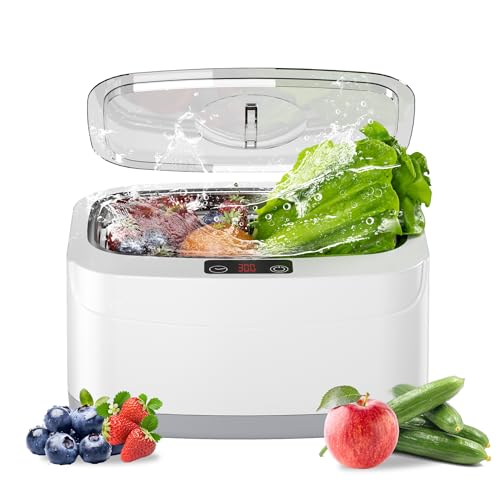
KUNPHY 2.5L Ultrasonic Cleaner stands out with a defined 2.5-liter basin, a 40 kHz frequency, and three timer choices. The maker says its ultrasonic waves clean produce, and the controls provide 5-, 10-, and 15-minute cycles with an LED time display. This format suits someone who wants a set basin and selectable cycle lengths for different batches. Its compact stated dimensions are 8 inches long and 5 inches wide, so buyers planning to wash bulky greens or a large batch should check the counter and basin fit before choosing it.
Bottom line: Choose this if timed cycles and a 2.5-liter basin match your typical batch size.
Portable OH-Ion Ultrasonic Cleaner
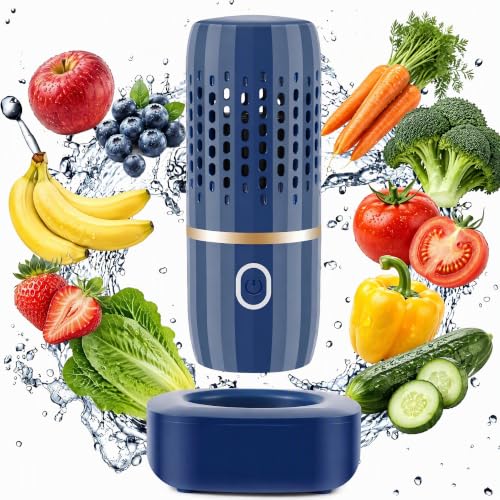
Portable OH-Ion Ultrasonic Cleaner combines OH-ion purification language with ultrasonic technology in a wireless portable design, unlike the fixed-basin format of KUNPHY 2.5L Ultrasonic Cleaner. The maker describes a one-touch automatic 10-minute cycle and positions the unit for a range of kitchen items. Its dimensions are 6.38 inches high, 3.86 inches long, and 3.54 inches wide, with a weight of 0.8 pounds. Those dimensions may suit buyers with limited storage space.
Bottom line: Choose this when compact storage and a portable dual-technology format matter most.
360-Degree Ultrasonic Produce Washer

360-Degree Ultrasonic Produce Washer is the broad-basin option among these picks, with dimensions of 9.1 inches long by 9.1 inches wide and a height of 5.1 inches. The maker describes 360-degree cleaning and electrolytic ultrasonic operation, plus a one-button start. That footprint may be useful for buyers who want room to place a batch in a bowl-style unit rather than use a capsule.
Bottom line: Choose this if a broad bowl footprint matters more than stated capacity or cycle settings.
How to choose an ultrasonic produce cleaner
Start with basin capacity and cycle controls, then treat cleaning claims as a separate question. Ultrasonic cleaners use high-frequency sound in liquid; cavitation can loosen soils from surfaces, but a device’s frequency or cycle length alone does not establish pesticide removal or disinfection. A 40 kHz frequency is a concrete operating specification, while claims such as “deep cleaning” are not a measured result. For routine home use, prioritize a capacity that fits your usual batch and a cycle you can manage without crowding the basin. If you need a verified reduction in a specific contaminant, do not infer that result from an ultrasonic label; choose a method supported for that purpose.
How to wash fruits and vegetables safely
Rinse produce under clean running water before eating or preparing it; the FDA advises against washing fruits and vegetables with soap, detergent, or commercial produce wash. Rub firm produce such as melons or cucumbers with a clean produce brush while rinsing, and gently rub soft produce by hand. Remove damaged or bruised areas before preparation, and dry with a clean towel when appropriate. A washer should not replace these basics: water flow and hand rubbing help physically remove dirt, while no specifications here establish that a machine sanitizes food. Keep raw meat and seafood separate from ready-to-eat produce, and clean hands, utensils, and surfaces after handling them.
Ultrasonic and portable cleaner types compared
A basin-style ultrasonic unit is a better fit when you want to submerge a batch and select a specific timer; a capsule cleaner prioritizes portability and may rely on a different technology. “Ultrasonic” refers to sound above human hearing, and cleaning units commonly operate in the tens of kilohertz; exact frequency matters only when the maker provides it. Use the table as a format decision, not as a ranking of cleaning effectiveness. A larger footprint can accommodate a wider batch, but actual usable capacity depends on basin depth, water level, and the produce shape.
| Need | Format to consider | Decision point |
|---|---|---|
| Set cycle lengths | Countertop basin | Choose a timer and usable capacity |
| Portable immersion | Cordless capsule | Check its charging and immersion instructions |
| Wide batch placement | Bowl-style washer | Compare the footprint with counter space |
Common produce-washing mistakes
Do not soak every type of produce for the same time or assume a machine’s cycle neutralizes contaminants. Excess moisture can speed spoilage for some stored produce, so wash close to preparation when practical and dry items before refrigeration if they will be stored. Keep produce away from raw meat, poultry, and seafood during washing and prep; separate cutting boards and utensils reduce cross-contamination risk. Never add soap or household cleaners to a produce-washing basin. For delicate berries, avoid rough handling and drain them gently; for firm items with visible soil, rinse and rub the surface rather than relying on a device claim alone.
Frequently Asked Questions
Do ultrasonic cleaners remove pesticide residues from produce?
A frequency or timed cycle does not by itself prove pesticide removal. Rinse produce under clean running water and rub firm surfaces; do not treat a cleaner’s claims as a verified residue test.
Should I use soap in a fruit and vegetable washer?
No, use clean water rather than soap, detergent, or commercial produce wash. The FDA recommends rinsing produce under running water, with hand rubbing or a clean brush for firm items.
How long should produce soak before I eat it?
There is no single soak time needed for all produce; running-water rinsing and rubbing are the general home-washing steps. Follow the cleaner’s cycle controls only as its operating cycle, not as proof of sanitizing.
Can I wash raw meat with produce in the same cleaner?
Keep raw meat and seafood separate from produce to reduce cross-contamination. Use separate preparation surfaces and clean hands and utensils after handling raw animal foods.
Does ultrasonic frequency tell me how well a cleaner works?
Frequency is an operating specification, not a direct measure of food-safety effectiveness. A 40 kHz value tells you the operating frequency, but does not establish pesticide removal or disinfection.